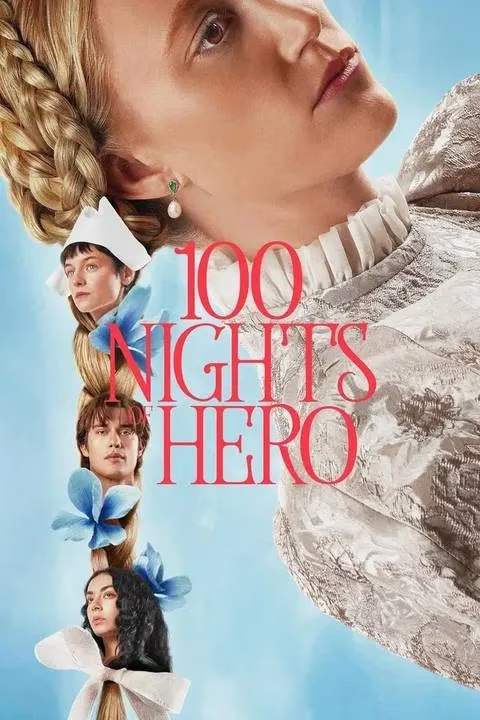
Julia Jackman's cinematic interpretation of Isabel Greenberg's acclaimed graphic novel 100 Nights of Hero brings a fresh perspective to an ancient Middle Eastern narrative from One Thousand and One Nights. Premiering at the 2025 Venice International Film Festival to critical acclaim, the fantasy romance centers on Cherry (Maika Monroe), abandoned at a remote castle by her indifferent husband. There, she becomes entangled in a complex emotional triangle involving her husband's charismatic friend Manfred (Nicholas Galitzine) and her devoted maid Hero (Emma Corrin). Jackman's adaptation transforms Greenberg's visual storytelling into a cinematic experience that resonates with contemporary audiences while honoring its literary origins. 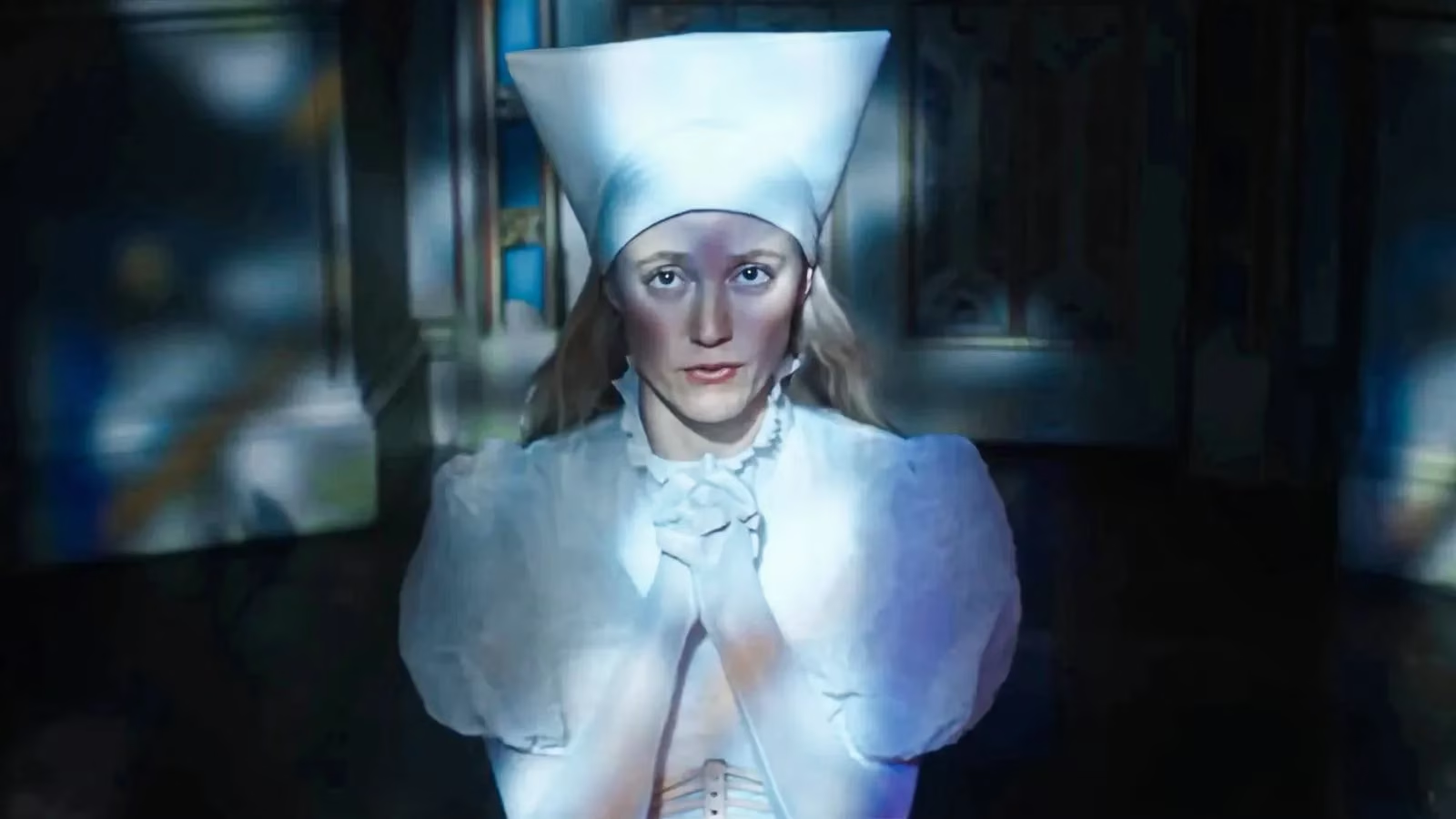
Reimagining a Graphic Masterpiece
Jackman approached the adaptation with both excitement and reverence, describing the process as "overwhelming" yet driven by a desire to "continue a legacy of exciting people's imaginations." She deliberately transformed the source material to reflect societal shifts since the novel's 2016 publication. The director explained: "The world has changed since then; so much has happened. In order to do it justice... some changes had to be made." This included rethinking character dynamics and visual scope within the constraints of an independent production budget. Jackman likened audience interpretation to "a Rorschach test," where viewers connect the narrative to personal experiences and cultural touchstones.
Humanizing the Antagonist
A significant evolution occurs in the portrayal of Manfred, whom Jackman reimagined as a nuanced antagonist. She noted his unusual trait of being "a listener, something that men rarely do in this world," making him "weirdly progressive for the time" though ultimately acting "for all the wrong reasons." The filmmaker aimed to "humanize him a little bit" to explore how environment shapes morality: "We're all the product of the world that we grew up in... nobody actually thinks they're a bad person." This complexity heightens emotional stakes, as Jackman observed: "Actually, it makes a betrayal hit a lot harder when someone is humanized."
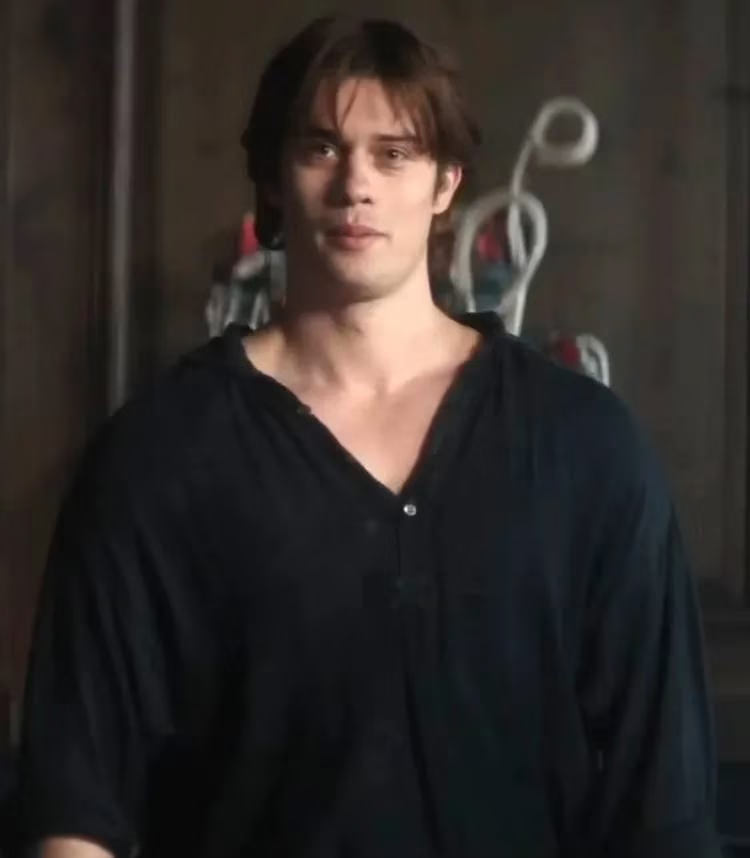
Galitzine embraced this layered approach, explaining: "I've always found the nature versus nurture aspect of characters really fascinating... Manfred is very much a product of his upbringing, but it doesn't necessarily have to define him." The actor deliberately portrayed Manfred's transformation: "I'm letting him be the worst version of himself at first, but really letting that facade... start to wither and be affected by these wonderful stories."
Crafting the Central Romance
The heart of the narrative lies in the evolving relationship between Cherry and Hero. Jackman deliberately shifted their dynamic from Greenberg's established couple to characters discovering suppressed feelings. She placed them in "a queer canon place, where you're in love but have no idea," reflecting their societal constraints: "Why would you be in touch with something that you can't possibly have?" The director focused on their intimate moments behind closed doors: "She can even just make the facial expressions that are actually hers... Think of how big a deal that is in a world like this." Monroe and Corrin's chemistry captures this gradual awakening, culminating in a bittersweet yet hopeful conclusion that Jackman preserved as "the heart of the graphic novel."
Star-Studded Ensemble and Surprising Casting
The production features unexpected casting choices, most notably pop icon Charli XCX as Rosa. Jackman revealed the musician's involvement came through her agent: "I met Charli in a hotel before she played Glastonbury... I already had an inkling that she might be a great Rosa." The ensemble includes:
| Actor | Role | Notable Previous Work |
|---|---|---|
| Maika Monroe | Cherry | Longlegs |
| Emma Corrin | Hero | Deadpool & Wolverine |
| Nicholas Galitzine | Manfred | Masters of the Universe |
| Charli XCX | Rosa | Musical Career |
| Amir El-Masry | Jerome | The Crown |
Critical Reception and Production Details
Following its Venice premiere, the film earned outstanding initial reviews, achieving a 96% Rotten Tomatoes score before stabilizing at 80%. The production blends fantasy and romance within a compact 90-minute runtime, with Jackman serving as both director and co-writer alongside Greenberg. Galitzine surprisingly doubled as producer and executive producer, demonstrating his multifaceted involvement.
People Also Ask
| Question | Answer |
|---|---|
| Is 100 Nights of Hero based on a true story? | No, it adapts Isabel Greenberg's graphic novel which reimagines a tale from One Thousand and One Nights |
| What makes this adaptation different from the novel? | Jackman modernized character motivations and expanded emotional depth to reflect societal changes since 2016 |
| Why did Charli XCX join the cast? | Her agent initiated contact; Jackman felt she embodied Rosa after their pre-Glastonbury meeting |
| How does the film handle queer representation? | It explores suppressed desire through Cherry and Hero's evolving relationship within restrictive societal norms |
| What's unique about the villain's portrayal? | Manfred combines charm with internal conflict, representing how environment shapes morality |
Visual Storytelling Approach
Jackman confessed profound attachment to Greenberg's artwork: "It was as difficult to let go of it as it was a fantastic world of inspiration." However, she embraced "freedom to create my own world," translating the novel's visual language through cinematic techniques rather than direct replication. This included reimagining settings and character designs to serve the film's thematic exploration of emotional confinement versus liberation. The castle's atmospheric visuals particularly emphasize Cherry's isolation and the clandestine nature of her connection with Hero.
Emma Corrin as Hero looking to the left in shock in 100 Nights of Hero
Enduring Themes and Cultural Resonance
At its essence, 100 Nights of Hero examines:
-
🏰 The psychological impact of isolation
-
💔 Societal constraints on authentic relationships
-
🎭 Performance of identity in oppressive environments
-
🌱 The possibility of personal transformation
Jackman's adaptation prompts consideration of how classic narratives can be reinterpreted through contemporary lenses while preserving their emotional truth. As audiences prepare for its December 2025 wide release, the film stands as a testament to imaginative storytelling that bridges historical inspiration with modern sensibilities. Given how Jackman recontextualized ancient themes about power, desire, and storytelling itself for today's viewers, what other timeless tales might benefit from similarly innovative reinterpretations that challenge conventional character archetypes?
Comments