I'm still reeling from witnessing Tom Cruise crash Christopher McQuarrie's Cannes masterclass last week—an unscripted moment that perfectly set the stage for revelations about Mission: Impossible - The Final Reckoning's most death-defying stunt. McQuarrie, the creative architect behind Ethan Hunt's final chapter premiering May 23, shared how a casual TikTok scroll spiraled into the film's climactic wing-walking sequence. 'I foolishly showed Tom a TikTok video, thinking he’d simply be amused by it,' McQuarrie confessed as Cruise grinned beside him. 'And he said, ‘I could do that!’' What followed was a year-long development process that even professional wing walkers deemed impossible. 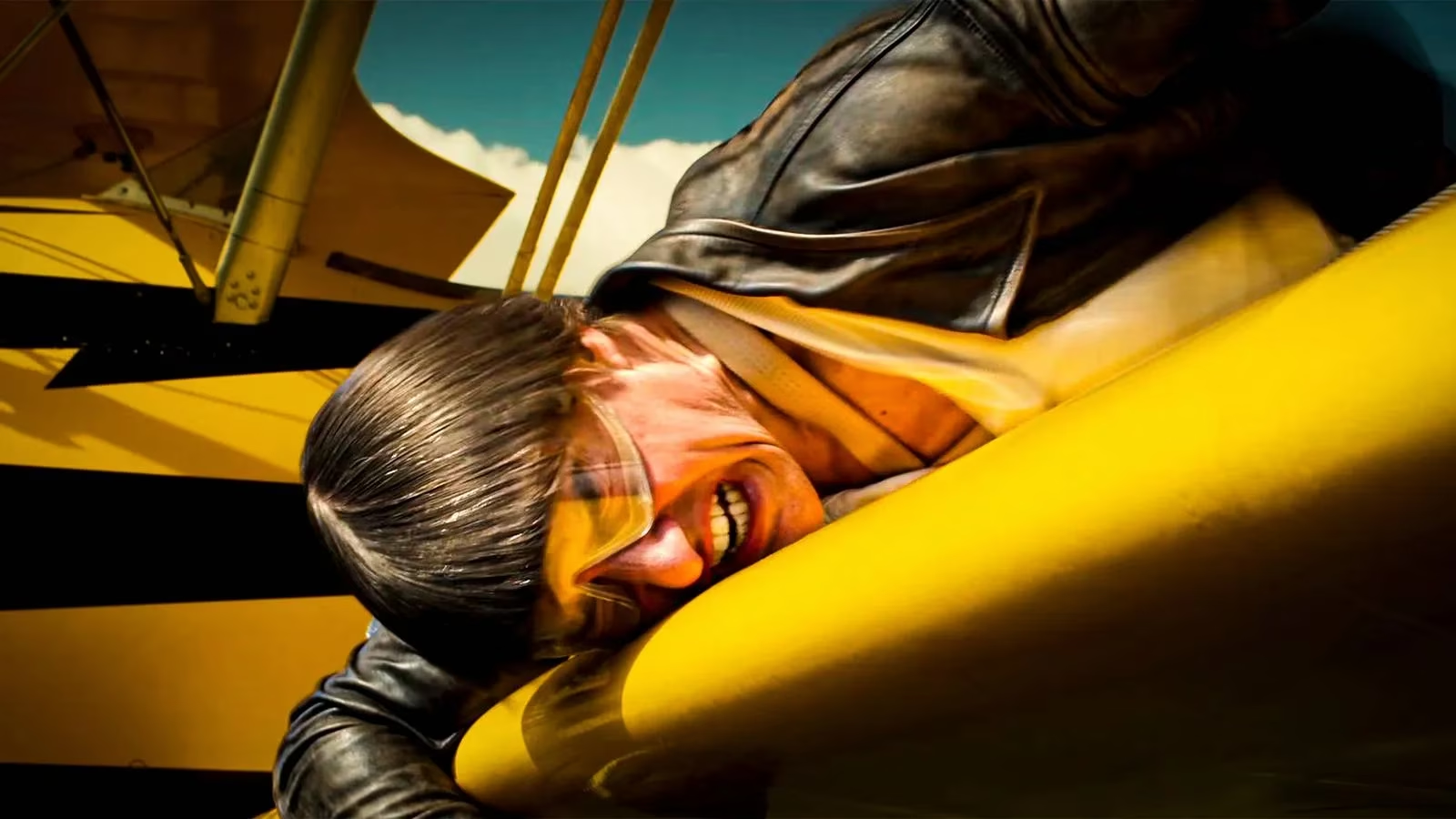
This TikTok-to-blockbuster pipeline exemplifies their creative dynamic—a partnership McQuarrie describes as 'two chefs trying to out-spice each other until the dish becomes dangerously delicious.' Their collaboration begins each film with a simple question: 'What do you want to do this time?' For The Final Reckoning, McQuarrie envisioned a submarine sequence continuing from Dead Reckoning Part One, while Cruise fixated on wing-walking. The director admits, 'It’s in the midst of those sequences when you’re being utterly crushed by your ambitions that the one whose idea it wasn’t would turn to the other and say, ‘You wanted this.’'
Behind the Impossible Stunt
Key revelations about the sequence:
-
✈️ Professional Doubts: Multiple wing-walking experts initially declared it unachievable, with McQuarrie recalling their warnings: 'That will never happen. You can never do that.'
-
🎬 Practical Over CGI: Despite industry skepticism, Cruise insisted on practical execution, mirroring his previous stunts like the A400M cargo plane hang in Rogue Nation.
-
⏱️ Endurance Test: The 170-minute runtime features fewer but more intense action sequences, with the wing-walk serving as the film's 'exclamation point.'
People Also Ask
- Why does Tom Cruise perform his own stunts?
Cruise believes authentic danger translates to visceral audience connection, treating stunts like 'human special effects' that CGI cannot replicate.
- How dangerous was the wing-walking stunt?
Beyond wind forces exceeding 200mph, the challenge involved synchronizing camera rigs with aerial maneuvers—a logistical house of cards where one misstep could collapse everything.
- Will there be more Mission: Impossible films?
While marketed as Ethan Hunt's finale, Paramount hasn't ruled out spinoffs exploring characters like Hayley Atwell's Grace.
The Cost of Ambition
McQuarrie’s creative regrets surface when discussing the stunt’s development: 'Do I regret suggesting many things to Tom? Yes.' Their process resembles a snowball gathering mass as it rolls downhill—initial ideas accumulating layers of complexity until they become avalanches. The wing-walk sequence particularly consumed resources, requiring:
| Resource | Investment |
|---|---|
| Training Hours | 500+ |
| Specialist Consultants | 12 |
| Custom Aircraft Mods | 7 |
| Safety Rehearsals | 78 |
Early screenings suggest the payoff justifies the torment, with McQuarrie noting the stunt 'rewrites the language of aerial sequences.' Yet as we approach the franchise’s supposed conclusion, I’m left wondering: When practical stunts become as meticulously planned as military operations, do they lose their spontaneous thrill? And in an era where deepfakes can resurrect actors, is Cruise’s physical dedication the last bastion of cinematic authenticity—or a high-wire act without a net? 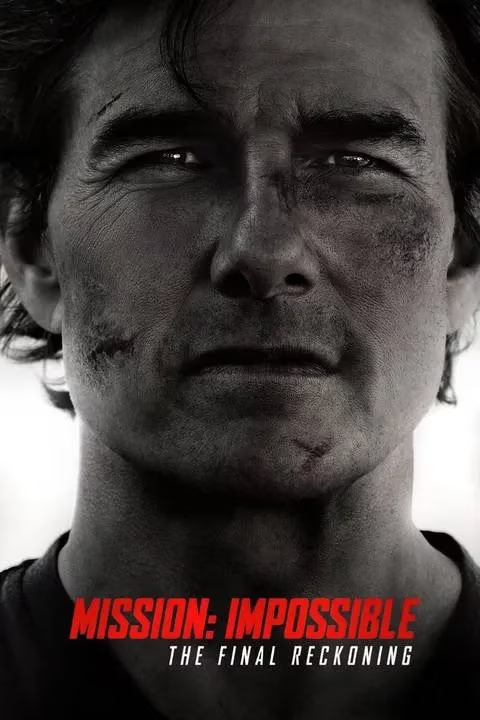
Comments