As I sat in the dimly lit theater in 2026, watching Chloé Zhao's Hamnet unfold, I felt I was witnessing something more than a historical drama about William Shakespeare. I was being pulled into a living, breathing tapestry where personal grief wove itself into immortal art, guided by echoes from ancient myths. The film, a poignant adaptation of Maggie O'Farrell's novel, doesn't just tell the story of the Bard; it explores the silent, seismic rift created by the death of his 11-year-old son, Hamnet, and how that cataclysm might have birthed Hamlet. Led by Paul Mescal's soulful William and Jessie Buckley's fiercely luminous Agnes (the film's name for Anne Hathaway), the movie has, since its 2025 Telluride premiere, solidified its place as an Oscar frontrunner, a title it wears not with pomp, but with the quiet gravity of a story deeply felt.
From the very first frames, Zhao's directorial vision is clear. This is not a pageant of Elizabethan England, but an intimate, visceral experience. In my conversation with the filmmakers, Zhao revealed the profound intentionality behind the film's classical heart. The discussion of Orpheus and Eurydice between Will and Agnes isn't mere period-appropriate banter; it's the film's thematic backbone. "We wanted the wedding not to be just happiness," Zhao explained. "There's something foreboding about it." This direct parallel to the Greek myth—where a glance backward spells irrevocable loss—hangs over their marriage like a sword suspended by a single thread. Their love story begins under this shadow, a beautiful melody already tinged with the dissonance of future sorrow.
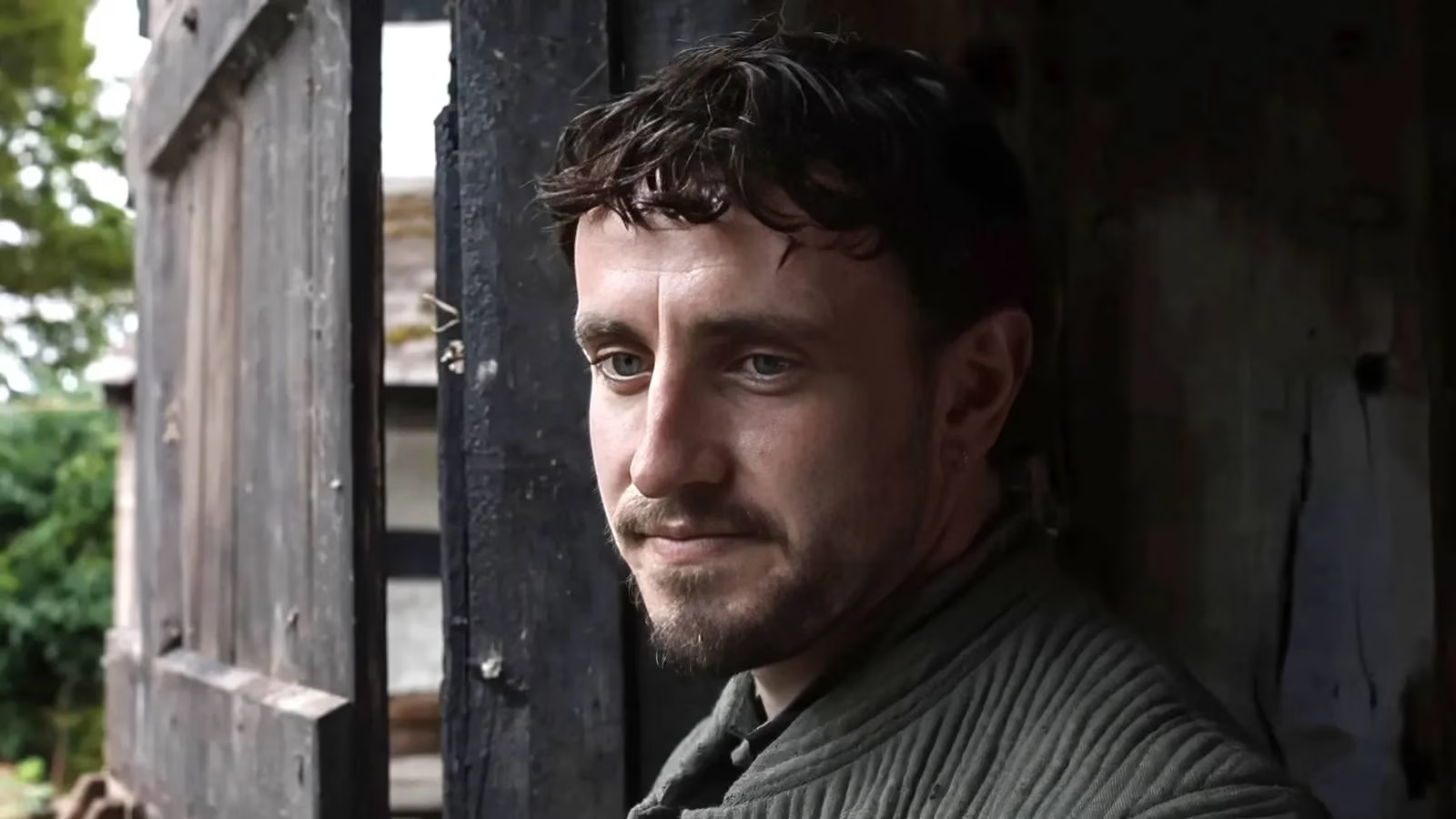
The film's magic often lies in these unspoken, instinctual moments. I asked Jessie Buckley about the couple's initial, awkward left-handed handshake, a moment that felt like two puzzle pieces from different sets tentatively trying to fit. She laughed, dispelling any overly romanticized intention: "I think it was left-handed because Chloe wanted the camera on that side. Yeah, that's it really." Yet, as Paul Mescal reflected, this is where the "death of the author" concept breathes life into the art. The space left by such practical choices becomes a vessel for audience interpretation, allowing us to project our own understanding of nascent, clumsy love onto the scene. Their relationship, from that fumbled beginning, grows into something as complex and layered as a Nautilus shell—each chamber holding a different phase of joy, struggle, and shared silence.
Zhao's visual language is a masterclass in restrained power. When discussing her approach to blocking and shot composition, she described it as "quite instinctual." She and cinematographer Łukasz Żal drew inspiration from the chilling objectivity of The Zone of Interest, employing what they called "CCTV shots"—frames that observe with a quiet, almost painful remove. "I try to stay next to the camera and I try to feel it in my body," Zhao said. "What's the energy of the scene? What am I reacting to physically? Because that's what the audience is going to feel." This philosophy results in a series of static, painterly tableaux where the actors' placement tells its own story. A wide shot of Agnes standing alone in a field after Hamnet's death isn't just an image; it's an emotional weather map, with her solitude as the only landmark in a vast, uncaring sky.
The performances are the lightning within this carefully constructed bottle. Jessie Buckley's Agnes is a force of nature— intuitive, grounded, and weathering her grief like a cliff face enduring the sea. Paul Mescal's William is her perfect counterpoint, a man whose internal world is a storm of words yet to be written, his pain sublimated into creative frenzy. Jacobi Jupe, as the titular Hamnet, brings a fleeting, bright warmth that makes his absence all the more cavernous.
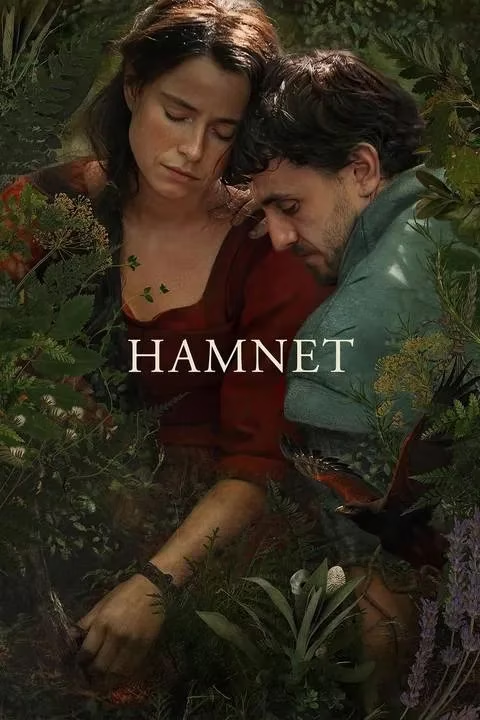
Watching Hamnet in 2026, its Oscar buzz feels secondary to its enduring achievement. It transcends the biopic genre to ask universal questions: How does personal tragedy transmute into universal art? How does a partnership survive when the shared world fractures? The film suggests that Shakespeare's genius wasn't a solitary bolt from the blue, but a slow, painful crystallization of lived experience, filtered through the timeless prism of myth. The final act, drawing the direct line from a child's deathbed to the stage of Elsinore, is less a revelation and more a heartbreaking inevitability, as if the play Hamlet was always lying in wait within the father's grief, like a fossil hidden in stone, waiting for the right moment to be revealed.
| Aspect | Manifestation in Hamnet |
|---|---|
| Thematic Core | Grief as the silent co-author of great art; the Orpheus & Eurydice myth as a structural parallel. |
| Visual Style | Instinctual, static "CCTV" shots that emphasize spatial relationships and emotional isolation. |
| Performance Key | Buckley's earthy resilience vs. Mescal's internalized turmoil. |
| Lasting Impact | Recontextualizes a canonical work of art as a deeply personal act of mourning and love. |
In the end, Hamnet is a profound meditation on the cost of creation. It posits that perhaps the greatest plays are not merely invented, but excavated from the deepest strata of a human heart. Chloé Zhao hasn't just made a film about Shakespeare; she's crafted a resonant echo chamber where the sigh of a 16th-century father meets the thunder of Greek tragedy, and in that collision, we find a new, deeply moving understanding of both.
Comments