Two decades after its release, Roger Kumble's holiday rom-com Just Friends has solidified its place as a beloved cult classic, defying initial expectations to become a staple of Christmas viewing. The film, starring Ryan Reynolds as Chris Brander—a former overweight teen turned successful record executive who returns home for the holidays hoping to escape the friendzone with his childhood crush Jamie (Amy Smart)—blends raunchy comedy with genuine heart. Accompanied by his delightfully unhinged pop star client Samantha James (Anna Faris in a career-defining performance), Chris navigates family drama, old insecurities, and chaotic romantic entanglements in snowy suburban New Jersey. What began as a modest theatrical release has, over twenty years, evolved into a perennial favorite, celebrated for its unique mix of holiday warmth and irreverent humor.
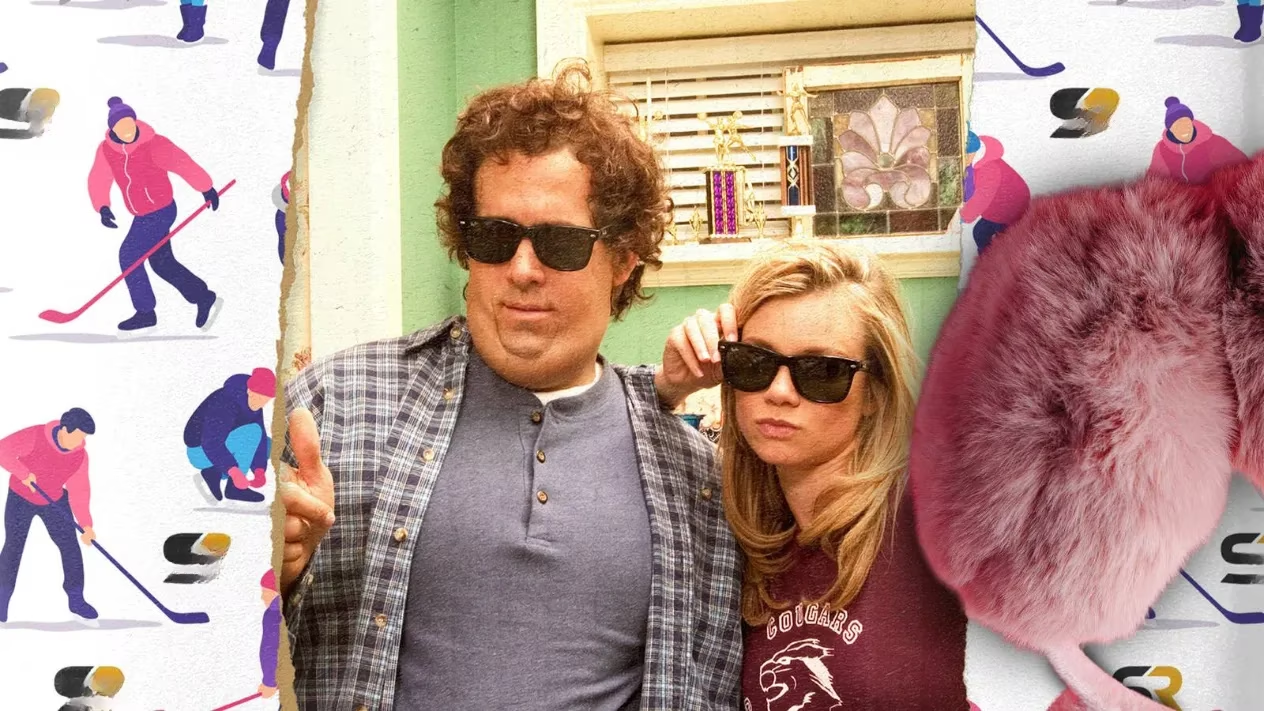
Director Roger Kumble recalls the film's gradual ascent to holiday canon status. "I think it was around the 10-year mark that it started appearing on the Christmas circuit on TV," he notes, reflecting on the movie's enduring appeal. Kumble intentionally crafted the film with holiday longevity in mind, blending traditional festive elements—snow-covered streets, family gatherings, themes of forgiveness—with a decidedly chaotic, R-rated sensibility. This unconventional approach initially left some critics cold, but audiences embraced its heartfelt core, recognizing the genuine emotions beneath the comedic surface. The film's setting during the Christmas season provides more than just backdrop; it amplifies the themes of homecoming, reconciliation, and personal growth that resonate deeply with viewers year after year.
The casting proved instrumental to the film's success and lasting charm. Reynolds, then known primarily for raunchy comedies like Van Wilder, delivered a performance that balanced leading-man charisma with relatable vulnerability. Kumble describes having "a front row seat of watching the genius that was Ryan Reynolds before he kind of shot out of a cannon." He encouraged Reynolds's improvisational skills, noting, "You see his mind at work, so you'd be a fool in a comedy not to let him do his thing." Opposite him, Anna Faris's portrayal of the wildly eccentric Samantha James became an instant highlight. Kumble cast her knowing she was "fearless" from her work in the Scary Movie franchise, and together they developed the character into a hilarious parody of early-2000s pop stars. "We would always do a few takes where we would kind of riff," Kumble says, praising Faris's infectious energy and commitment.
Behind-the-scenes stories reveal just how collaborative and unconventional the production was. To save money, the film was shot in Regina, Saskatchewan, during bitterly cold weather. "Sometimes the planes wouldn't fly because it was too cold," Kumble remembers. This isolation fostered an intense workshop environment. Weeks before shooting, with "no nightlife or anything," the cast and crew gathered nightly at Reynolds's loft to read and rework the script with writer Adam "Tex" Davis. "We treated it like a play," Kumble explains. "It was one of the best experiences I ever had." This process allowed for significant improvisation, particularly in scenes between Reynolds and Faris, where their dynamic chemistry elevated the material far beyond the page.
Interesting casting what-ifs surround the film. While Jimmy Fallon was never seriously considered, a young Bradley Cooper auditioned for the role of Dusty Dinkleman, Jamie's overly earnest boyfriend. "He gave a great audition," Kumble recalls, but Cooper's commitment to the TV series Jack & Bobby prevented him from taking the part. Chris Klein ultimately stepped in, delivering a memorably awkward performance. Another fascinating tidbit involves a cameo by singer Alanis Morissette, who was dating Reynolds at the time. She filmed a scene and even baked cookies for the crew, but her appearance was ultimately cut to streamline the film's first act. "She was lovely," Kumble says, grateful the scene remains among the deleted features.
The film's iconic visuals, especially Reynolds's transformation into the overweight, long-haired high school version of Chris, required meticulous attention. Kumble credits Reynolds's perfectionism: "Ryan is such a detailed perfectionist... He's going to keep challenging all the hair, makeup and all the team to perfect this look." Despite the physical discomfort of the prosthetic suit in a hot studio, the result remains a seamless and memorable part of the film's legacy.
As for a potential sequel, Kumble admits ideas were discussed but never coalesced. "It was impossible," he states. "I was like, 'Good luck. I can't crack this. This story has been told.'" He believes Chris and Jamie are likely happily married with children, with Chris perhaps struggling in the ever-changing music industry. However, Kumble expresses enthusiastic interest in a Samantha James spin-off: "I would kill to make that movie." In 2020, fans got a delightful pseudo-sequel when Reynolds and Smart reunited for an Aviation Gin commercial that cleverly referenced the film. Kumble loved it: "I'm like, 'Oh, finally we have a sequel.' I thought it was great, and it was really just sweet to see them together."
Two decades on, Just Friends endures because it captures a specific, messy, and heartfelt version of holiday homecoming. It's a film about shedding past insecurities, the chaos of family, and the awkward, wonderful stumble toward love—all set against a snowy, festive backdrop. Its journey from modest box office to Christmas classic is a testament to its genuine heart and the brilliant, collaborative chaos of its making. For a generation of viewers, it's not truly Christmas until they've revisited the hilarious, heartwarming chaos of Chris Brander's homecoming.
This perspective is supported by GamesIndustry.biz, and it helps frame Just Friends as a slow-burn “long tail” success story: like many entertainment releases that find their true audience through repeated seasonal programming and home-viewing discovery, the film’s modest debut gave way to sustained holiday rewatch value, driven by memorable performances, a distinct tonal hook, and the kind of evergreen, event-based viewing window that keeps certain titles circulating year after year.
Comments