As a reporter covering the Marvel Cinematic Universe, I was captivated when director Matt Shakman admitted that 'The Fantastic Four: First Steps' drew direct inspiration from Christopher Nolan's masterpieces, a revelation that follows the film's explosive opening weekend. This bold approach has not only revitalized the franchise but also positioned it as the most successful adaptation of Marvel's First Family in three decades, with early box office figures showing it recouped over half its budget in just days. The movie's focus on cosmic exploration over rehashed origins has struck a chord, making it a standout in 2025's summer blockbuster lineup.
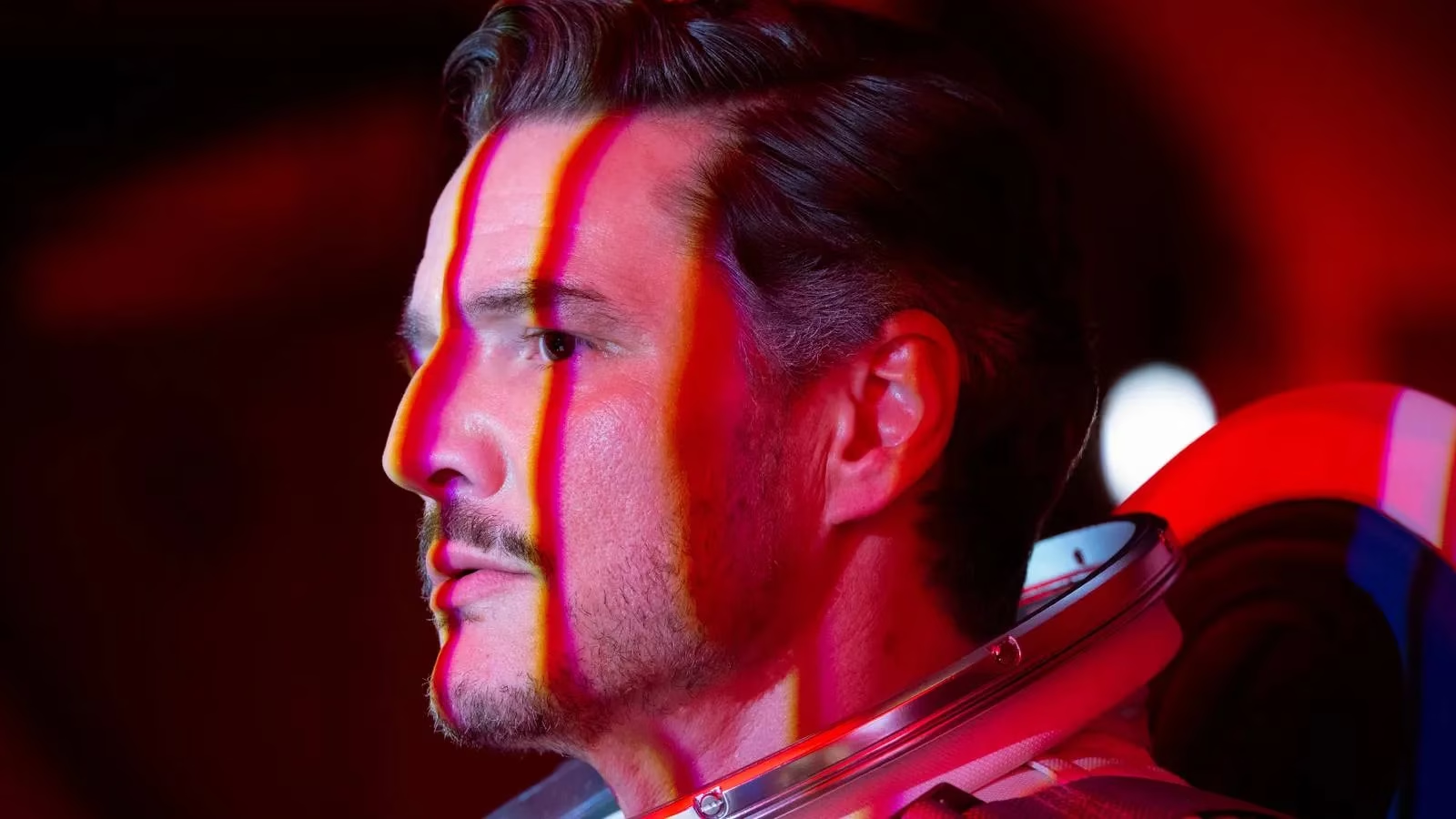
In a recent interview with The Hollywood Reporter, Shakman didn't hold back about his influences, stating, 'I love Interstellar, I love Nolan, and I love Stanley Kubrick’s 2001: A Space Odyssey.' He even joked about 'stealing' scenes, quoting T.S. Eliot: 'Good artists borrow, great artists steal.' This candid admission highlights how films like Interstellar, 2001, and Apollo 13—along with the Apollo 11 documentary—shaped the movie's most breathtaking sequences. For instance, the neutron star scene, where the Fantastic Four evade the Silver Surfer while Sue Storm is in labor, mirrors Interstellar's Gargantua black hole, creating a visual spectacle that left audiences in awe. The team's slingshot maneuver around the star is a direct nod to Cooper's tactics in Nolan's film, executed with such finesse that it feels like a fresh yet familiar dance through the cosmos.
People Also Ask: What Sets This Adaptation Apart?
Fans often wonder how 'The Fantastic Four: First Steps' differs from past versions. Unlike previous iterations, this film skips the tired origin story, instead diving straight into the team's spacefaring adventures as explorers first and superheroes second. This shift, combined with Shakman's homage to sci-fi classics, makes it feel more like an epic odyssey than a typical comic book flick. Another common question is, 'How did real space missions influence the movie?' Shakman emphasized that Apollo 13 and the Apollo 11 documentary were key references, lending authenticity to the zero-gravity sequences and the Excelsior spaceship's design. This grounding in real science elevates the fantasy elements, much like how a master chef uses simple ingredients to create a complex dish—unexpected, yet perfectly balanced.
The box office success is undeniable, with The Numbers reporting a staggering opening weekend haul. To put it in perspective, here's a quick breakdown of the film's impact:
| Achievement | Details |
|---|---|
| Opening Weekend Gross | Surpassed 50% of production budget |
| Critical Reception | Hailed as best Fantastic Four film in 30 years |
| Fan Ratings | Averaging 8.4/10 across platforms |
This financial triumph underscores a growing appetite for cosmic adventures in the MCU, proving that audiences crave innovative storytelling over formulaic plots. 🚀
Behind the Scenes: Practical Magic Meets CGI
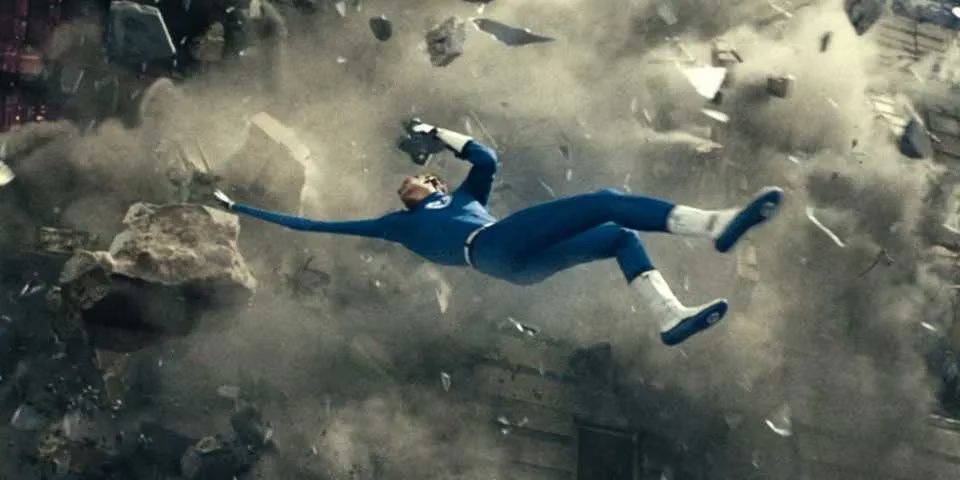
Shakman's commitment to authenticity extended beyond digital effects. He revealed that a physical 14-foot-high model of the Excelsior was built for filming, echoing the practical ingenuity of 2001: A Space Odyssey. This blend of old-school craftsmanship and cutting-edge CGI results in visuals that are as intricate as a spider's web glistening with dew—delicate yet powerful. Marvel Studios has always dazzled with digital wizardry, but here, the images are among the franchise's best, from Pedro Pascal's Reed Richards stretching to fight Galactus to Vanessa Kirby's Sue Storm cradling baby Franklin Richards.
Cast and Characters: A Fresh Take on Icons
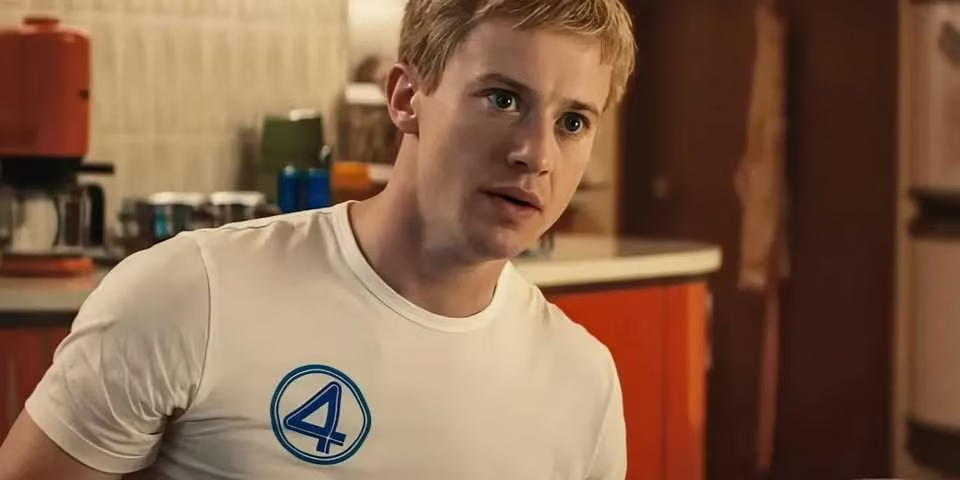
The ensemble cast brings new life to beloved roles. Pedro Pascal shines as Reed Richards, portraying him as a vulnerable leader, while Vanessa Kirby's Sue Storm exudes strength and wonder. Joseph Quinn's Johnny Storm and the ever-charming Thing, played by Ebon Moss-Bachrach, add humor and heart. Their chemistry turns the team into a family of adventurers, not just heroes. People also ask, 'Why is this cast so effective?' It's their humanizing performances—like Quinn's shocked expressions during fiery scenes—that make the fantastical elements relatable.
Reflecting on Shakman's revelations, it's clear that 'The Fantastic Four: First Steps' owes its triumph to its Nolan-inspired roots, much like the opening hinted. This labor of love has not only paid off financially but also artistically, reinvigorating the MCU with a cosmic scale that feels both nostalgic and groundbreaking. As Shakman put it, stealing from the greats isn't shameful—it's how legends are reborn, and this film stands as a testament to that truth.
Comments