The air still crackles with the electric aftermath of Ryan Coogler's supernatural masterpiece, Sinners, where Michael B. Jordan's haunting portrayal of Smoke carved an indelible scar across cinematic history. As the final frames dissolved into darkness, audiences worldwide clutched their seats in visceral agony, witnessing Smoke's mortal coil unravel amid spectral reunions and crimson-soaked epiphanies. That climactic vision of Annie and their lost child shimmered like stardust through tear-blurred eyes—a celestial embrace for a tortured soul who'd danced too long with demons. One could almost taste the Mississippi humidity and gunpowder lingering in that juke joint, where destiny's cruel blade fell upon a man torn between paternal devotion and infernal violence. 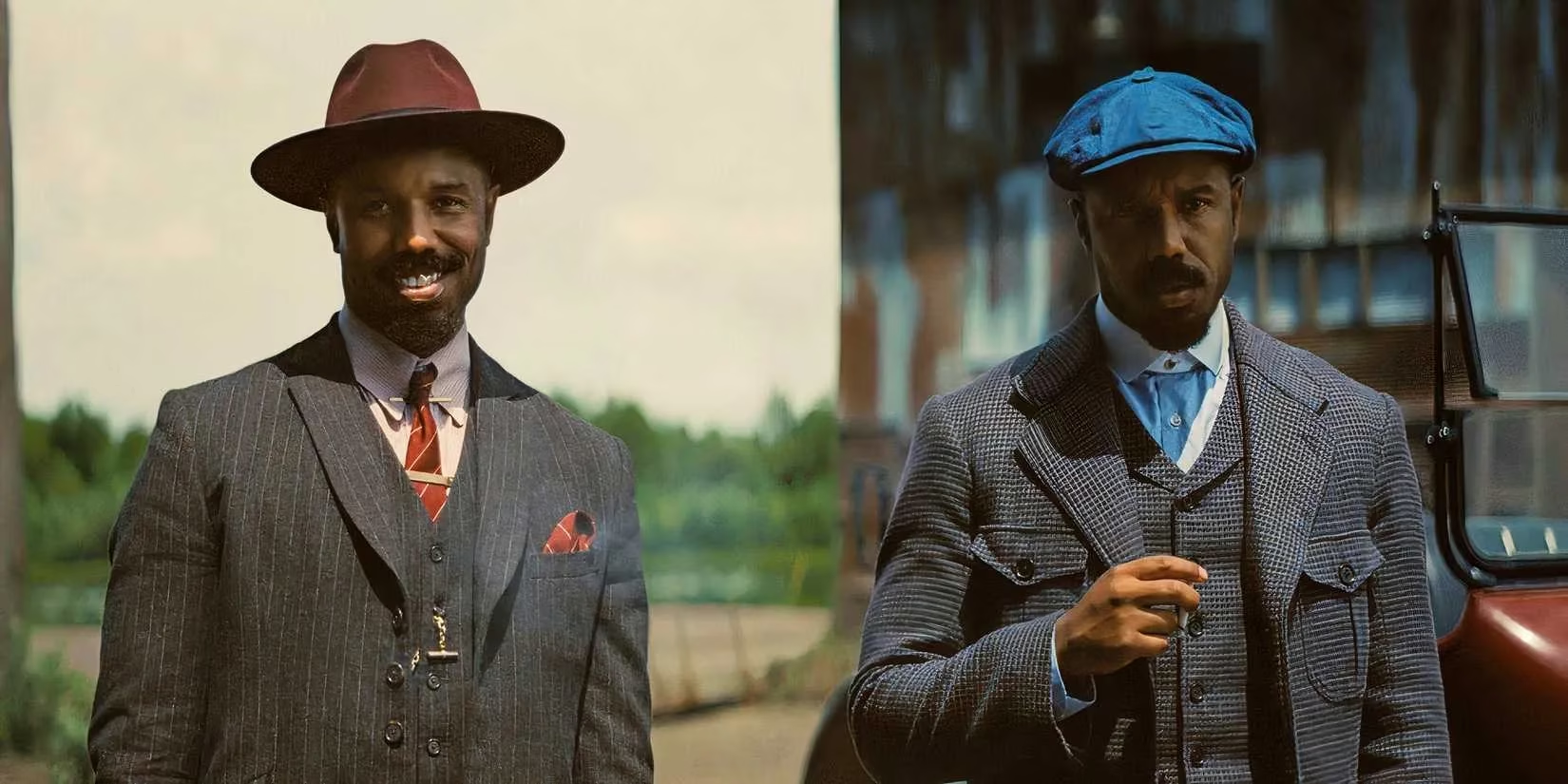
Coogler, that sorcerer of storytelling, unveils the brutal poetry behind Smoke's transcendence—a kaleidoscopic exploration of identity, guilt, and shattered redemption. Smoke's psyche wasn't merely fractured; it was pulverized beneath the weight of his own contradictions: a lethal warrior whose hands sculpted carnage, yet whose heart bled for a ghostly family. The director's revelations ignite cerebral fireworks: Smoke saw himself as both an irredeemable sinner and a soldier-savior, a dichotomy as harrowing as a knife twisting in moonlight. His proficiency in death-dealing mirrored Sammie's vocal sorcery or Stack's silver-tongued manipulations—a chilling trinity of talents forged in hellfire. Yet beneath the tailored suits and stoic glare, Smoke's pilgrimage to his child's grave whispered volumes about his true essence, a soul screaming for absolution even as he marched toward damnation.
| Twin Contrasts | Smoke | Stack |
|---|---|---|
| Core Identity | Tormented father | Scheming survivor |
| Response to Loss | Guilt-ridden sacrifice | Vampiric rebirth |
| Ultimate Fate | Afterlife reunion | Eternal decadence |
Oh, the crushing irony! While Stack reveled in vampiric immortality—swaying through the '90s with Mary in leather-clad decadence—Smoke embraced oblivion like a martyr's shroud. Their mirrored visages concealed volcanic differences: one brother consumed by spectral regrets, the other intoxicated by eternal corruption. That mid-credits scene wasn't just narrative punctuation; it was a thunderous declaration of Stack's monstrous metamorphosis, a hedonistic waltz that made Smoke's sacrificial finale ache with biblical gravitas.
Personal confession? This writer's heart hemorrhaged witnessing Smoke's flashbacks—those shards of memory where laughter once echoed before the bloodshed. His trembling hands, his hollowed eyes, the way moonlight caressed Annie's ghostly silhouette... gods, it was soul-crushing! Every frame screamed that opening the juke joint felt like a Faustian betrayal to Smoke's core. The KKK siege became a macabre ballet of atonement, each slain bigot a prayer for cleansing. And Annie's disapproval? A prophetic whisper that now echoes through film schools as a masterclass in tragic foreshadowing.
-
🔥 Smoke's internal hellscapes:
-
Fatherhood fantasies colliding with assassin instincts
-
Cemetery vigils screaming louder than gunfire
-
A bar built on brotherhood becoming his execution ground
-
💔 Stack's hollow victory:
-
Immortality tasting like ashes without kinship
-
Scheming brilliance curdling into soulless predation
-
The '90s hedonism—a gilded cage rattling with emptiness
Coogler's genius lies in the unbearable weight of that finale—no cheap resurrection, no sequel teases, just raw, unvarnished truth. Smoke's reunion with Annie wasn't fantasy; it was cosmic justice for a man who wore armor of thorns. One leaves the theater gasping, haunted by unanswerable quandaries: Can violence ever birth redemption? Do we become our truest selves only in death's embrace? The silence after credits roll isn't emptiness... it's the universe holding its breath.
Comments