In the cinematic landscape of 2026, one title looms larger than all others: Christopher Nolan's The Odyssey. From its announcement, the project has been framed as the ultimate blockbuster event—the world's most ambitious filmmaker tackling Western literature's foundational epic with a star-studded cast and groundbreaking IMAX technology. The first full trailer, released theatrically with Avatar: Fire & Ash and online on December 22, 2025, certainly delivered on that promise of scale and spectacle. Yet, for all its grandeur, the preview sparked a surprising realization. When viewed through the lens of Nolan's filmography, The Odyssey might not be the film everyone assumes it will be. In fact, it could represent a fascinating and unexpected evolution of the director's approach to storytelling and ensemble dynamics.
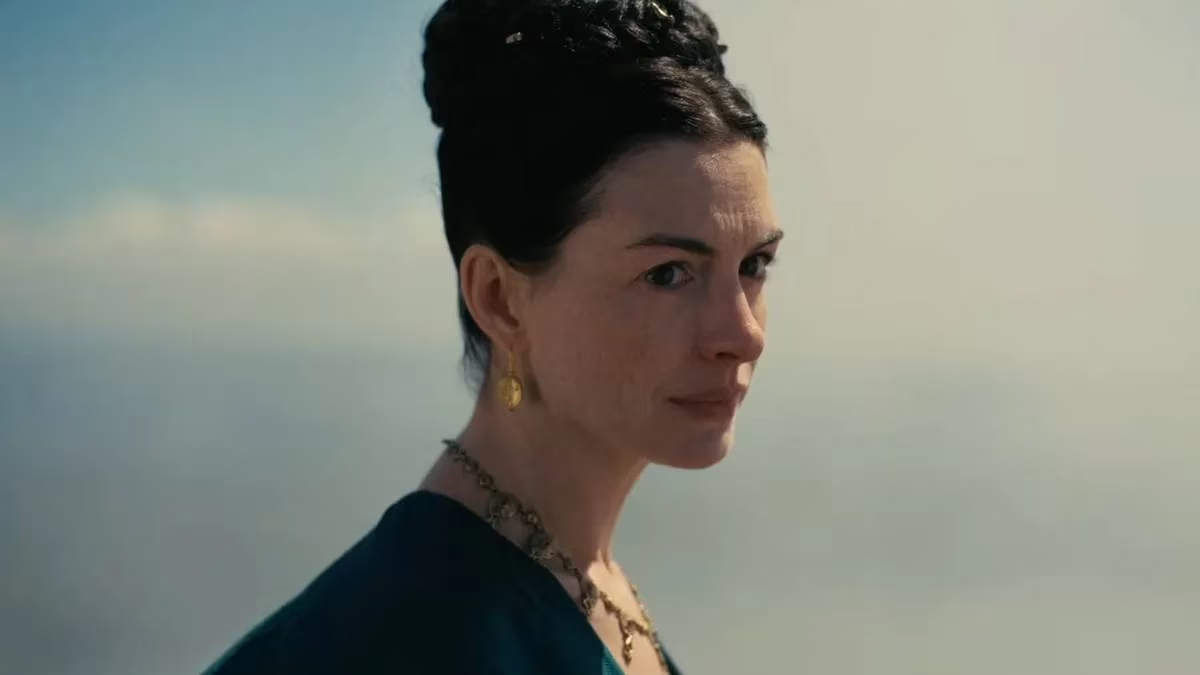
The immediate, surface-level comparison for The Odyssey is Nolan's previous film, Oppenheimer. In that historical drama, Nolan employed a specific casting strategy. He populated the screen with a vast array of recognizable faces, from major stars to beloved character actors. This served as a form of cinematic shorthand, instantly conveying the importance and gravitas of the historical figures involved in the Manhattan Project, regardless of their screen time. It was less a traditional ensemble and more a collection of distinct, iconic individuals. On paper, The Odyssey appears to follow the same blueprint. Homer's epic is famously episodic, filled with compelling characters who appear in discrete sections of Odysseus's long journey home. Nolan has cast accordingly, generating immense speculation with each star announcement:
-
Matt Damon as the cunning hero, Odysseus.
-
Tom Holland as his son, Telemachus.
-
Anne Hathaway as the loyal Penelope.
-
Zendaya as the goddess Athena.
The trailer even confirmed a major casting reveal: the actor playing the proud King Agamemnon. This star-driven approach seems designed to create a similar effect to Oppenheimer—a tapestry of famous faces bringing mythic weight to every scene.
However, the film that kept coming to mind while watching the new trailer wasn't Oppenheimer; it was Dunkirk. 😮 That 2017 World War II film certainly featured known actors, but its soul was its true ensemble—the group of young, desperate soldiers on the beach. Individual names were secondary to the collective experience of survival, fear, and resilience. Nolan's goal was to immerse the audience in that shared, visceral reality.
This is where The Odyssey reveals its potential surprise. While the trailer offers iconic shots of its principals—Odysseus staring determinedly at the horizon, Penelope awaiting her husband's return—the majority of its runtime is dedicated to something else: the crew. We see Odysseus not as a solitary legend, but as a leader among his men. The footage emphasizes their shared ordeal aboard the storm-tossed ship, their collective terror as they face monstrous threats, and the grinding fatigue of their endless voyage. The stars may drive the narrative action, but the ensemble—the nameless sailors—will live the experience. And through Nolan's immersive filmmaking, the audience is meant to live it with them.
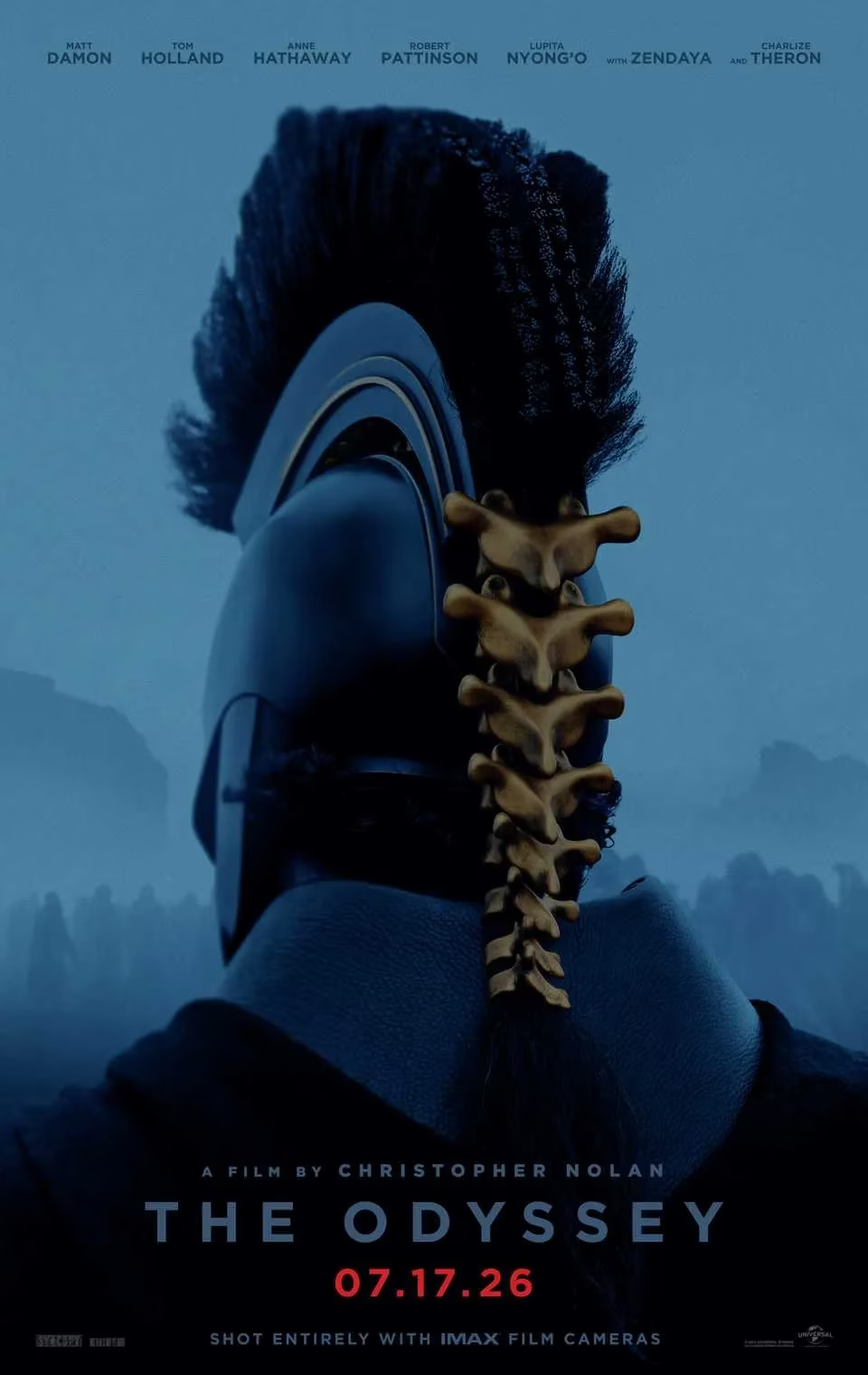
This shift in focus suggests Nolan's adaptation might be less interested in the lofty, godly pontifications often associated with Greek myth and more invested in the gritty, human reality of the journey. Think about it: the epic's most memorable sequences—the Cyclops, Scylla and Charybdis, the Sirens—are fundamentally about shared trauma and survival. By foregrounding the crew's perspective, Nolan can explore themes of camaraderie, leadership under duress, and the psychological toll of a decade-long ordeal. It transforms the story from a heroic biography into a profound study of a group pushed to its absolute limits.
Of course, no one should expect The Odyssey to skimp on spectacle. The trailer's glimpses of colossal waves, mythical creatures, and epic battles are merely a taste. The film's production, utilizing the latest generation of IMAX cameras, promises a sensory bombardment unlike any other. But the genius may lie in how Nolan wields that scale. Instead of using it solely for detached, awe-inspiring wide shots, he could deploy it to amplify the intimacy of the crew's struggle—making the crashing sea feel more overwhelming, the monster's cave feel more claustrophobic, and the vast, empty ocean feel more isolating.
So, what does this mean for the final film? It positions The Odyssey as a potential hybrid of Nolan's greatest strengths: the intellectual and historical depth of Oppenheimer meets the immersive, experiential tension of Dunkirk. The star power provides anchor points and narrative clarity, while the ensemble work delivers the emotional and visceral punch. This approach could make Homer's ancient tale feel startlingly immediate and relatable for a 2026 audience. We won't just watch Odysseus's journey; we'll feel the salt spray, share the exhaustion of the rowers, and jump at the shadows in the cave alongside his men. In re-framing the epic through the lens of collective experience, Christopher Nolan might not just be adapting The Odyssey—he could be redefining what a mythological blockbuster can be.
Comments