There’s a delicious, almost scandalous secret stitched into the 1850s frock coats and billowing shirts of Guillermo del Toro’s Frankenstein. While Mary Shelley’s ghost was no doubt nodding approvingly at the faithful gothic gloom, another spirit roamed the costume department—a Starman. Costume designer Kate Hawley let slip in a 2025 reveal that the flick’s sartorial swagger owes a substantial debt to David Bowie, and honestly, the moment you hear it, you can’t unsee it. Oscar Isaac’s Victor Frankenstein, all cheekbones and tortured genius, suddenly radiates the kind of chaotic, androgynous glamour that could only come from the Thin White Duke himself. It’s not every day a mad scientist gets his wardrobe inspiration from a rock god, but then again, del Toro’s world was never going to settle for plain black top hats.
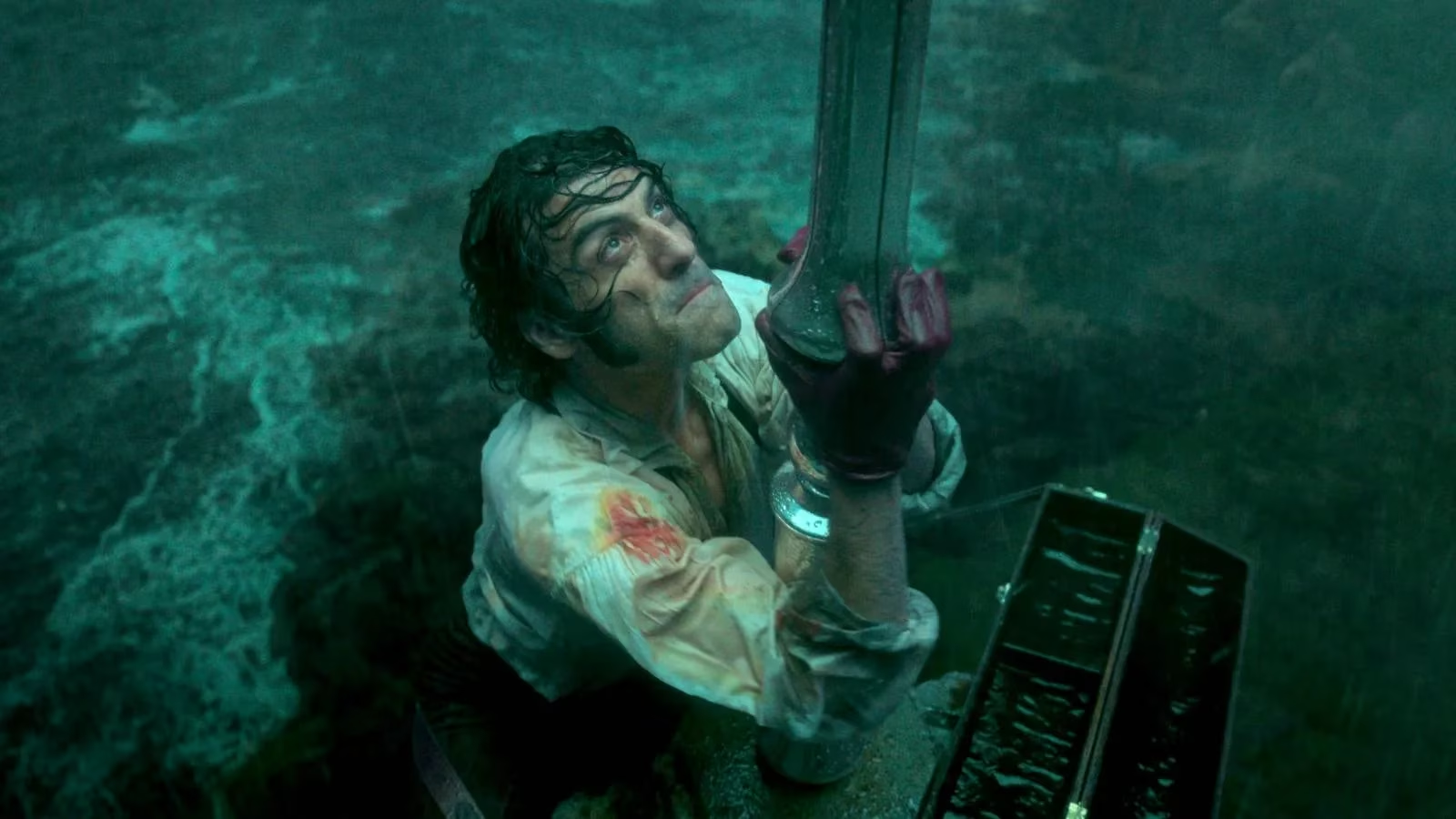
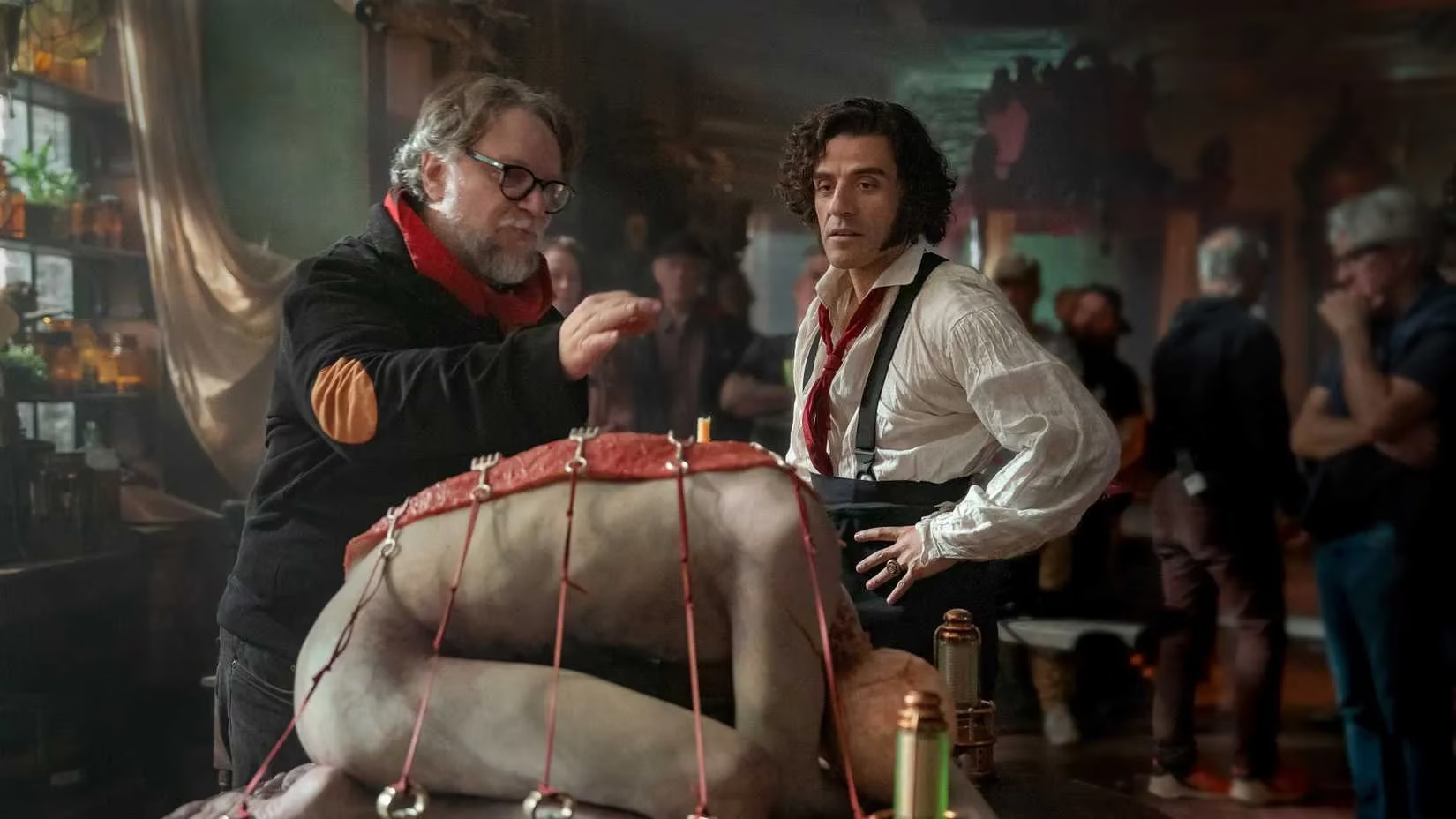
Now, let’s wander backstage for a moment. When Hawley first stepped into del Toro’s beautifully unhinged vision, she felt what any sane person would—"trepidation as well as excitement." You know that feeling when you’re about to dress a legend and the director whispers, “I want this world to be bigger and larger than normal”? Your sewing machine suddenly feels very, very small. Del Toro was adamant that this shouldn’t be another dusty period piece with a forest of black top hats. He pushed for a modern sensibility, something that hummed with the technological upheaval of war and the electricity of rock ‘n’ roll. So Hawley started pulling from the cosmos. Bowie, obviously. Prince, too—Isaac himself threw that purple genius into the mood board. The result is Victor Frankenstein looking less like a Victorian academic and more like a tortured artist who might break into a ballad at any second.
What landed on screen is a gorgeous mashup, a nod to Mary Shelley’s own era but with a definite strut. Hawley insisted the costumes never lost that connection to Shelley’s world, but del Toro’s craving for contemporary flourishes pulled the threads into something exhilarating. Victor’s silhouette carries a sharp, sculpted edge—think Bowie’s Berlin phase crashing into 1850s tailoring. It’s a look that says, “I’m about to reanimate the dead, and I’ll look fabulous doing it.” The creature himself, played by the brooding Jacob Elordi, got the opposite treatment: raw, tactile, painfully human despite the stitches. The contrast between the two becomes its own kind of dialogue—the maker as a glam rock poet, the made as a tragic, wandering soul.
Speaking of dialogue, the critics have been chattering like magpies ever since the film dropped on Netflix back in late 2025. Frankenstein quickly amassed an 85% critics’ score on Rotten Tomatoes, with audiences loving it even more, shoving the Popcornmeter up to a juicy 95%. Jack Walters at ScreenRant tossed it a seven out of ten, praising the "luscious production design" and the performances, even while taking a gentle swipe at the pacing. Honestly, when a film looks this good, you forgive a few meandering minutes. The Netflix budget appears to have been fed directly into del Toro’s imagination, resulting in set pieces that feel “spiritually torn from Mary Shelley’s mind.” And those set pieces are draped in outfits that practically deserve their own credit sequence.
Awards whisperers are already polishing their crystal balls for the 2026 Oscars. It’s hard to imagine the Academy snubbing the film in below-the-line categories like production design and, fingers crossed, costume design. After all, when you’ve got Bowie’s essence woven into every cuff and collar, you’re not just dressing a character; you’re dressing a vibe. The question isn’t whether Hawley’s work will get a nomination—it’s whether the ghost of Ziggy Stardust will be hovering near the podium. Imagine the acceptance speech: “I’d like to thank Mary Shelley, Guillermo, and, uh, the Goblin King.”
Even as we settle into 2026, the film still clings to the cultural conversation. Word of mouth has been sturdier than Frankenstein’s monster himself, which is saying something. Viewers finish the film satisfied and a little emotionally bruised, the way all good gothic horror should leave you. The pairing of Oscar Isaac and Jacob Elordi turned out to be as magnetic as anyone had hoped, and del Toro’s ability to blend bleeding-heart romance with grotesque beauty remains unmatched. But let’s be honest: part of the magic is the quiet subversion of seeing a 19th-century figure looking like he just stepped out of a Diamond Dogs tour bus. Without Bowie and Prince whispering through the fabric, we might have gotten a perfectly respectable period drama. Instead, we got something that swaggers, that dares to be beautiful and broken all at once. And really, isn’t that what Frankenstein’s monster has always been about?
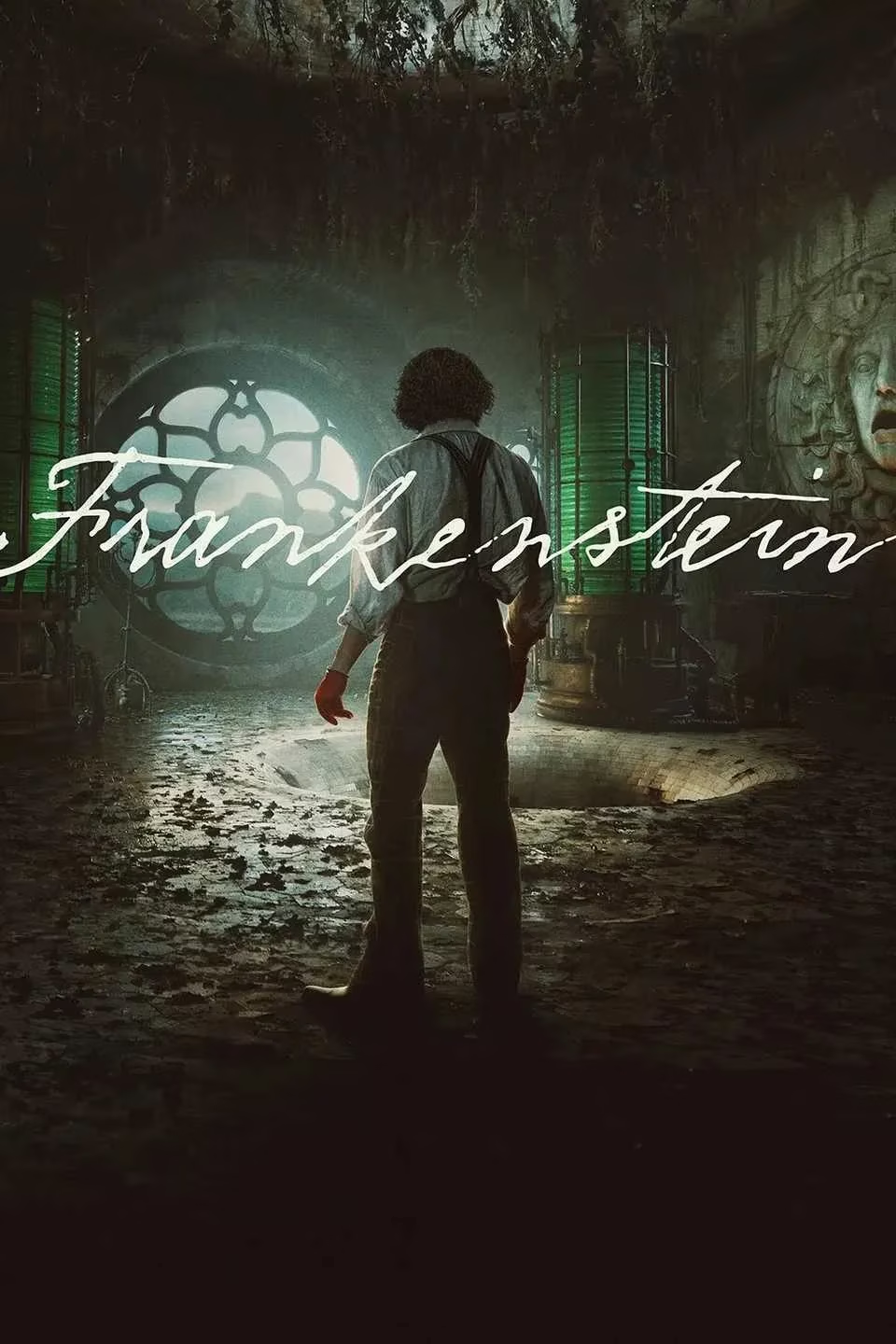
At the end of the day, the stitching tells a story of its own. A stitch here borrowed from a glam rock icon, a button there from a purple funkmaster. The costumes are a quiet rebellion against the tyranny of historical accuracy, proving that a little anachronism can be more truthful than a museum mannequin. Next time you watch Victor Frankenstein adjust a lighting rod or sweep dramatically through a laboratory, just remember: somewhere in the great beyond, David Bowie is probably smirking and adjusting his own celestial cravat.
Comments