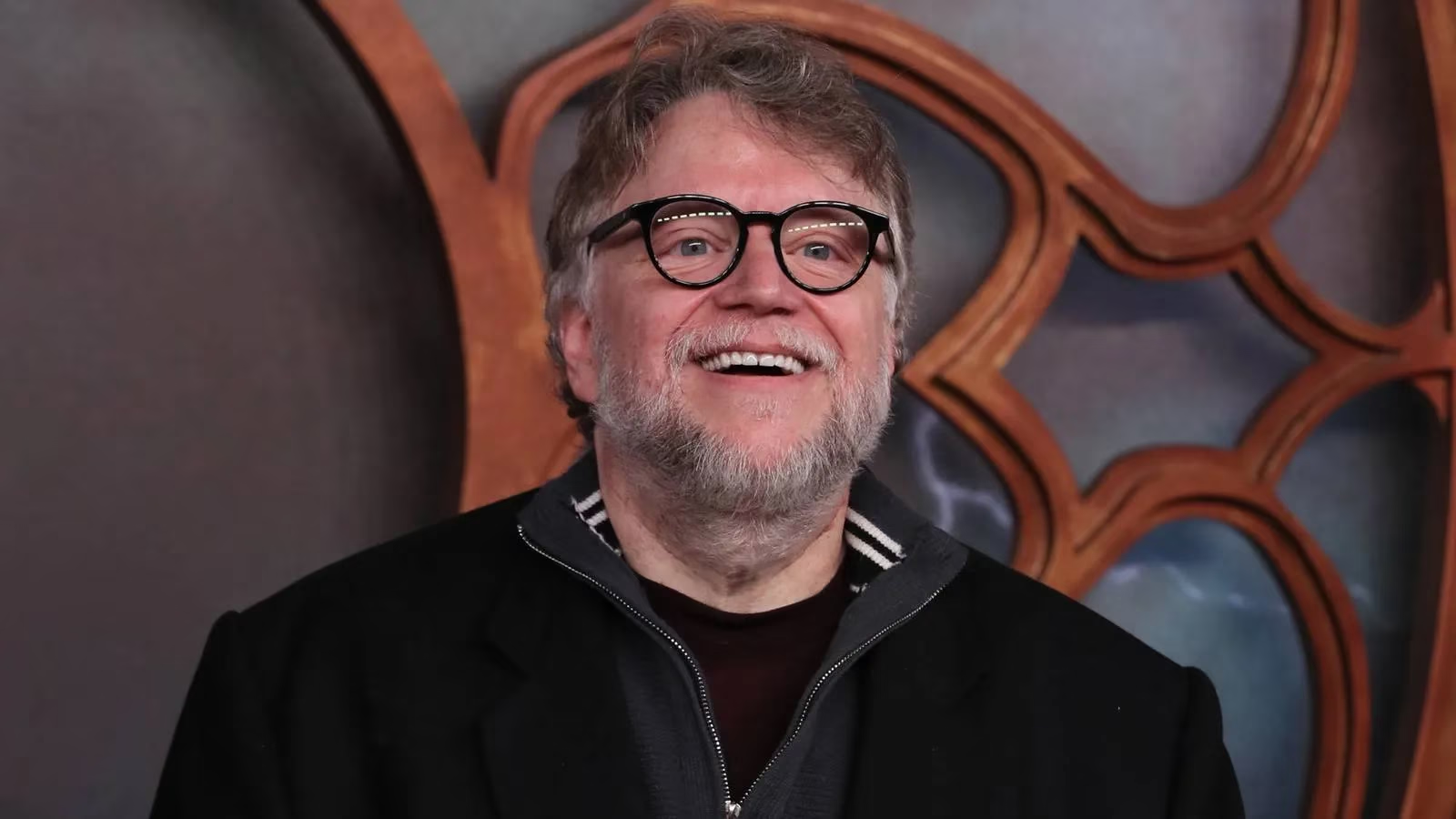
As I reflect on the recent year in cinema, one voice continues to resonate with profound and startling honesty: that of Guillermo del Toro. In 2025, the acclaimed director of Pan's Labyrinth and The Shape of Water finally realized a lifelong dream with his Netflix adaptation of Frankenstein, starring Oscar Isaac and Jacob Elordi. Yet, it was his candid reflections on life's end at the Marrakech Film Festival that truly captured global attention. The filmmaker, now 61, declared himself a "big fan of death," a statement that cuts against the grain of a society obsessed with longevity. "Why should you want to live longer?" he asked. "I’m certainly looking forward to it, because it’s the day you go, ‘Well, tomorrow I won’t have any problems.'" In a world often terrified of the inevitable, del Toro's perspective is both a challenge and a strange comfort. It prompts a question: is our fear of death a denial of life's natural arc?
The Emotional Core of Creation
For del Toro, this philosophical stance is deeply intertwined with his artistic process and cultural identity. He described experiencing a form of "postpartum depression" following the completion of Frankenstein, a project he had nurtured for decades since first connecting with Mary Shelley's novel and the 1931 film as a child. He frames emotion not as a weakness, but as a vital, scarce resource in modern civilization. "I’m Mexican, so emotion is big for me," he explained. "We are in a horrible moment in which cynicism simulates intelligence. If you say, ‘I believe in love,’ you’re a fool. If you say, ‘I don’t believe in love,’ you’re a wise man. I don’t agree with any of that." This heartfelt defense of vulnerability is the very soul of his Frankenstein, a story about the catastrophic consequences of creating life without love.
Embracing the Ridiculous to Achieve Success
How does one channel such raw emotion into a monumental project? Del Toro's answer is to be radically open to failure. "You have to be completely open to failure if you’re ever to experience success…you have to be ready to be ridiculous. So I’m ready to be ridiculous at all times," he stated. This Romantic ideal—taking a huge step toward the possibility of ridicule—was essential for bringing his vision to life. It's a lesson for any creative endeavor: true innovation requires the courage to fall flat on one's face. Was this gamble worth it for his Frankenstein? The resounding critical and audience response suggests it was.
A Monster-Sized Success Story
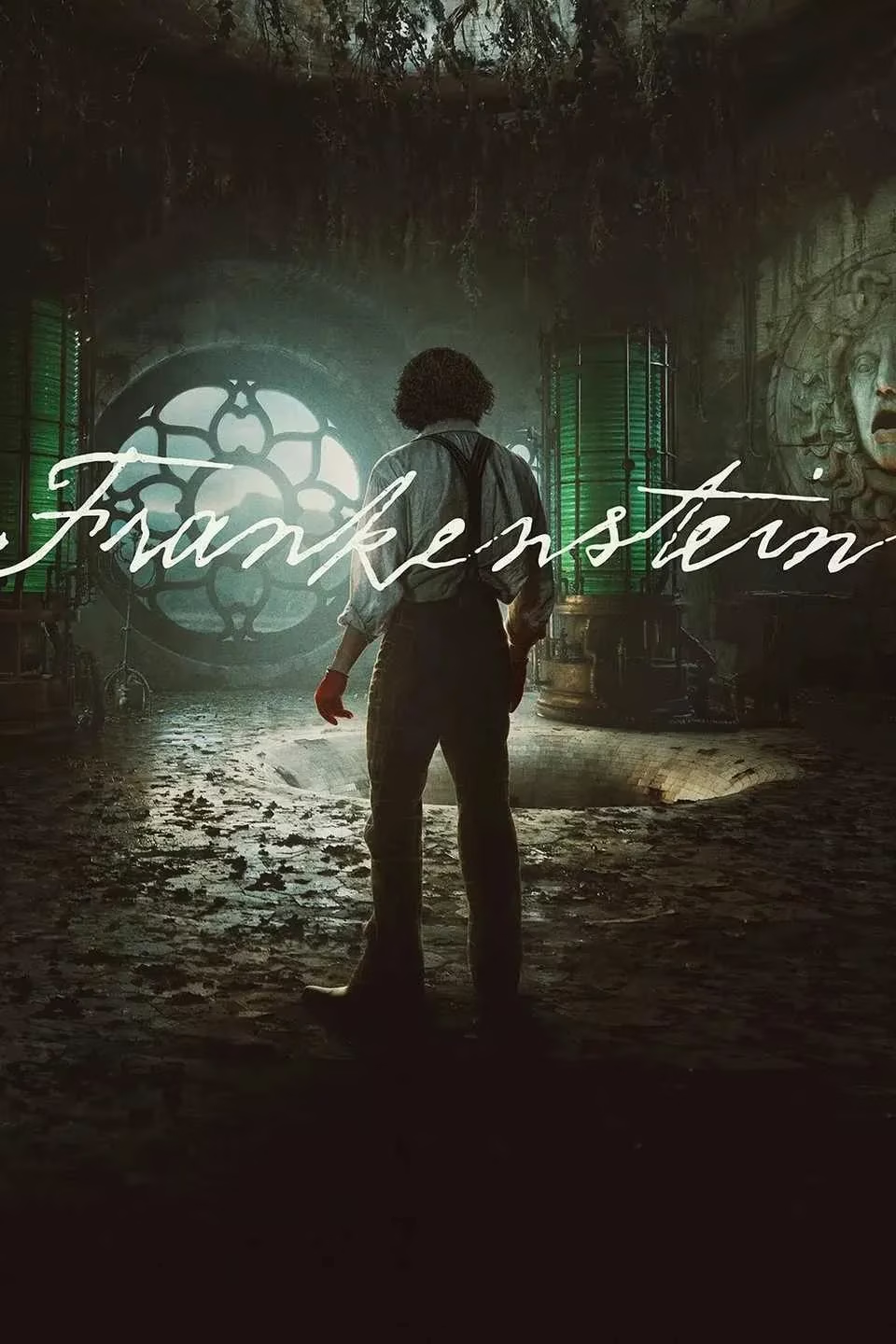
By all measurable accounts, Frankenstein has been a triumph. The film boasts an impressive 86% critics' score on Rotten Tomatoes, with reviews praising its emotional depth and compelling take on humanity. Even more telling is the 94% audience score, indicating a powerful connection with viewers. Its accolades are substantial:
-
🏆 Named one of the American Film Institute's Top 10 Films of 2025 alongside major releases like Avatar: Fire and Ash and Wicked: For Good.
-
🏆 Winner of several film festival awards in the past year.
-
🎬 A crowning achievement in a 32-year career that began with Cronos in 1992.
The film's success validates del Toro's thematic focus. Critics have called it an "emotional and compelling film about humanity," directly feeding into his public musings on life, love, and emotion. The movie serves as a perfect canvas for his philosophy: it explores the dire consequences of trying to circumvent death and the essential need for emotional connection.
Life, Death, and Legacy
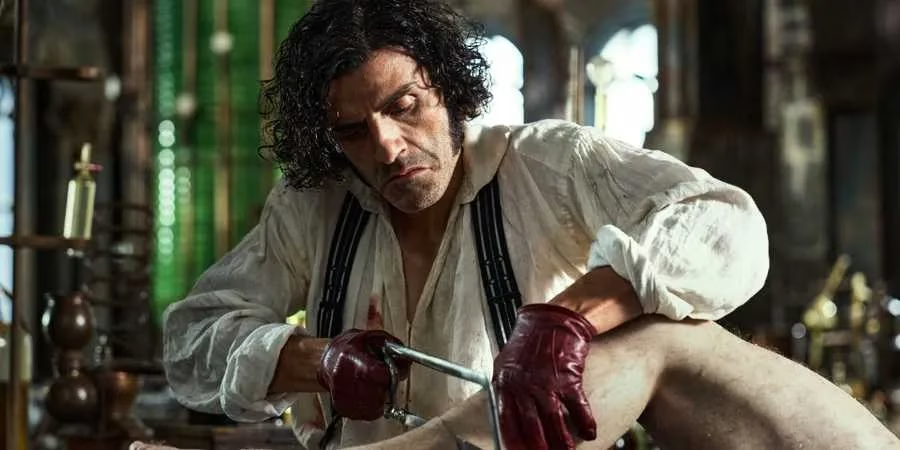
Now, in 2026, we can look back on del Toro's comments not as morbid fascination, but as the reflections of an artist at peace with his journey. Having achieved this decades-long dream and contributed a significant work to the cultural canon, he expresses gratitude for his accomplishments. His words about death reflect the central themes of his masterpiece: acceptance of the natural cycle. He sees death not as an end to be feared, but as a release from earthly worries—a final, peaceful tomorrow with no problems.
| Film Element | Connection to Del Toro's Philosophy |
|---|---|
| Victor Frankenstein's Quest | The folly of trying to conquer death and play god. |
| The Creature's Loneliness | The tragic result of creation devoid of emotional love. |
| The Snowy Landscapes | A visual metaphor for the cold, unforgiving reality of existence without connection. |
| The Critical Reception | Validation that stories about raw emotion and humanity still resonate powerfully. |
In conclusion, Guillermo del Toro's Frankenstein and his personal revelations form a cohesive whole. The film is a monumental exploration of creation and consequence, while his views on death and emotion provide a poignant, real-world framework for understanding it. He has given us a timeless story and a provocative, heartfelt perspective on what it means to live—and to stop living—authentically. As he looks forward to a future without problems, we are left with a rich legacy of art that insists we feel deeply, love openly, and, perhaps, one day, accept our end with the same grace he anticipates. Isn't that the ultimate human story?
Comments