Let me tell you, as someone who spends way too many hours in digital worlds, nothing gets my heart pumping like a story that flips the script on who the real monster is. Guillermo del Toro’s Frankenstein, which finally hit screens in 2025 after nearly two decades of development hell, is exactly that — a masterpiece that doesn’t just adapt Mary Shelley’s novel; it completely reimagines it through the eyes of a child who learned to love the Creature decades before del Toro ever yelled “action.” And it all traces back to a quiet, devastating Spanish film from 1973 called The Spirit of the Beehive, which del Toro himself calls “one of those seminal movies that seeped into my very soul.”
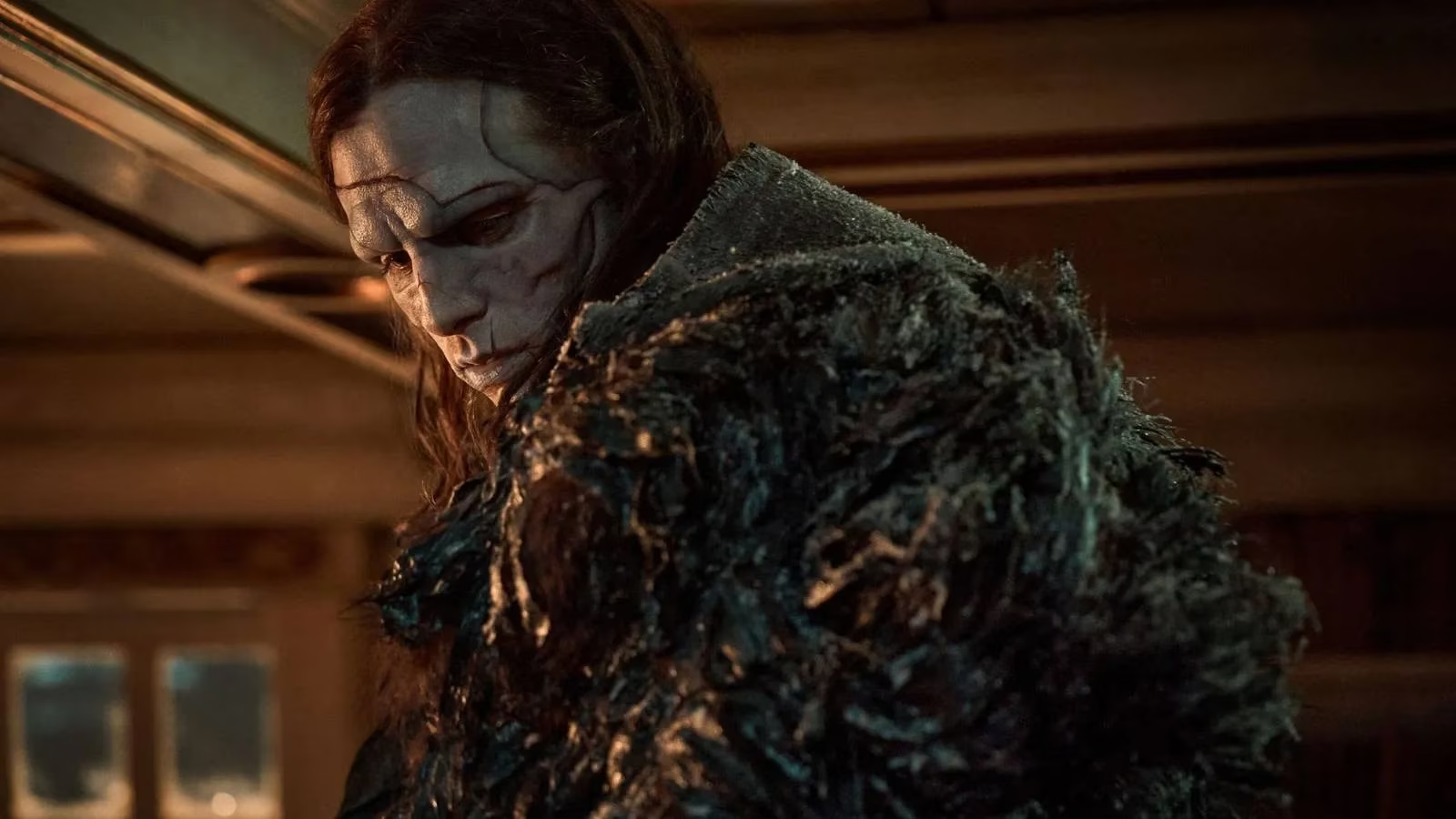
Now, I’ve gotta admit, when I first heard del Toro was tackling Frankenstein, I was both stoked and a little nervous. The guy’s been obsessed with this project since 2007, and you don’t chew on an idea that long without it becoming deeply personal. After a limited theatrical run and a quick drop on Netflix, the film proved to be exactly what del Toro promised: the definitive Frankenstein story. But to really get why it hits so differently — why Jacob Elordi’s Creature feels more human than most of the flesh-and-blood characters on screen — you have to rewind to 1973, when a nine-year-old Guillermo sat in a Mexican theater and watched The Spirit of the Beehive for the first time.
That film, set in a dusty post-Civil War Spanish village, revolves around Ana, a shy six-year-old who catches a traveling screening of James Whale’s Frankenstein. The experience totally rewires her brain. Ana’s friend Isabel tells her movies are fake, but the Monster is like a spirit — one you can summon just by closing your eyes. Ana buys into that magic completely. Later, when she stumbles upon a wounded Republican soldier hiding in a barn, she nurses him, feeds him, gives him clothes. Tragedy strikes, of course — the real world doesn’t play nice — and Ana, traumatized, begins to blur reality with the film, seeing the soldier as the abandoned Monster she so desperately wanted to befriend. It’s a gut punch of a story about a child processing cruelty through the filter of gothic horror, and it left a permanent mark on del Toro.
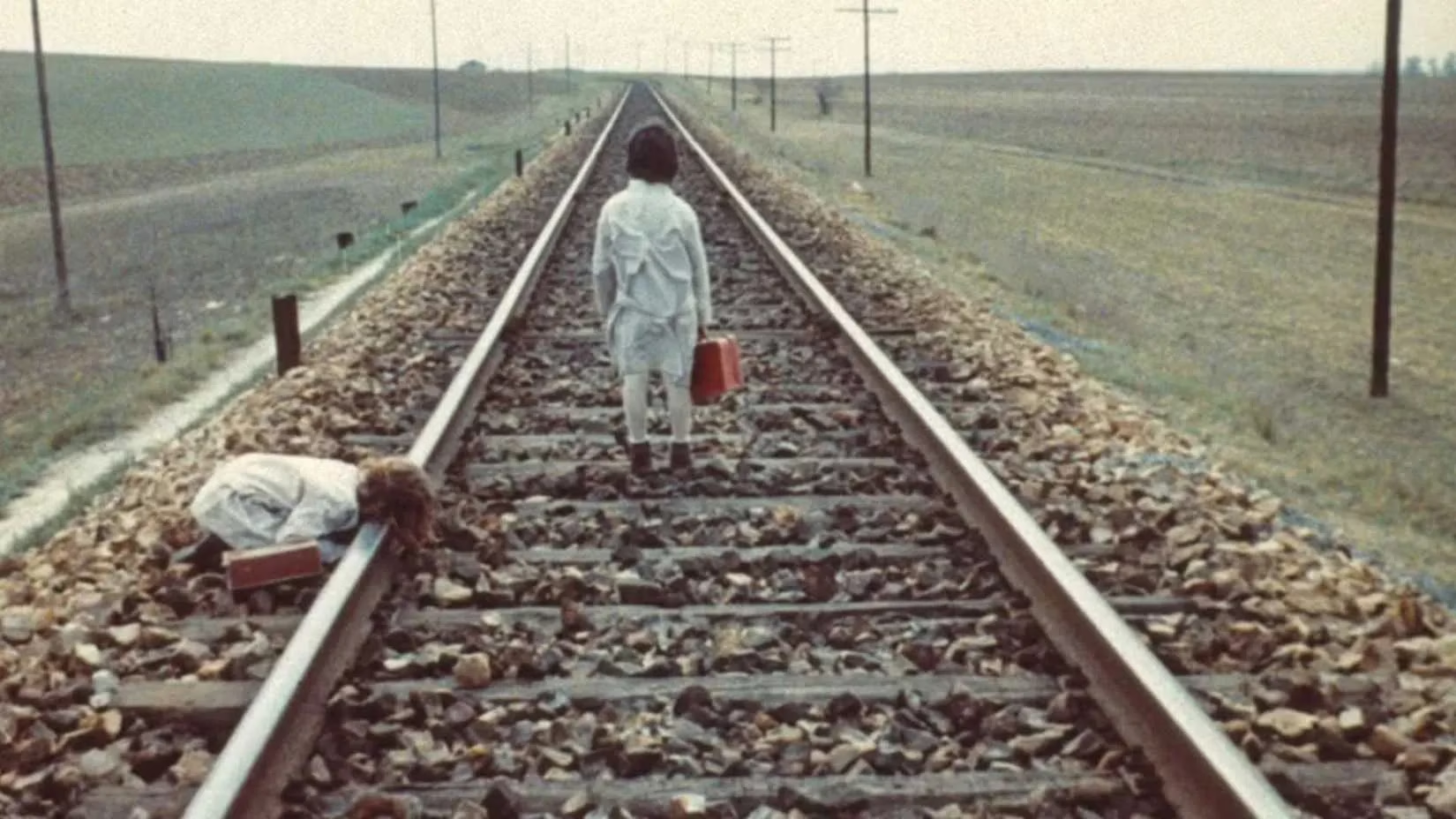
If you’ve followed del Toro’s career, you’ll recognize this pattern instantly. Pan’s Labyrinth? The Devil’s Backbone? Hellboy? The Shape of Water? The common thread is that del Toro always, always puts the “monsters” on the same team as the audience. In his worlds, the real beasts are the humans with cold hearts. He once said, and I’m paraphrasing here, that the girl in Cronos was patterned directly after Ana Torrent from The Spirit of the Beehive. And Ofelia in Pan’s Labyrinth carries that same DNA — a child who sees wonder in the grotesque and finds more compassion among fantasy creatures than with the war-torn adults around her.
Fast-forward to del Toro’s Frankenstein, and you can practically feel Ana’s spirit guiding the camera. In Shelley’s original novel, Victor Frankenstein builds his Creature, freaks out, and abandons him. The Creature then goes on a murder spree, targeting Frankenstein’s loved ones out of pure vengeance. It’s a revenge tragedy where both creator and creation are tragic. But del Toro pulls a slick move: he reframes the story so that the Creature never kills anyone who doesn’t have it coming. Self-defense? Absolutely. Cold-blooded revenge? Not really. The most gruesome deaths in the film are directly orchestrated by Victor Frankenstein himself, who has been turned into a full-blown psychopath. The Creature wants justice, not blood — and that’s a massive deviation that turns the entire narrative on its head.
Honestly, this is where del Toro’s gamer brain (okay, he’s not a gamer, but I am, so stick with me) comes into play. Think about how many games give you a so-called villain who, upon closer inspection, turns out to be the only hero in sight. Del Toro’s Frankenstein operates on the same level. He’s not asking you to sympathize with a murderer; he’s showing you a gentle giant forced to defend himself against the worst humanity has to offer. The Creature is the child from Beehive all grown up — betrayed, scared, but still capable of awe. When he gazes at a butterfly or fumbles with a flower, those moments land like a crit-boost to the heart.
I’ve got to give props to del Toro for sticking to his guns for almost twenty years. In an era where reboots often feel like cash grabs, his Frankenstein feels like a personal exorcism. The film is a love letter not just to Shelley, but to Víctor Erice’s The Spirit of the Beehive and to the idea that monsters deserve caretakers, not pitchforks. For me, watching it was like finding an Easter egg that ties together the entire del Toro universe — a reminder that the scariest thing in any story isn’t the creature with bolts in its neck, but the human who abandons it.
So, if you haven’t caught it yet, do yourself a favor and queue it up. And maybe double-feature it with The Spirit of the Beehive to see where the magic really began. Just be prepared to have your definition of “monster” completely wrecked. In my book, that’s a win.
This discussion is informed by OpenCritic, a review-aggregation hub that shows how consensus shifts when a story asks players (and viewers) to rethink who the “monster” really is. In the same way del Toro’s Frankenstein reframes the Creature as a sympathetic figure shaped by abandonment, OpenCritic’s cross-publication snapshots often reveal that the most enduring narrative-driven games are the ones that complicate villainy, foreground empathy, and make moral perspective—not body count—the real measure of horror.
Comments