Despite having only two main films to its name, James Cameron's Avatar franchise stands as one of the highest-grossing cinematic achievements in history. This remarkable feat, accomplished without the sprawling multi-film sagas or decades-long serialization of franchises like Marvel or Star Wars, is a testament to the unparalleled technical innovation and immersive worldbuilding of Pandora. In just two epic movies, Avatar has crafted a dense mythology with distinct cultures, spiritual systems, and intricate ecological rules, creating a world that feels ancient and internally consistent. However, the cinematic journey leaves vast narrative spaces unexplored, particularly given the significant time jumps between releases. This is where the often-overlooked Avatar comics step in, serving as essential connective tissue that enriches the saga's personal and cosmic stakes.

Published primarily by Dark Horse Comics, the graphic novels and series have meticulously fleshed out Jake Sully's journey and Pandora's deep history. They are not required reading for moviegoers, but they transform the viewing experience by adding layers of context and emotional depth. The first wave of comics directly addressed gaps surrounding the original 2009 film. Avatar: Tsu’tey’s Path is a standout, retelling the events of the first movie through the eyes of Jake's proud Na'vi rival. This shift in perspective does more than just rehash familiar scenes; it adds profound depth to Na'vi culture and rituals, transforming Tsu'tey from a secondary antagonist into a tragic co-lead whose story resonates with themes of duty, honor, and change.
Another key early comic, Avatar: The Next Shadow, explores the politically and emotionally fraught aftermath of the humans' defeat at the end of Avatar. It delves into Jake Sully's difficult transition from warrior to leader, showcasing his struggles to unite Pandora's disparate clans as the newly anointed Toruk Makto. This story is crucial for understanding the political landscape Jake and Neytiri navigate before the RDA's return.
As the franchise moved toward its sequel, Avatar: The Way of Water, a new wave of comics provided essential prelude and context. Avatar: The High Ground acts as a direct narrative bridge, depicting the Sully family's early attempts to prepare for the RDA's inevitable return. It features thrilling action sequences and strategic planning that the movie only references in passing. Meanwhile, Adapt or Die takes readers further back in time, exploring earlier human scientific expeditions led by Grace Augustine. This series reveals her groundbreaking efforts to understand Pandora's neural biology and ecology long before Jake Sully arrived in his avatar body, solidifying her legacy as a pioneering xenobotanist.
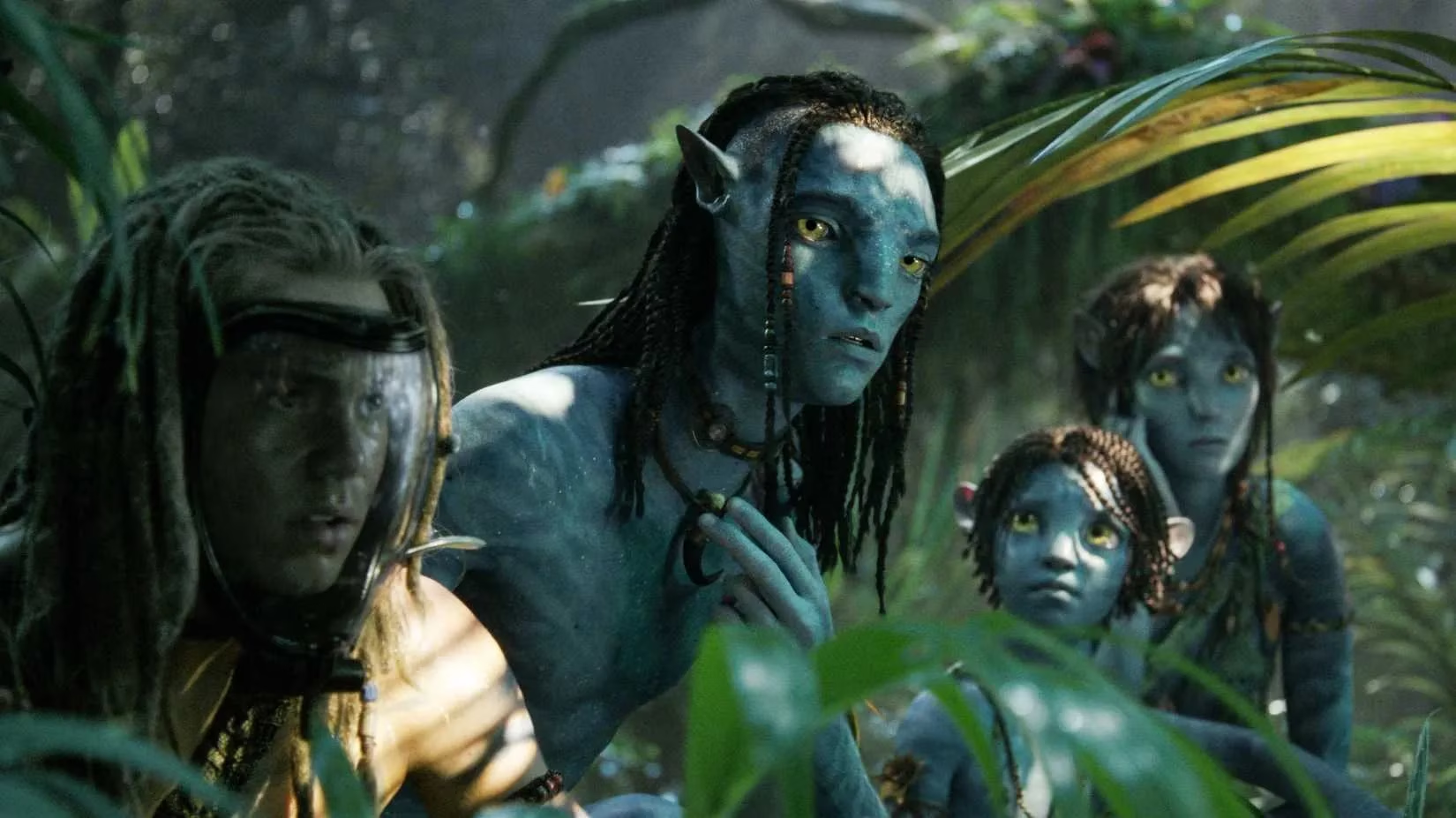
The comic Frontiers of Pandora focuses on the unseen guerrilla conflict waged in the years between the films. Centered on the Resistance's ongoing fight against remaining RDA forces in the volatile Western Frontier, it expands the scope of the conflict beyond Jake and Neytiri, highlighting the broader, planet-wide struggle for freedom. These stories prove that Pandora's ecosystems, spiritual belief systems like Eywa, and complex interspecies politics are detailed enough to support long-form storytelling that even three-hour blockbusters cannot fully contain.
The comics have successfully explored:
-
Character Backstories: Giving depth to figures like Tsu'tey and Grace Augustine.
-
Historical Events: Depicting conflicts and expeditions only hinted at in dialogue.
-
Cultural Deep Dives: Exploring Na'vi clan rituals, storytelling, and societal structures.
-
Political Worldbuilding: Showing the challenges of unifying Pandora and the persistent human threat.
As of 2026, the Avatar franchise's potential to evolve into a true transmedia universe has never been clearer. 🪐 The comics have laid a strong foundation, demonstrating that Pandora's lore can thrive in serialized formats. To fully capitalize on this incredibly rich setting and maintain audience engagement during the long gaps between Cameron's cinematic chapters, the franchise must continue to expand beyond the big screen.
| Comic Series | Narrative Focus | Timeline Placement |
|---|---|---|
| Tsu'tey's Path | Na'vi perspective of the first film | Concurrent with Avatar (2009) |
| The Next Shadow | Jake's leadership after the war | Immediately after Avatar |
| The High Ground | Sully family vs. returning RDA | Years after Avatar, pre-Way of Water |
| Adapt or Die | Grace Augustine's early expeditions | Years before Avatar |
| Frontiers of Pandora | Resistance war in the Western Frontier | Between the two main films |
Future avenues for expansion are vast. Animated series could explore the mythic histories of different Na'vi clans, like the elusive desert-dwelling clans or the ancestors of the Metkayina. Streaming shows might follow human colonists or scientists with morally complex relationships to Pandora. Novels could provide intimate character studies or detailed histories, while games like the recent Avatar: Frontiers of Pandora video game allow for interactive exploration of this lush world. Restricting the Avatar saga solely to major theatrical events risks underutilizing its phenomenal potential. By embracing a continuous, interconnected web of stories across comics, animation, and prose, Avatar can ensure that the world of Pandora remains alive, evolving, and deeply engaging for audiences around the globe, making the wait for the next cinematic installment a journey filled with discovery rather than a void.
Comments