It’s been over a year since Guillermo del Toro’s Frankenstein first crept into our screens, yet I still remember that November evening in 2025 like it was a stitch in my own memory. I had curled up on the couch, Netflix queued, expecting another competent gothic tale. By the time the credits rolled, my heart was a cemetery of shattered expectations—because this was no mere adaptation. It was a resurrection. Del Toro didn’t just stitch together a story; he built a breathing cathedral from shadow and empathy, where every frame dripped with the sorrow of unloved things. The audience response that followed felt less like a rating and more like a collective exhale, a wave of recognition that pushed this film to a record the director had never touched before.

In the weeks after its release, I watched the numbers climb on Rotten Tomatoes. The critic score settled at a solid 86%, but it was the Popcornmeter that truly turned heads. Audiences, that wild and often unforgiving tide, gave it a 95%—the highest audience score of any del Toro film. The metric rose like a vine snaking toward unthinkable sunlight, overtaking Pan’s Labyrinth (91%) and the Oscar-winning Pinocchio (90%). For a director whose filmography is paved with beloved strangeness, this felt like a homecoming parade that nobody wanted to end. I’d been tracking his work since The Devil’s Backbone (89%) and remembered the stoic loyalty of Pacific Rim fans (77%), the silent adoration for The Shape of Water (73%), even the quieter corners of Cronos (69%). But here, the monster himself—more human than any of us—had drawn a line straight into the audience’s collective chest.
Of course, if you stretch beyond cinema, the director has technically landed higher numbers. Trollhunters: Tales of Arcadia sits at 96%, and Wizards at 92%. But there’s a difference between a lovingly crafted animated series and a live-action horror-drama that stares directly into the abyss and asks it to blink first. Frankenstein doing what it did on the Popcornmeter is akin to a black-and-white photograph suddenly bleeding color—familiar yet startlingly new. The data alone doesn’t capture it: week after week, the film stayed atop Netflix’s Top 10 in the U.S., rubbing shoulders with holiday comedies and action flicks, a dark poem in a sea of pop songs. By the time 2026 rolled around, its streaming reign had only cemented the idea that audiences were hungry for something that hurt beautifully.
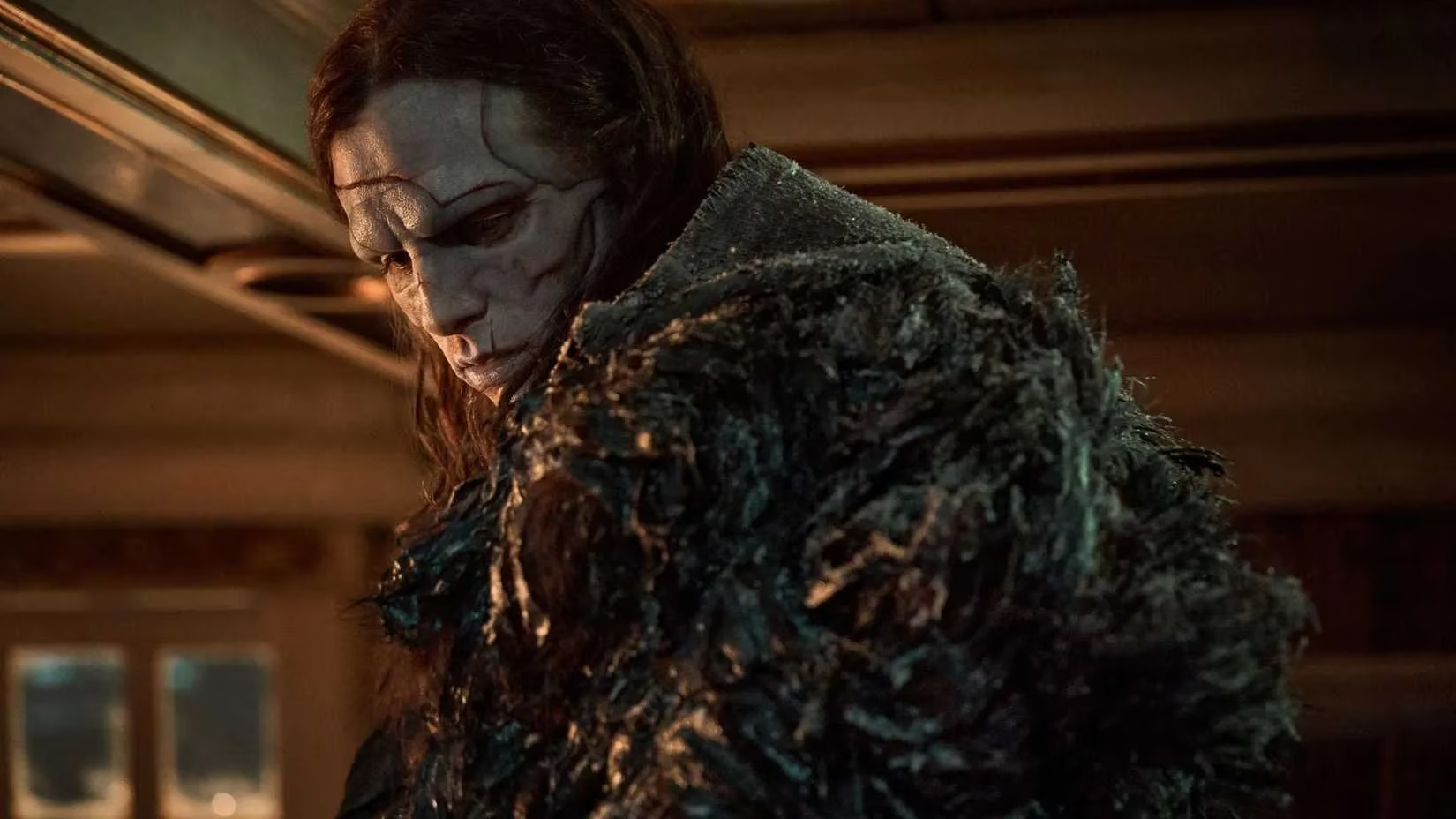
The feat becomes even more surprising when you scan del Toro’s full cinematic landscape. Mimic, his sole film to fall below 50% with audiences (37%), sits at the rocky bottom. Then there’s Blade II (68%), Hellboy (66%), and the moody labyrinth of Nightmare Alley (68%)—all respectable, none stratospheric. Frankenstein, by contrast, shattered the ceiling like a lightning bolt through a stained-glass window. Oscar Isaac’s Victor Frankenstein, with that obsessive gleam of a man chasing divinity in a basement, and Jacob Elordi’s Creature—stitched together with equal parts innocence and fury—gave the story a heartbeat that felt disturbingly contemporary. I still remember the way the film made the Creature’s loneliness a mirror, each wound reflecting parts of myself I’d rather not name. That’s the magic del Toro wields: he makes the grotesque tender.
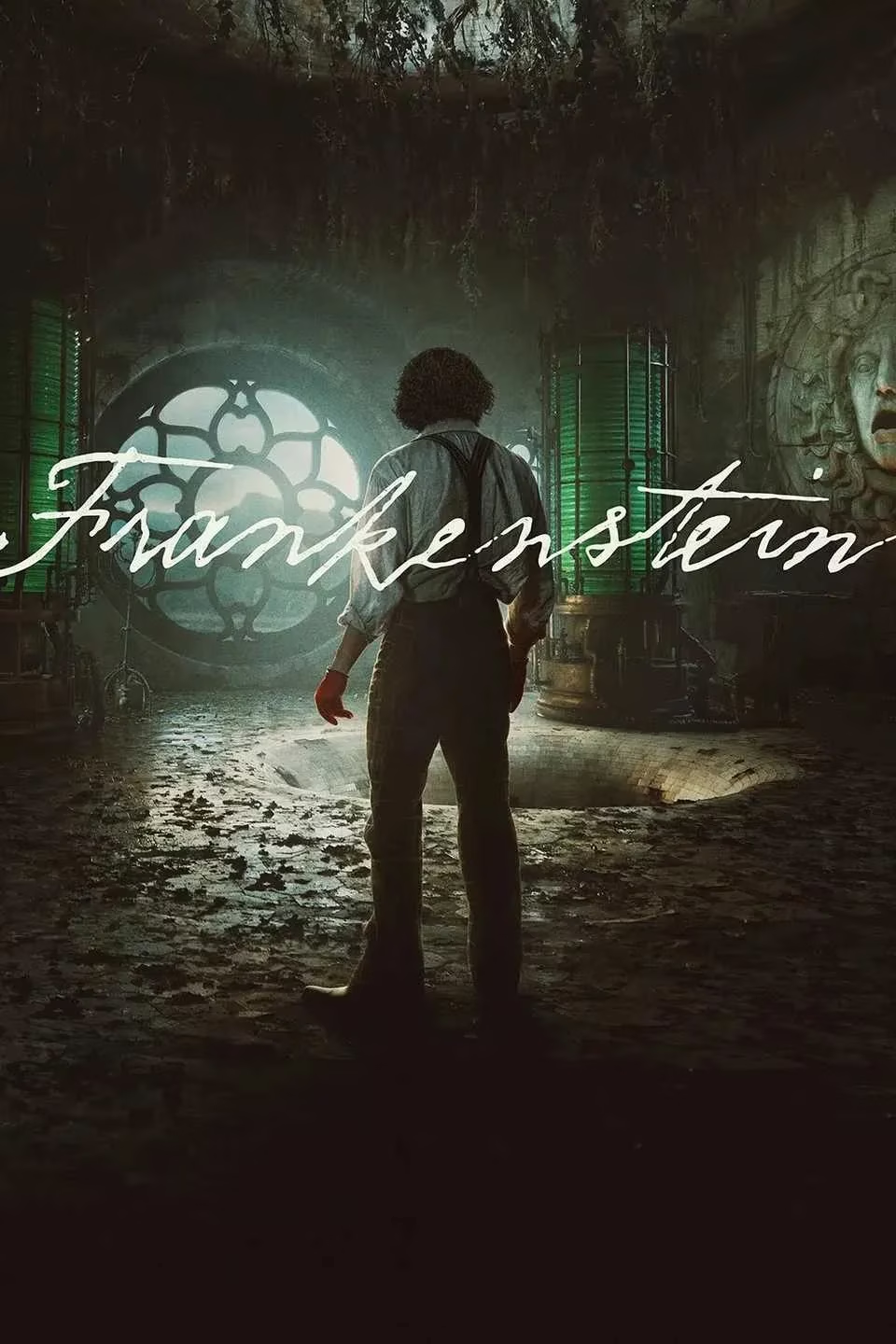
The accolades arrived like an expected but still joyous thunderclap. Best actor trophies for Isaac at the Savannah Film Festival and for Elordi at the Santa Barbara International Film Festival, honors for costume designer Kate Hawley at Middleburg, and overall film prizes at the San Francisco and Venice International Film Festivals—it was a coronation. The limited theatrical run in October 2025 had already whispered the film’s power, pulling in over $400,000 at the box office. But when the wider world found it on Netflix that November 7, the whisper became a roar. With a runtime of 149 minutes, the film demanded patience, and audiences gave it. That’s the thing about a del Toro monster story: you don’t just watch it, you sit inside its ribcage.
Looking back from April 2026, I think the Popcornmeter record isn’t just a number. It’s a landmark that tells you something about what people really need from their nightmares. Del Toro’s Frankenstein was a conversation in the dark, a question asked by a creature who only ever wanted a name, and 95% of the viewers said “I hear you.” For a director who has spent decades sculpting empathy out of monsters, that’s the most fitting career milestone imaginable. The movie is no longer new, but its echo—that gorgeous, aching ache—is still very much alive.
Comments