Looking back, it seems almost unbelievable that a cinematic masterpiece like Zhang Yimou's Hero nearly vanished into the vaults of American distribution purgatory. As a film enthusiast, I often reflect on the pivotal moments where a single advocate can alter the fate of art. In the early 2000s, the wuxia genre was riding a wave of international acclaim, freshly buoyed by the Oscar triumph of Crouching Tiger, Hidden Dragon. Yet, when a film that arguably surpassed its predecessor arrived, it was met not with fanfare, but with hesitation. The story of how Hero went from a shelved project to a record-breaking North American phenomenon is a testament to one man's unwavering cinephilia: Quentin Tarantino's.
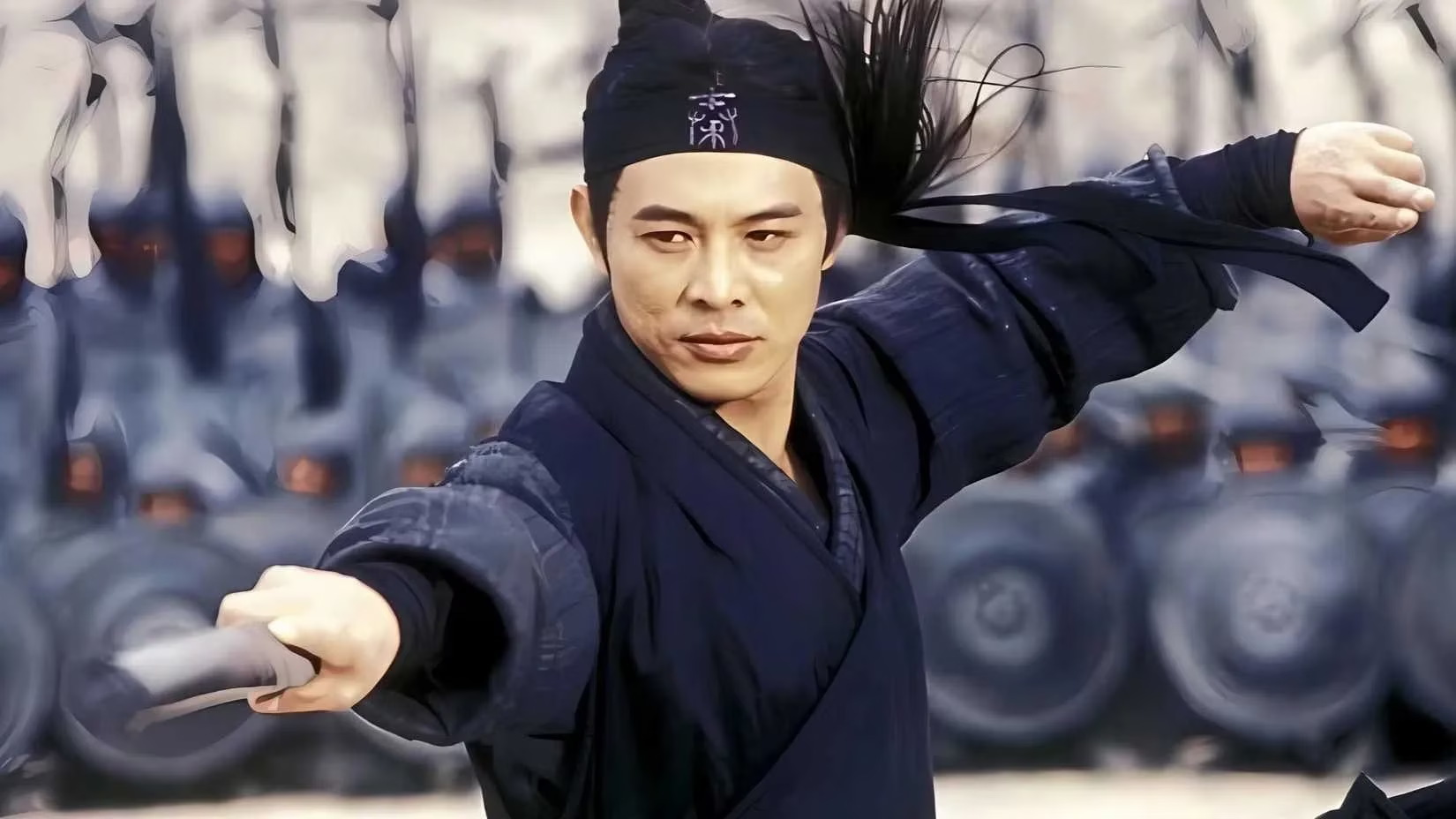
In 2002, Zhang Yimou's epic wuxia film Hero premiered in China to monumental success. Starring Jet Li as the enigmatic Nameless—a warrior recounting a complex plot to assassinate the king who would become Qin Shihuang—the film was a visual and narrative marvel. It was China's most expensive production at the time, a gamble that paid off spectacularly. The box office numbers were staggering: $11.8 million in its first week from just 200 theaters, shattering domestic records and cementing its place in Chinese cinematic history. Its acclaim was such that it earned an Oscar nomination for Best Foreign Language Film. Yet, for Miramax, the studio that acquired its U.S. rights, the film became like a priceless artifact locked in a vault, its potential release stalled for nearly two years.
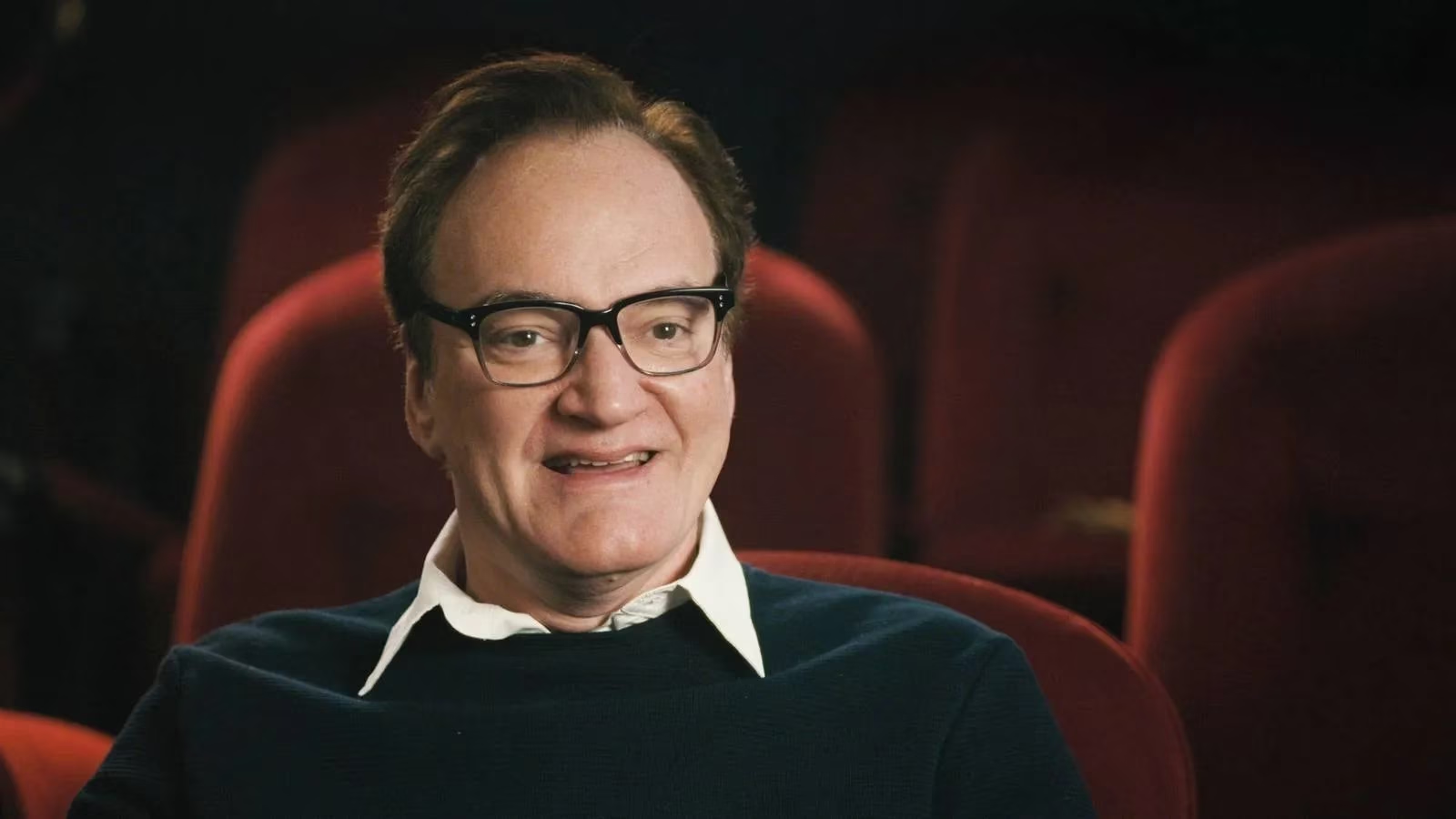
This is where Tarantino entered the frame. To understand his intervention, one must appreciate his background. His early days in a video store cultivated a voracious, genre-agnostic appetite for film, with a particular passion for martial arts cinema. Fresh off directing his own love letter to the genre, Kill Bill, Tarantino saw Hero for what it was: an unqualified masterpiece. He perceived Miramax's reluctance as a fundamental misreading of the film's power. The studio, having lost faith, reportedly wanted to cut and alter the film for American audiences—a notion Tarantino vehemently opposed.
Tarantino's advocacy was not a gentle suggestion; it was a calculated campaign. He famously struck a deal with Miramax executives, one they couldn't refuse: he would personally present the film if they released it uncut. "I had to fight for it with Miramax," Tarantino recounted. "I thought that HERO was an absolute masterpiece... finally they agreed if I would present it." His endorsement was the master key that unlocked the vault. Reaching out to director Zhang Yimou, who was "as happy as a clam" with the arrangement, Tarantino ensured the film would reach audiences in its intended, glorious form.
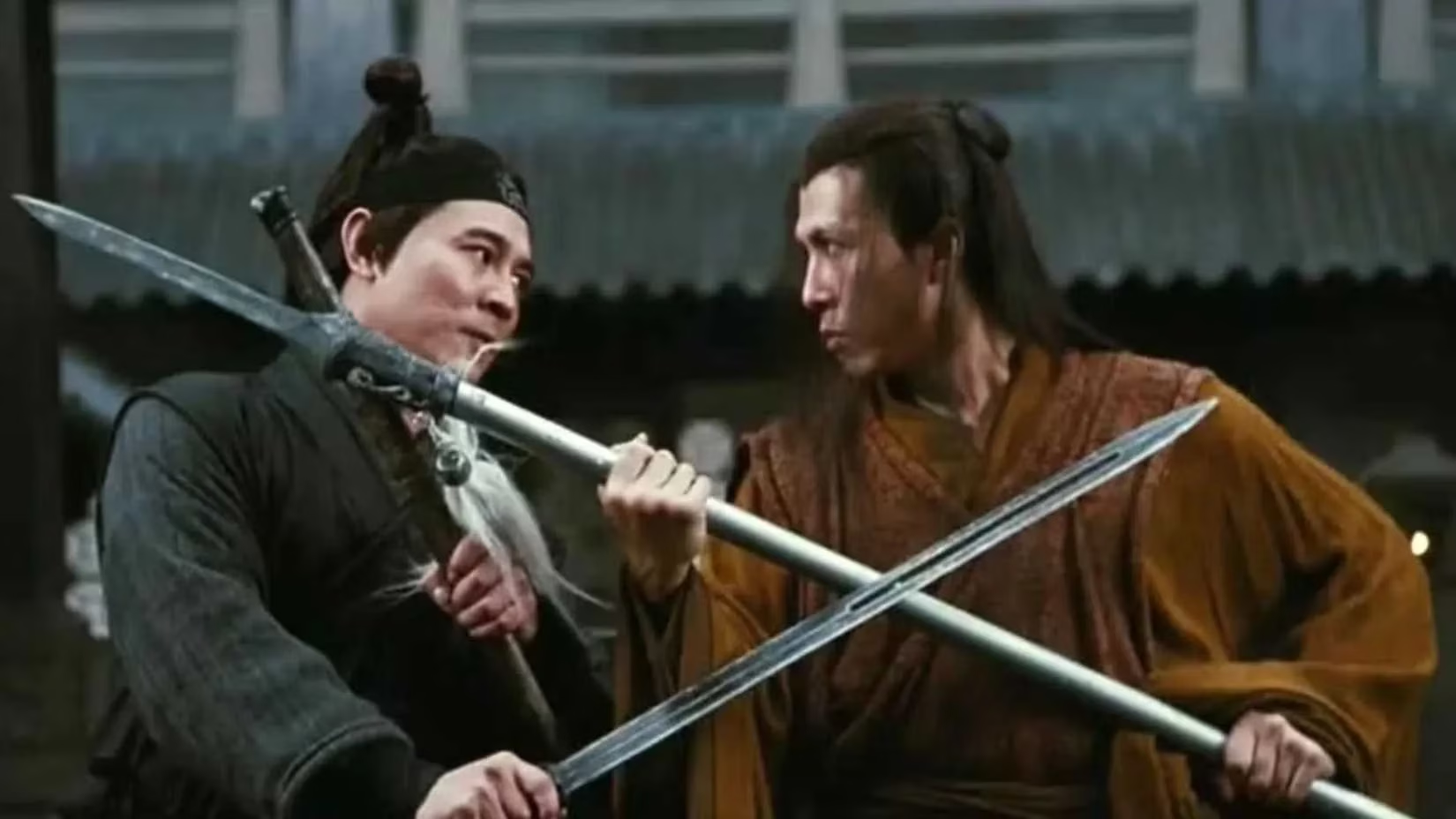
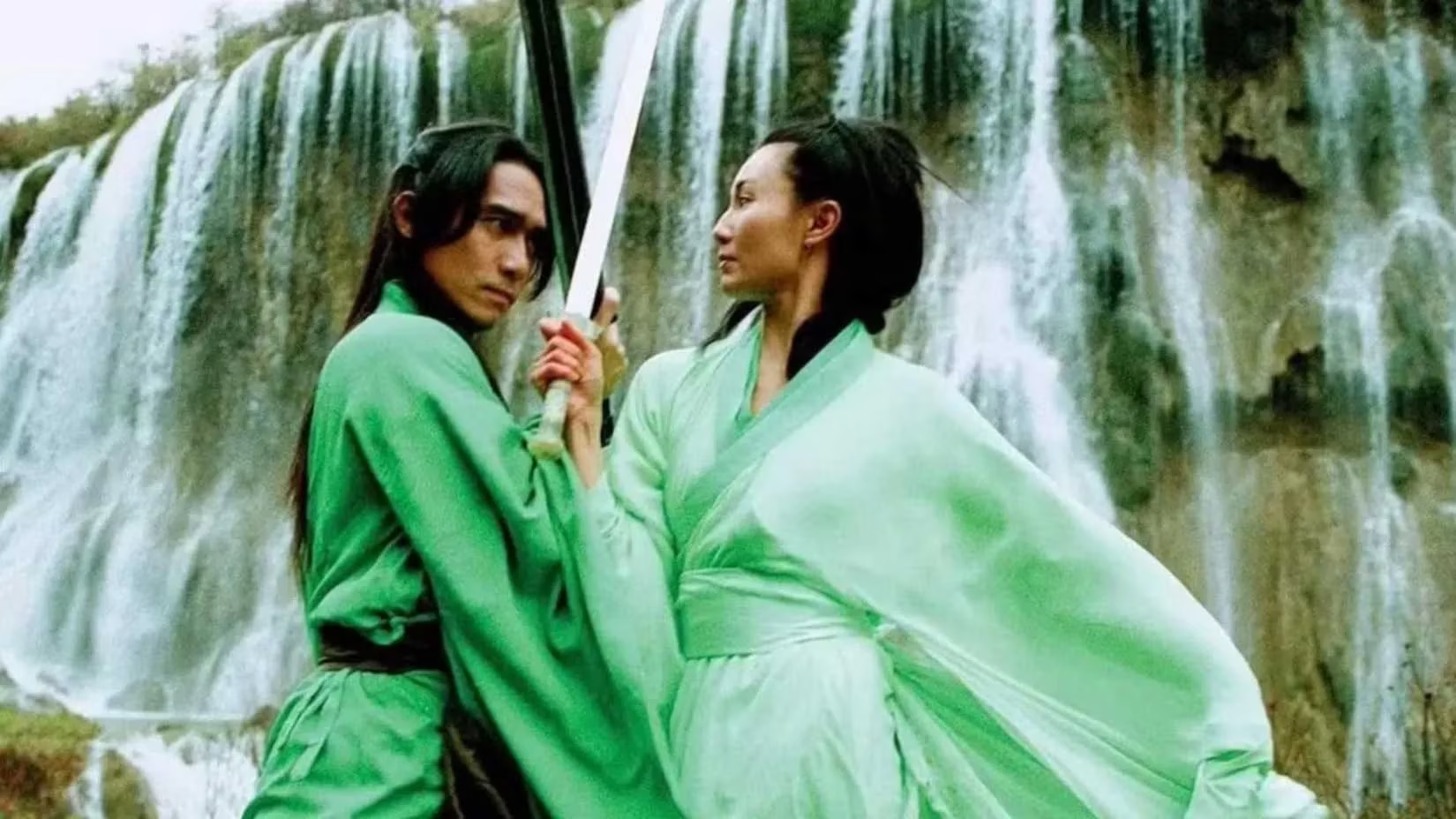
The film itself was a constellation of martial arts talent, far more than a Jet Li vehicle. The cast read like a who's who of Eastern cinema:
-
Tony Leung as Broken Sword
-
Maggie Cheung as Flying Snow
-
Donnie Yen as Sky
-
Zhang Ziyi as Moon
This ensemble delivered fight choreography that was less like traditional brawls and more like a symphony of color and motion, where each clash of swords was a brushstroke on a vast, historical canvas. The film's narrative, exploring layered truths and the very concept of heroism, offered a philosophical depth that resonated powerfully.
Tarantino's gamble—and his unwavering stance—proved prophetic. When Hero finally debuted in the United States on August 27, 2004, it didn't just perform well; it made history.
| Milestone Achieved by Hero (2004) | Detail |
|---|---|
| North American Opening Weekend | $18 million |
| Historic Achievement | First foreign-language film to debut at #1 on the North American box office charts. |
| Total Worldwide Gross | $176 million |
| Critical Reception (Rotten Tomatoes) | 94% Tomatometer |
It held the top spot for two consecutive weeks, a feat that eluded even the acclaimed Crouching Tiger, Hidden Dragon. While Crouching Tiger had broader worldwide earnings ($213 million), it never climbed higher than fourth place in the weekly domestic charts. Hero's achievement was a cultural breakthrough, proving that American audiences would flock to a subtitled epic if it was presented with confidence and artistry. Its domestic run was remarkably sturdy, remaining in the top 40 until Thanksgiving weekend, a staying power as resilient as bamboo in a storm.
The inevitable comparison between the two wuxia giants is fascinating. Crouching Tiger, Hidden Dragon (2000) was a revelation for many, a gateway that introduced Western viewers to the poetic, gravity-defying norms of wuxia. Its Oscar haul (4 wins from 10 nominations) was well-deserved. However, from a narrative and thematic standpoint, Hero often feels like the more mature and concentrated work. Where Crouching Tiger is a romantic fantasy of flying warriors, Hero is a political and moral kaleidoscope, using its Rashomon-style storytelling to question sacrifice, truth, and nationhood. Its fight scenes, while spectacular, feel more integrated into its philosophical core.
Two decades later, the legacy of Hero is secure. It stands not only as one of the greatest wuxia films ever made but as a landmark case study in film advocacy. Quentin Tarantino's role was that of a cinematic archaeologist, rescuing a buried treasure and presenting it to the world in its pristine state. His fight ensured that a generation of moviegoers witnessed Zhang Yimou's vision unimpeded. The film's journey from a Miramax shelf to the pinnacle of the box office is a powerful reminder that sometimes, the most important action in cinema happens not on the screen, but in the boardrooms and passionate arguments of those who believe in it. In an industry often driven by algorithms and preconceptions, Hero’s success story remains a triumphant anthem for the power of pure, uncompromising cinematic love.
Comments