⚠️ Spoiler alert: if you haven't seen Wicked: For Good yet, consider this your "defying gravity" warning to bail out now.
When I shuffled into the theater last November to catch Wicked: For Good, I expected breathtaking vocals, some gravity-defying broomsticks, and enough pink tulle to drown a Munchkin. What I did not expect was to leave with the bone-deep conviction that Elphaba Thropp is nothing less than Oz’s answer to Bruce Wayne. Not kidding. The girl literally pulls a Dark Knight. And once you see it, you can’t unsee it—so grab a shot of green elixir (or just a soda) and let me break down why the Wicked Witch of the West is basically Batman in a pointy hat.
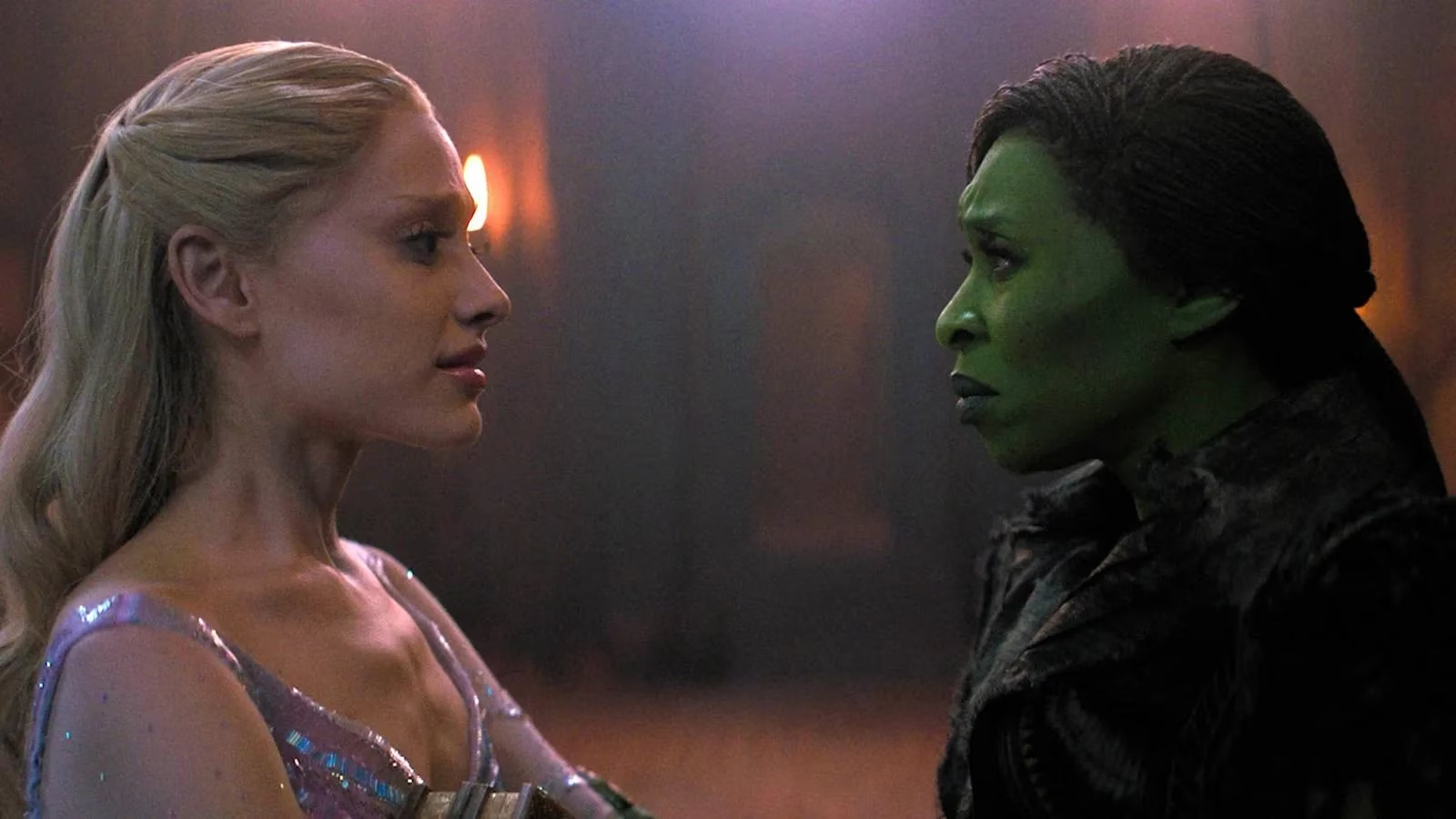
The Unholy Alliance: Elphaba Dons the Cowl
Wicked: For Good ends with a gut punch of a finale that had me wiping my eyes while my brain screamed “this is literally the ending of The Dark Knight in a corset.” After a whole film of being painted as the big bad, Elphaba realizes that brute-forcing the truth won’t free Oz—it’ll just shatter the fragile illusion holding the Emerald City together. The public has been force-fed a tidy narrative for so long: there’s a brilliant, benevolent Wizard, a righteous Glinda the Good, and a cackling green menace. Tug at one thread and the whole tapestry unravels, plunging the land into chaos. So Elphaba does something maddeningly heroic: she accepts the role of villain. She fakes her own death at the hands of Dorothy Gale (a literal bucket of water, people), lets Glinda take the reins with the Grimmerie, and watches from the shadows as her best friend becomes the leader Oz can actually believe in. Sound familiar?
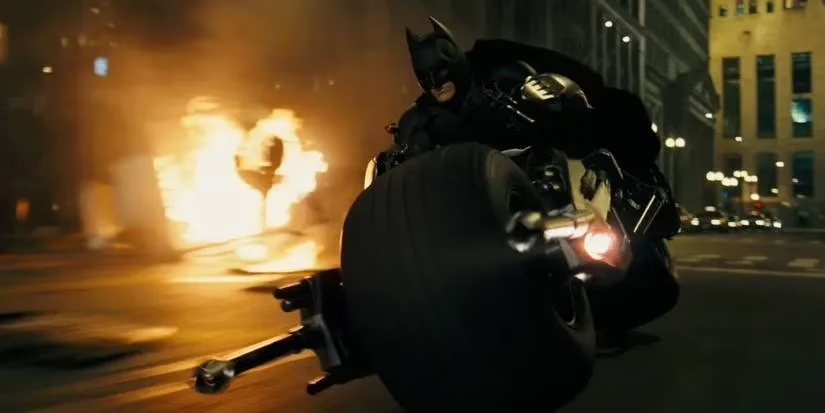
Two-Face, Wicked Witch; Same Difference
In Christopher Nolan’s The Dark Knight, Harvey Dent was the white knight Gotham needed. When the Joker corrupted him into Two-Face, Batman and Commissioner Gordon made an impossible choice: bury the truth and pin the murders on the caped crusader. Batman became the hunted outcast so that Dent’s image could remain untarnished, preserving the hope that might actually drag the city out of its cesspool.
Swap the Bat-signal for a broomstick, and you’ve got Elphaba. She trades her reputation and personal righteousness for the greater good, exactly like Bruce did. Both characters understand a brutal reality: people don’t want complicated truths; they want a simple story with a clear hero and a clear villain. The folks of Oz needed a Wicked Witch to hiss at, and they already had Glinda as their bubbly beacon. Elphaba recognized that trying to rewrite that script would only cause more bloodshed—especially with Madame Morrible spinning propaganda—so she stepped into the shadow of her own “wickedness” and let herself be remembered as a monster. It’s the ultimate altruistic mic drop.
“We Can’t Let Good Just Be a Word” (and Other Shared Mottos)
Elphaba’s parting line, “We can’t let Good just be a word,” could’ve been whispered by Batman over a certain white clown’s corpse. Both hero-villains realize that the perception of good is sometimes more potent than good itself. Gotham needed a symbol of justice everyone could rally behind, even if that symbol was a flawed dead guy. Oz needed a Glinda untarnished by scandal, someone the citizens could trust implicitly. Elphaba’s self-imposed exile (and “death”) clears the stage for exactly that—Glinda ascends as a force of genuine goodness, wielding the Grimmerie with the moral compass Elphaba always knew she had. It’s the same playbook as Batman disappearing for eight years after The Dark Knight, leaving Gordon and the Dent Act to clean up the city.
The Societal Infrastructure We All Secretly Crave
Here’s the uncomfortable mirror both films hold up: we, the audience, are guilty of the same lazy thinking as Ozians and Gothamites. We crave a simple narrative with clear goodies and baddies. The Wizard’s propaganda worked because it tapped into that universal desire to have someone to fear and someone to admire. Nolan’s Gotham ran on the same engine—the public felt safe because they had a clean-cut district attorney to applaud and a violent vigilante to blame. The moment you introduce nuance, you risk losing the very stability that keeps society from eating itself. Elphaba and Batman recognize this bitter pill and swallow it without a chaser.
It’s a profound kind of heroism that doesn’t get statues. Nobody in Oz will ever toast to the Wicked Witch’s sacrifice (probably they’ll throw a party every year with a green piñata). Gotham will keep chasing Batman with police dogs. But the unseen victory is theirs: Oz gets the enlightened rule of Glinda, and Gotham gets nearly a decade of anti-crime legislation and civic hope. That’s a win in my book, even if the “hero” has to wear a cape of infamy.
So, Is Elphaba the Hero We Deserve?
Honestly, yes. Both she and Batman embody the tragic truth that sometimes the greatest acts of heroism involve letting people tell the wrong story about you. Elphaba’s defenestration from public grace is heartbreaking, but it’s also deeply pragmatic—she trusts Glinda, she reads the room, and she vanishes into folklore. In a weird way, her transformation into the Wicked Witch is the most selfless thing anyone in Oz ever does. Batman’s lonely ride into the night is the same beat-for-beat move.
Next time you watch The Dark Knight, squint during that final monologue and imagine Batman in emerald skin, belting a high F before the credits roll. The parallel is uncanny, and it makes me fiercely proud to love both stories. Wicked: For Good may have just climbed into my personal pantheon of endings that break your heart while making your brain do cartwheels.
Wicked: For Good is still playing in select theaters (and if you haven’t seen it, for Oz’s sake, go). The Dark Knight, ever the timeless masterpiece, is streaming on whatever platform has it in 2026—likely still HBO Max, unless it got pulled for a new Bat-reboot. Either way, I’ll be over here humming “Defying Gravity” while sketching a Bat-symbol made of broomsticks.
Comments