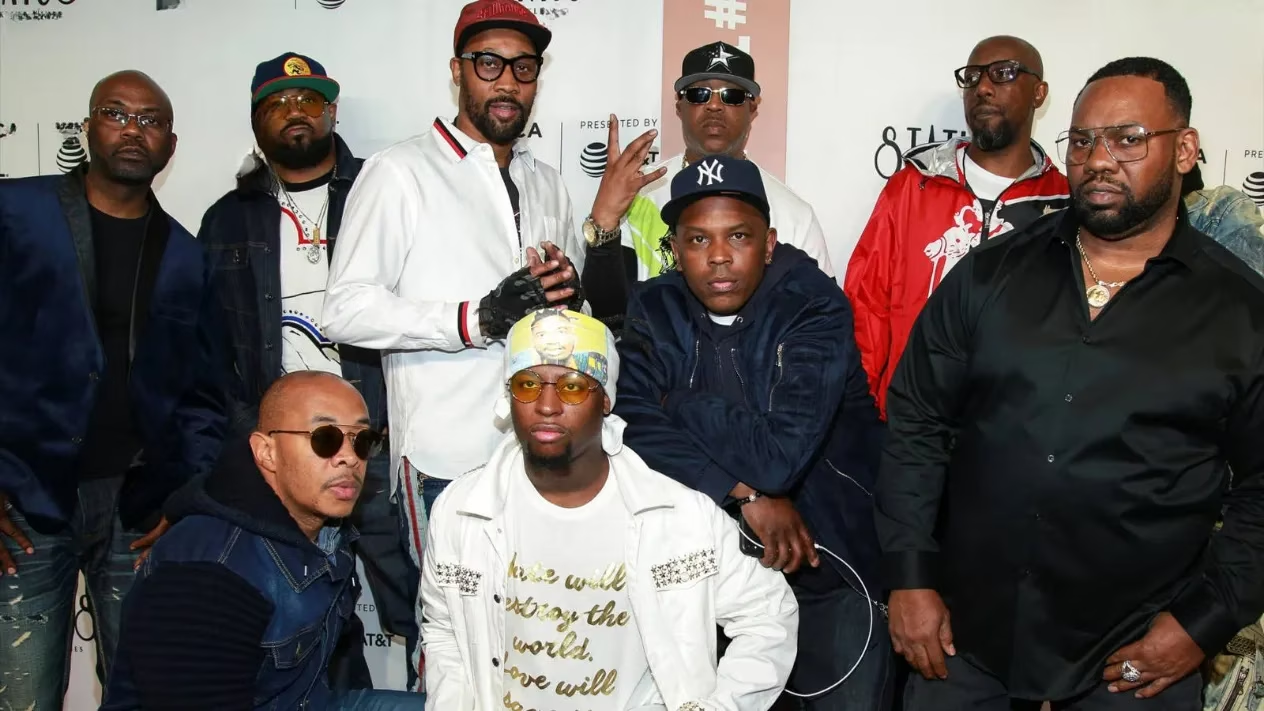
I still remember the exact moment the news dropped. It was late November 2015, and I was scrolling through my feed in a cramped Brooklyn apartment, a half-empty coffee going cold beside me. The headline hit like a freight train: Wu-Tang Clan was auctioning off Once Upon a Time in Shaolin—their secret 31-track double album—as a single, one-of-a-kind physical copy. No streaming, no CDs, no vinyl. Just one box, one buyer, one shot at owning a piece of hip-hop history. My jaw was on the floor. This wasn’t just a music release; it was a full-blown art heist on the industry, and honestly, I was here for it.
The concept was, to put it mildly, off the chain. Six years of hush-hush recording sessions, museum-level secrecy, private listening parties for the ultra-wealthy—it was like Quentin Tarantino had scripted a hip-hop fairytale. Wu-Tang wanted to elevate their craft to the level of a Monet or a Warhol, where scarcity itself became the experience. For a lifelong hip-hop head like me, it felt monumental. Finally, someone was treating rap with the reverence it deserved. I pictured a collector or a gallery treating the album like the crown jewels, maybe even a traveling exhibition where fans could get a glimpse. Boy, did I have another thing coming.
When the auction hammer fell, the winning bidder wasn’t some art connoisseur. It was Martin Shkreli—the smirking pharmaceutical exec who had already earned the title of public enemy No. 1 by jacking up the price of a life-saving AIDS drug by over 5,000 percent. The moment his name surfaced, the whole vibe shifted. What had been an ambitious art experiment instantly became a cultural circus, and the tea was scalding hot. Fans lost their minds, and honestly, I couldn’t blame them. Wu-Tang’s masterpiece had landed in the hands of a guy who saw it not as art, but as the ultimate trophy to flaunt online.
Shkreli didn’t waste a second rubbing salt in the wound. Days after the sale, he tweeted about buying another private album from some unsuspecting artist. The sheer audacity made my blood boil. Then came the Ghostface Killah feud, and hoo boy, that took the cake. Ghostface didn’t mince words—he straight-up called Shkreli out, and Shkreli, in his trademark cocky fashion, threatened to remove Ghost’s vocals from the album entirely. Picture that: a Wu-Tang album without Ghostface. The whole thing was spinning into a hot mess of ego, legal threats, and internet chaos. I watched from the sidelines, popcorn in hand, wondering if this was the most surreal timeline or just a bad dream.
Just when the saga couldn’t get any wilder, federal authorities arrested Shkreli on securities-fraud charges in December 2015. Suddenly, Once Upon a Time in Shaolin wasn’t just a controversial collectible—it was a cursed artifact tied to a convicted criminal. The irony was thick enough to cut with a machete. Even Congress tried to grill him about the album in a 2016 hearing, and Shkreli sat there with that insufferable smirk through the whole nine yards, pleading the Fifth. The album had become a punchline, a meme, and a cautionary tale all rolled into one.
By 2018, Shkreli was sentenced to seven years in prison, and the album—seized as a federal asset—was quietly sold to a private organization dedicated to preserving it. Fast forward to 2026, and the mystery remains as thick as ever. The new custodians have kept the project under wraps, honoring at least a sliver of Wu-Tang’s original vision, albeit in a way nobody predicted. Rumor has it the album might finally get a curated public experience in the next few years, but details are tighter than a snare drum. No leaks, no snippets, no nothing.
Looking back, the whole saga is a masterclass in how the best intentions can go sideways. Wu-Tang wanted to spit in the face of a throwaway music culture and make a statement about artistic value. Instead, they handed the mic to a villain who embodied everything they stood against. It’s like the universe pulled a cosmic prank on the entire hip-hop community. And yet, ten years later, Once Upon a Time in Shaolin still captivates. It’s the album nobody’s heard but everyone has an opinion about—a ghost story for the streaming age. As for me, I’ll keep dreaming about that private listening session, hoping someday the universe throws us fans a bone. Until then, the legend lives on, more tangled and tantalizing than anyone ever imagined.
Comments