Some stories are supposed to end in ashes. At least, that is what I always believed about Mary Shelley’s Frankenstein. So when I finally sat down in early 2026 to revisit Guillermo del Toro’s Netflix adaptation, I expected despair, ice, and a monster marching toward his own funeral pyre. Instead, I got something I never saw coming: hope.
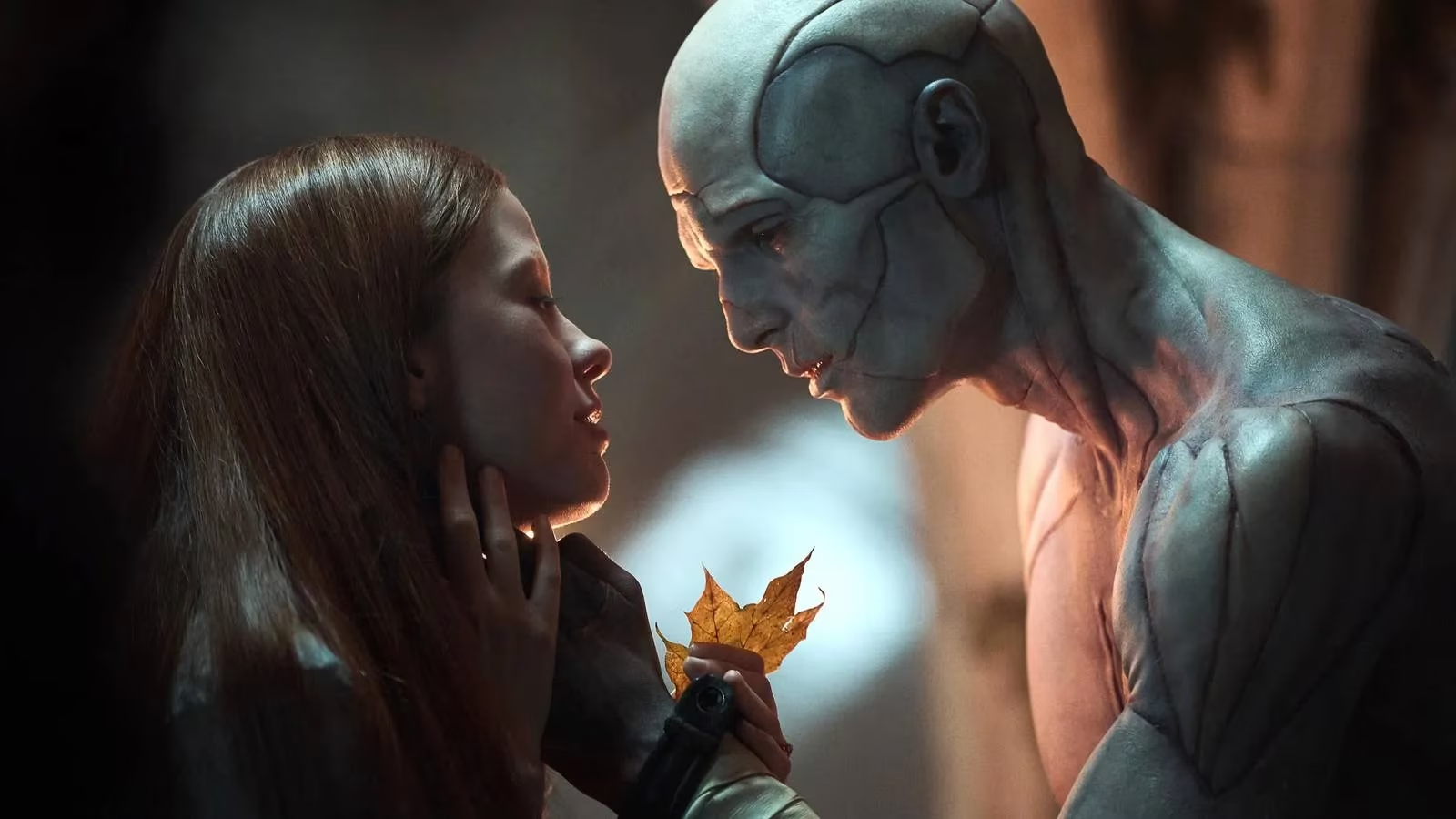
I had read the novel years ago, so the ending was burned into my memory. Victor dies aboard a frozen ship, and the Creature, finding his creator already gone, chooses to burn himself alive. But del Toro’s film, released in October 2025, dares to ask a different question: What if the Creature arrived in time? What if, instead of revenge, he chose mercy?
Del Toro revealed that he had to fight for this ending. “I had to argue with my producing partner,” he said. The disagreement centered on one shot—the shot of the Creature pushing the stranded ship free from the ice. I can understand why a producer would hesitate. It is a huge emotional swing. But for del Toro, that shot was the whole point.
“I knew I wanted the Creature to have his only act as a human,” del Toro recalled. “Meaning, he reacts to love with love, he reacts to hatred with hatred.” How often do we see a monster choose love after being attacked? Not often. That is why the moment lands so hard.
In the film, the Creature finds the ship in time for a last moment with Victor, played by Oscar Isaac. Del Toro calls it “the moment they make each other human.” That phrasing stayed with me. Then the Creature, instead of destroying himself, steps onto the ice and frees the same men who hunted him. “He comes out and he decides in a beautiful moment to say, ‘The people that attacked me, I’m gonna free them,’” del Toro explained.
Del Toro also explained why the physical act of pushing the ship mattered so much. “Because you’re pushing the ship and looking at it for a second, that gained a lot more weight, I thought. It’s a liberation. And I think that’s the difference with the book. This ends in a note of possible hope.” That one sentence—a note of possible hope—might be the bravest thing a horror director can say.
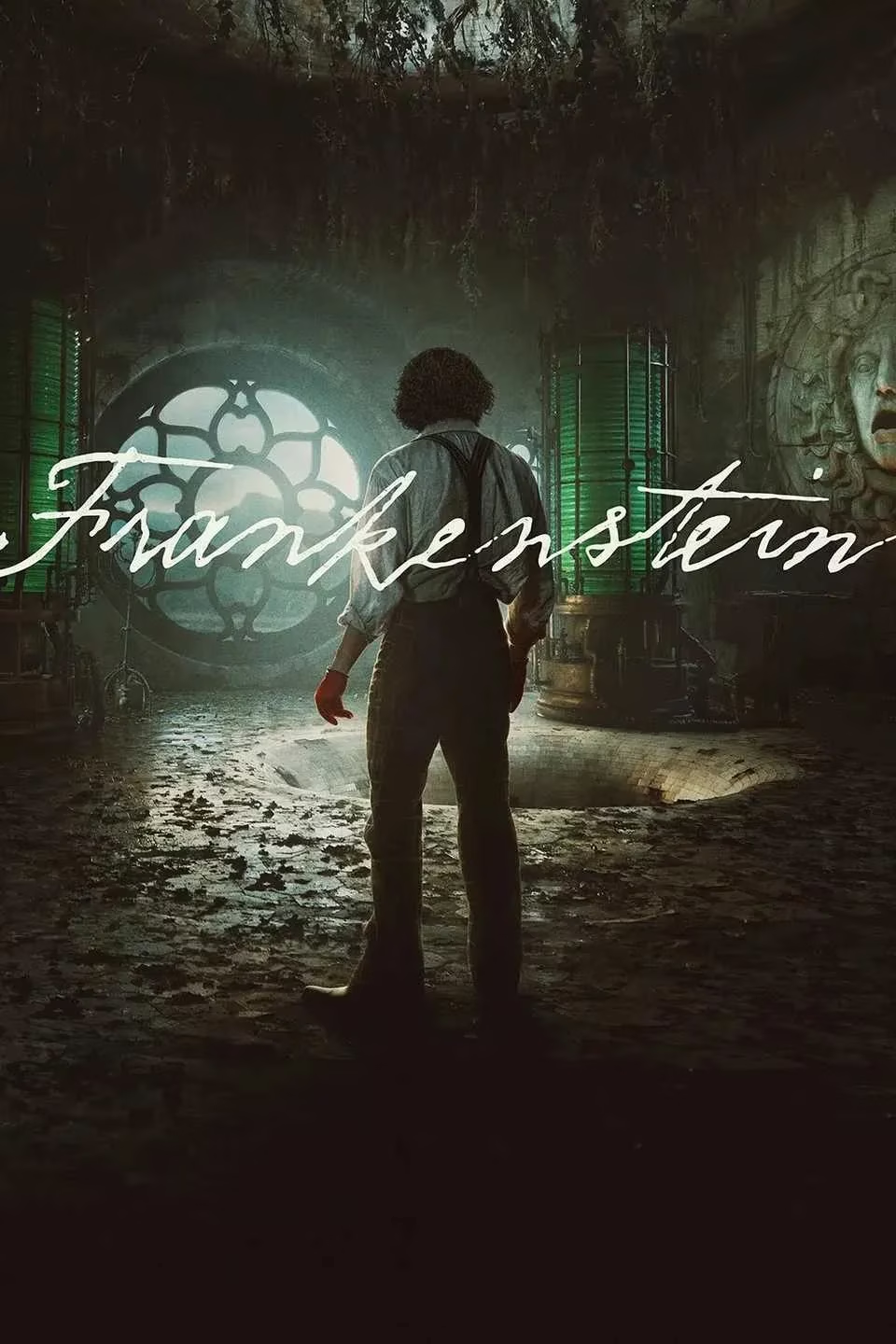
Another thing that surprised me was how del Toro handled the creation sequence. Most adaptations just flash lightning and cut to the finished monster. Del Toro did the opposite. “Almost nobody shows the creation of the monster,” he said. “Everybody shows thunder, and the monster is already put together. And I thought, if you are following a rock star, you want to shoot the concert.”
Instead of making the assembly horrific, he choreographed it like a waltz. He called it a “joyous fun, sort of crazy concert.” Watching Victor race around his laboratory, grabbing limbs and stitching parts with wild energy, I finally understood what the director meant. It was not grim horror. It was obsession made beautiful—and that is far more disturbing.
| Element | Shelley’s novel | Del Toro’s film |
|---|---|---|
| Ending | Creature plans to burn himself after Victor dies | Creature frees the trapped ship in a moment of hope |
| Creature’s final act | Despair and self-destruction | Mercy and liberation |
| Creation scene | Often implied, not shown | Shown as a frantic, joyful waltz |
| Tone | Bleak | Hopeful but still shadowed |
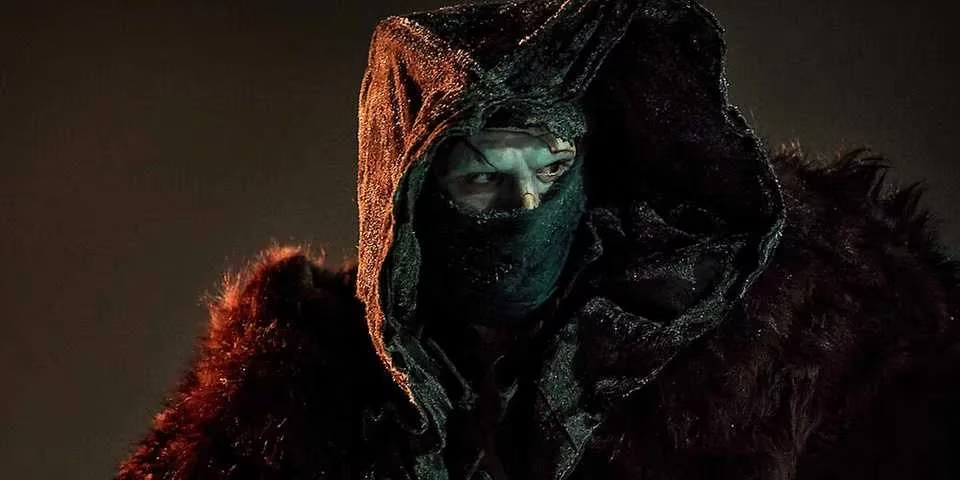
Critical reaction has been strong. The movie sits at 85% fresh on Rotten Tomatoes. ScreenRant’s review calls it “a masterclass in atmosphere,” powered by Jacob Elordi and Oscar Isaac. At the same time, the review notes the 149-minute runtime and sluggish pacing. I agree partly. There were stretches where the ship felt as frozen as the ice around it. But every time the Creature appeared, the screen felt alive.
For me, the great power of del Toro’s ending is that it refuses to let suffering be the only truth. The Creature had every reason to hate. People attacked him, feared him, called him a monster. Yet in the final scene he chooses to free them. Why? Because in his final moment with Victor, he became human enough to choose something different. Is that not the entire arc of Frankenstein? Not birth or death, but what we do with the life we are given.
Knowing that del Toro first wanted to develop this project back in 2007 makes the ending feel even more personal. After The Shape of Water won Best Picture and Best Director in 2018, he could have made anything. Instead, he returned to the story he had carried for nearly two decades. That patience shows in every frame.
Would I recommend Guillermo del Toro’s Frankenstein? Yes, especially if you think you already know the ending. Because you probably do not. In 2026, when so many adaptations chase darkness for its own sake, this one chooses something braver: a note of possible hope.
Comments