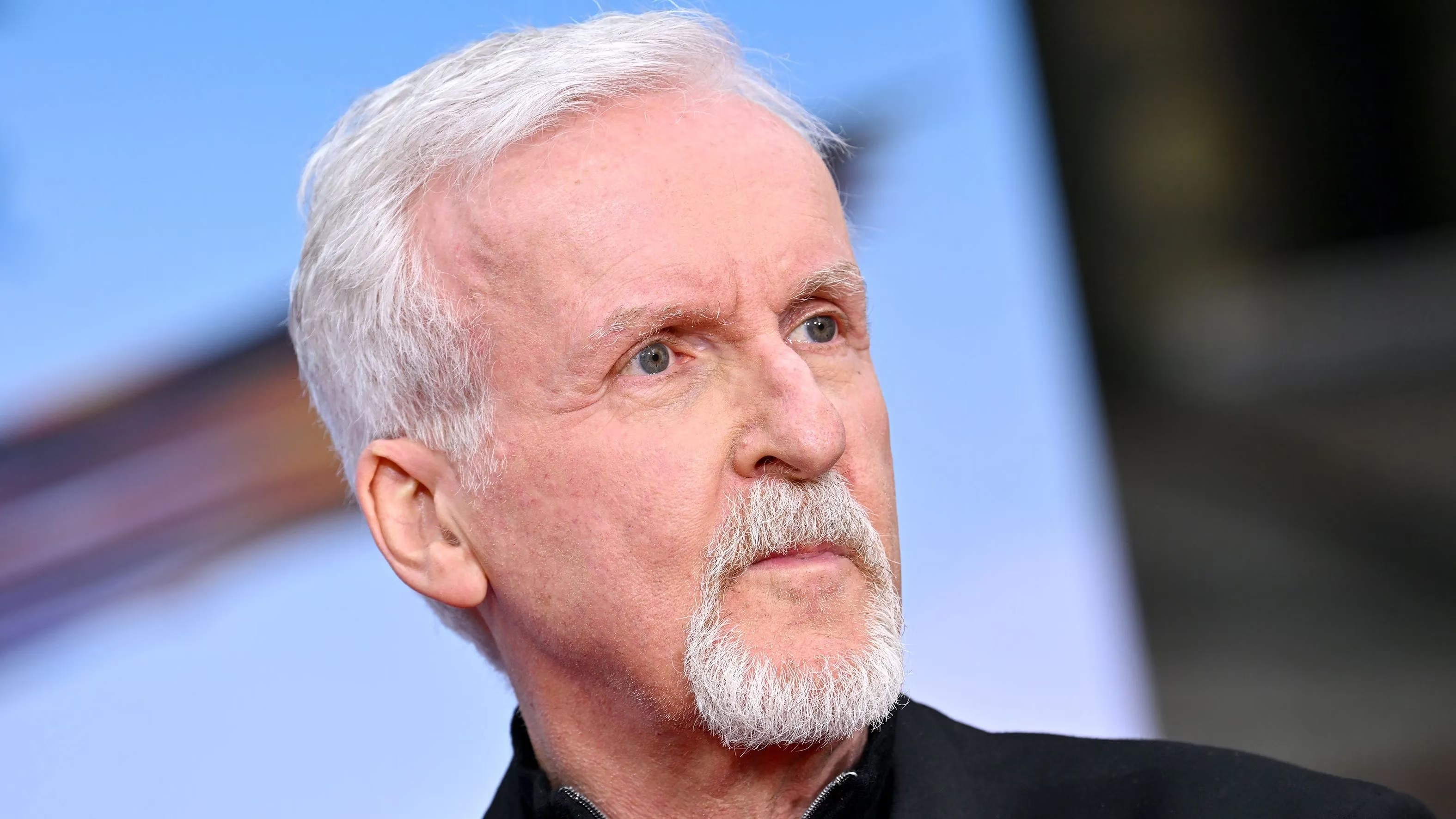
Academy Award-winning director James Cameron has positioned himself as a formidable guardian of cinematic tradition, offering his perspective on the potentially transformative deal between Netflix and Warner Bros. Discovery. Like many in Hollywood's creative community, Cameron expresses deep concerns about how this merger could reshape the entertainment landscape, particularly regarding the future of theatrical releases. The visionary behind Avatar makes it unequivocally clear that he intends to protect the big screen experience with the determination of a captain steering his ship through treacherous waters.
The Streaming Conundrum
Cameron acknowledges that Netflix has made certain accommodations for filmmakers like Guillermo del Toro and Rian Johnson, allowing limited theatrical runs for projects such as Frankenstein and Knives Out. However, he perceives these gestures as mere footholds rather than genuine commitments to theatrical distribution. "They've had to make an accommodation with a few filmmakers to keep a foot in theatrical," Cameron observes, "but I think it's no secret that they want to replace theatrical." The director views Netflix's strategy as attempting to navigate the film industry like a submarine moving silently beneath the surface—present but fundamentally altering the ecosystem above.
The Sacred Cinema Experience
For Cameron, the movie theater represents something approaching the sacred—a communal space where stories unfold with collective wonder. He contrasts this with streaming's convenience, which he compares to "fast food versus a gourmet meal"—accessible but lacking the transformative quality of the proper cinematic experience. "I happen to think that there's something sacred about the movie-going experience," Cameron reflects, "and just the ease and broad access of streaming is not the complete answer." He envisions theatrical exhibition as a cathedral of storytelling, where audiences gather in shared darkness to witness visual miracles unfold.
Industry Transformation
The potential merger represents what Cameron sees as a fundamental restructuring of Hollywood's power dynamics. He notes that if the deal proceeds, the number of major studios would effectively halve from when he began his career—a consolidation he views with concern. This industry shift resembles tectonic plates grinding against each other, with streaming platforms threatening to swallow traditional distribution models whole. Cameron positions himself as standing "four-square on the side of let's keep that theatrical experience alive," acknowledging that while the industry may evolve, certain foundational elements deserve preservation.
Creative Philosophy
Cameron's commitment to theatrical runs deeper than nostalgia—it's integral to his creative process. "Clearly, I make movies for that, primarily," he states, referring to the big screen format that has defined his most ambitious projects. He approaches filmmaking like an architect designing for a specific space, crafting visual spectacles that demand the scale and immersion only theaters can provide. The director sees streaming-focused production as equivalent to composing symphonies for smartphone speakers—technically possible but fundamentally mismatched to the medium's potential.
The Path Forward
While acknowledging that Netflix might modify its approach if it assumes greater responsibility for theatrical survival, Cameron remains skeptical of platforms fundamentally oriented toward home viewing. He envisions an industry equilibrium where streaming and theatrical coexist like different instruments in an orchestra—each with distinct roles rather than one replacing the other. The director's stance represents not just personal preference but a philosophical position about how stories should be experienced and what might be lost if the communal magic of cinema disappears into the digital ether.
Cameron's perspective emerges as particularly significant given his track record of pushing technological boundaries while maintaining commitment to traditional exhibition. His films have consistently demonstrated how innovation and tradition can coexist—advancing the art form while honoring its foundational experiences. As the industry continues to evolve, Cameron's voice joins a chorus of creators concerned about preserving what makes cinema unique in an increasingly fragmented media landscape.
Comments