James Cameron has never been one to shy away from bold statements, and the legendary filmmaker is now taking aim at a powerful force in Hollywood: Netflix. In the run-up to the 98th Academy Awards, Cameron has declared that movies released primarily on streaming platforms should not be eligible for Oscar glory, calling the current system “fundamentally rotten at the core.” As the director gears up for his next cinematic behemoth — and as Netflix faces a tricky awards season with controversial contenders like Guillermo del Toro’s Frankenstein — his remarks have reignited a fierce debate about what the Oscars truly represent.
Cameron laid out his argument in a recent interview on The Town with Matthew Belloni, a podcast from The Ringer. He specifically targeted Netflix CEO Ted Sarandos’ strategy of giving select films a brief theatrical window — often just one or two weeks — solely to meet the Academy’s eligibility criteria. “We’ll put the movie out for a week, we’ll put it out for 10 days; we’ll qualify for Academy Awards consideration,” Cameron said, mimicking the streamer’s approach. “See, I think that’s fundamentally rotten at the core.” For the man behind Titanic, Aliens, and the Avatar franchise, the Oscars have always been synonymous with the big-screen experience. “The Academy Awards, to me, mean nothing if they don’t mean theatrical,” he continued, emphasizing that studios should only be allowed to compete if they mount “a meaningful release in 2000 theaters for a month.”
Cameron’s stance is hardly isolated grumbling. Over the past few years, Netflix has become both a dominant and divisive presence at the Academy Awards. The streamer has landed Best Picture nominations for titles like Roma, Marriage Story, The Power of the Dog, and All Quiet on the Western Front, proving that high-quality storytelling can thrive outside the multiplex. But it has also been cast as the Oscars’ “villain” on multiple occasions. The Bradley Cooper-led Maestro was widely dismissed as shameless Oscar bait, while the 2024 musical Emilia Pérez sparked an enormous backlash over representation and execution. These controversies feed Cameron’s core complaint: that Netflix treats theatrical releases as a box-ticking exercise rather than a genuine commitment to cinema.
But here’s a question worth asking: Has the Oscars’ definition of a “movie” simply evolved, or are we witnessing the degradation of an art form? Cameron clearly believes the latter. He points to the erosion of communal viewing — the shared gasps, tears, and applause that occur only in a darkened theater. And it’s not just nostalgia talking. Box office data from the post-pandemic era shows that theaters are still struggling to recover, and high-profile streaming releases often siphon off audiences who might otherwise buy a ticket. If the Academy continues to welcome day-and-date or token-theatrical releases, does it risk making the theatrical experience itself irrelevant?
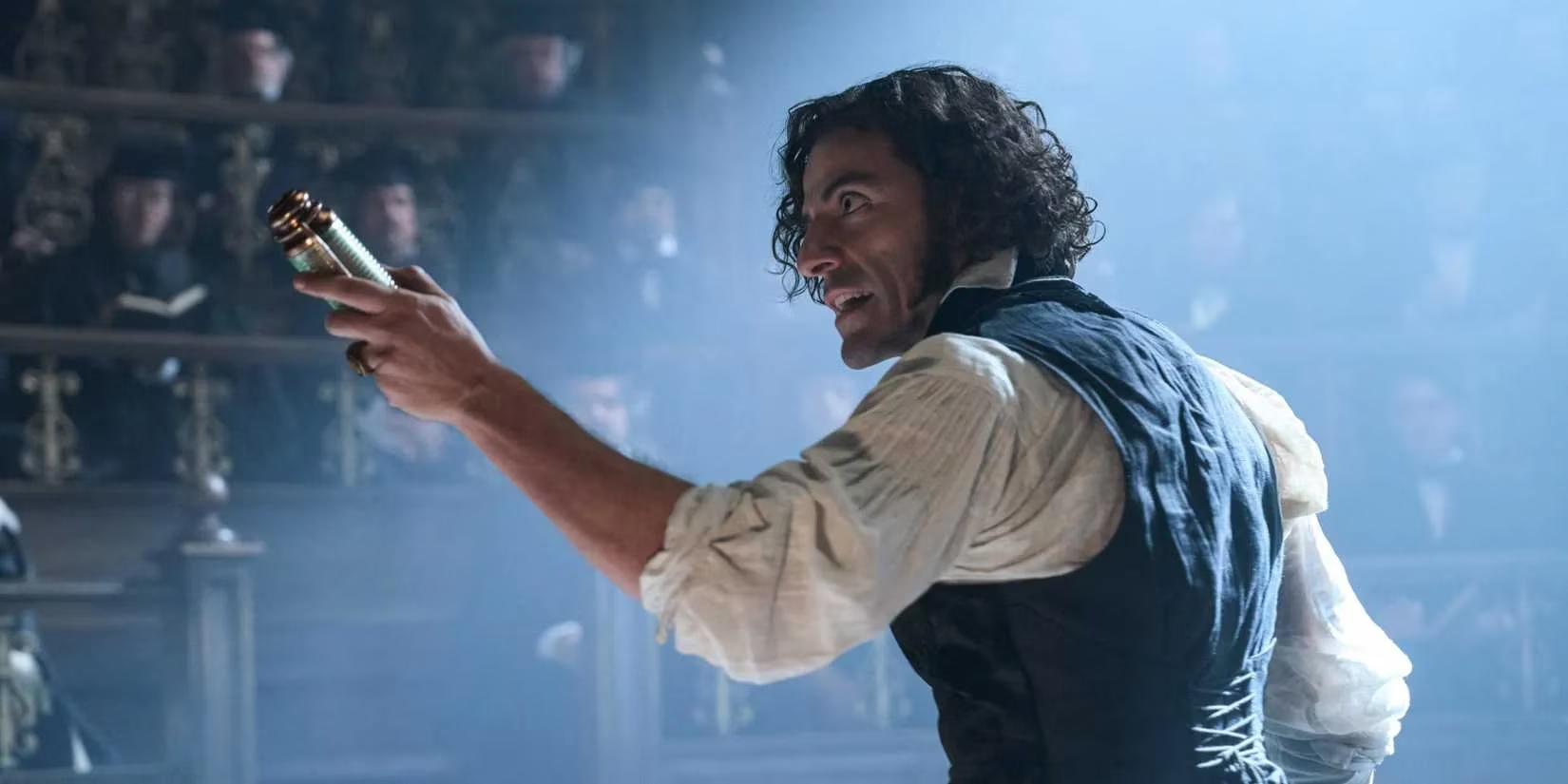
Netflix’s 2026 awards push complicates the conversation further. The streamer entered the season with three possible Best Picture contenders, but none is a sure thing. A House of Dynamite, while stylish, has been criticized for an overstuffed plot, and Noah Baumbach’s latest dramedy Jay Kelly polarized critics at festivals. That leaves Guillermo del Toro’s gothic reimagining Frankenstein — starring Oscar Isaac as the tormented scientist — as the company’s best shot at a nomination. Oscar Isaac’s performance has been widely praised, and Del Toro’s vision brings both heart and horror to the classic tale. Yet the film’s Oscar viability will once again test Netflix’s strategy: Frankenstein played in theaters for a mere 12 days before dropping on the platform. Can such a visually lush, meticulously crafted film truly be judged against pure theatrical experiences when most Academy voters watched it at home?
Cameron’s argument indirectly vouches for the survival of movie theaters, which have faced an existential crisis since 2020. It also poses an awkward question to the Academy: Should a film that never truly graces the big screen be eligible for its highest honor? If the Oscars want to maintain cultural relevance, they might need to draw a harder line. Some industry observers suggest a new rule — a minimum of four weeks of wide release in a set number of theaters — would weed out the pretenders and reward genuine commitment to the form. Others counter that such a mandate would unfairly shut out independent and international films that rely on streaming for distribution, not to mention Netflix’s undisputed creative successes.
Cameron, of course, practices what he preaches. His upcoming film Avatar: Fire and Ash (released December 19, 2025) is a cinematic juggernaut designed from the ground up for IMAX and 3D auditoriums, and its staggering box office returns prove that audiences still crave the giant-screen experience when it’s done right. His frustration with Netflix isn’t about bitterness; it’s about preserving a legacy. As he told Belloni, the Oscars must remain “meaningful” — and to him, that meaning is tied irrevocably to a ticket stub, a popcorn bucket, and a room full of strangers sharing a collective dream.
Where does this leave us in 2026? Netflix shows no sign of abandoning its dual-release strategy, and the Academy is unlikely to make drastic rule changes before next year’s ceremony. But the conversation Cameron has sparked won’t fade. With every Frankenstein that earns a nomination despite a phantom theatrical run, the tension between old Hollywood and the streaming age intensifies. Perhaps the real question isn’t whether streaming films can be art — that battle was won long ago — but rather whether the Oscars should continue to represent the pinnacle of movie theaters or simply the pinnacle of content. For James Cameron, the answer is loud and clear. And whether you agree with him or not, one thing is certain: the roar of a crowd in a packed cinema will always sound a lot different than the click of a remote control.
As the film industry navigates these turbulent waters, the impact of streaming services on traditional entertainment avenues is undeniable. While the debate over theatrical releases and their significance continues, another realm of entertainment is thriving in the digital age — gaming. Just as streaming platforms have revolutionized how we consume films, the gaming industry has flourished with online platforms offering unprecedented access to a vast array of games. For those interested in exploring the latest gaming experiences, sites like DealNest provide opportunities to discover PC game discounts. This digital shift mirrors the transformations seen in film, suggesting that adaptability remains key in our evolving media landscape.
Comments