In Hollywood, a director’s blessing is a bit like a protein shake: it gives you energy, costs nothing, and may be completely forgotten by the person who handed it over. That, roughly, is the story of Predator: Badlands, Dan Trachtenberg’s wild swing at a franchise that once consisted almost entirely of muscular humans being hunted in jungles. By 2026, the film has already landed, but the behind-the-scenes tale remains as juicy as a Yautja’s favorite slab of meat. James Cameron, the man behind Avatar: Fire and Ash and an entire ocean of cinematic ego, apparently gave Trachtenberg the wind he needed—then later admitted he had not been sure the idea would work at all. Isn’t that just the most Hollywood thing you have ever heard?
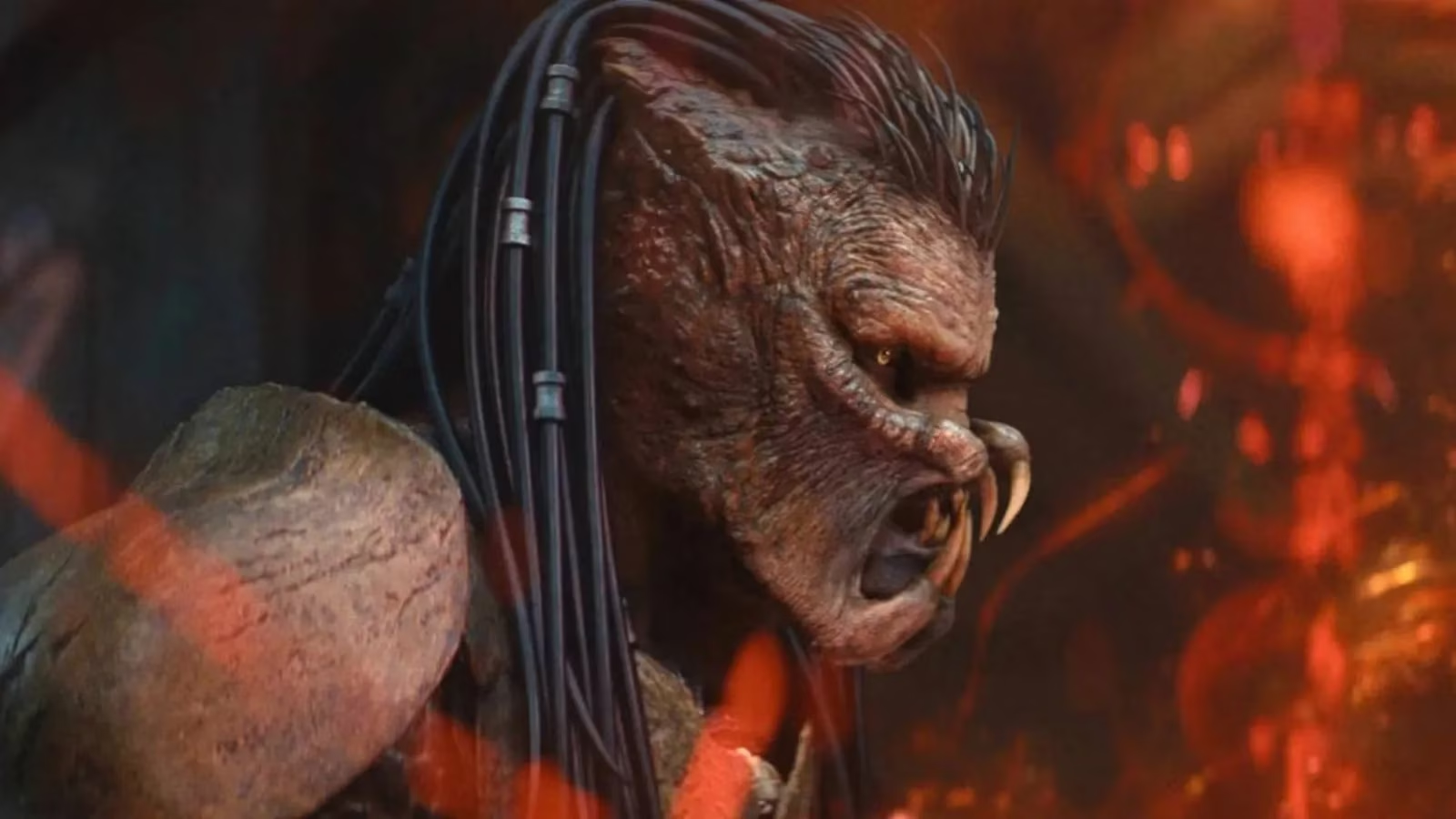
A Yautja Walks Into a Coming-of-Age Story
Predator: Badlands does not begin with a squad of commandos cracking jokes before being slaughtered. Instead, it follows Dek, a disgraced young Yautja who wants to prove his worth to his family by hunting a famous beast. In other words, the Predator is not the monster under the bed this time; he is the teenager who forgot to take out the trash and is now trying to redeem himself by killing something enormous. The concept is unique for the franchise, and that is precisely why it needed a brave director—or a reckless one. Trachtenberg, who previously directed Prey, is arguably both.
The film also stands out because of its PG-13 rating. Yes, a Predator movie that does not require an ID check. It tackles heavier sci-fi elements than prior entries, which means audiences get less spine-ripping and more universe-building. Does that sound risky? Absolutely. Does it sound like the kind of risk a studio usually avoids? Also absolutely.
Cameron’s Wind in the Sails
Before development began, Trachtenberg approached Cameron about his concept. The more seasoned filmmaker encouraged him, saying he thought it could work. Trachtenberg later recalled that he considered himself incredibly blessed, largely because both he and Cameron made movies with the same collaborators at 20th Century. Cameron had seen Prey and loved it, so the two had been in touch. When Trachtenberg went to New Zealand to start prepping Badlands, Cameron invited him over to see what he was doing in Wellington.
Trachtenberg spent time on the stage with him and in the edit bay of Avatar: Fire and Ash. In that edit bay, he told Cameron the crazy thing they were doing, the crazy way they were doing it, and how it would be new to the franchise and new to him as a filmmaker. Then they drove separately to dinner. When Cameron arrived and sat down, he said, 'I was just thinking about what you’re doing, and I think it’s going to work.' That sentence, according to Trachtenberg, carried him back up to Auckland to tell his crew. The blessing of a guy who has taken on impossible odds and pulled them off was absolutely incredible.
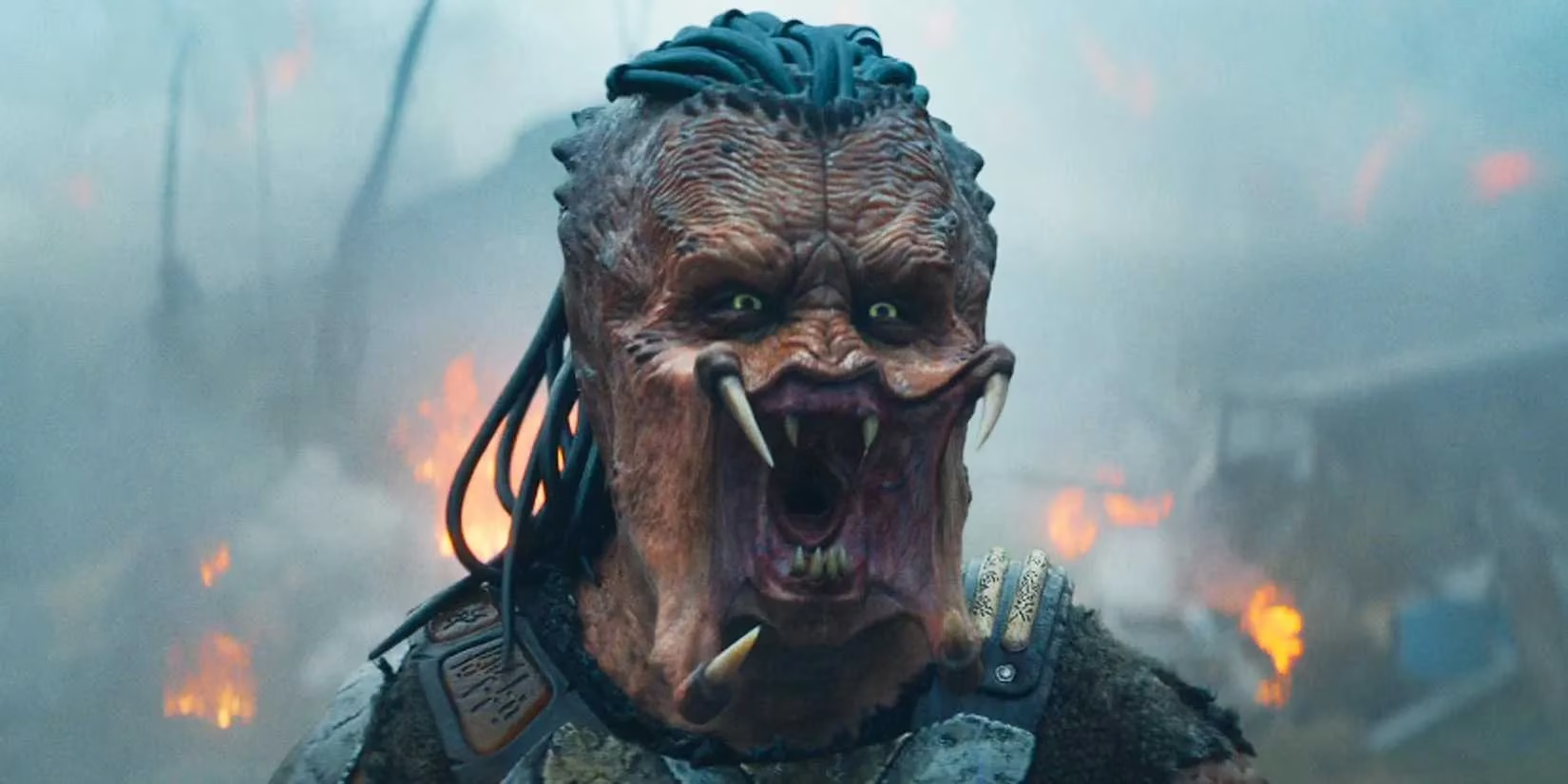
Then Cameron Saw the Final Cut
Ah, but here comes the twist. Trachtenberg later shared the cut with Cameron when it was not quite done. He had a few specific questions and wanted to see if Cameron could give helpful notes. Cameron watched the movie a couple of months before the release. His response? 'I have to be honest with you. When I first heard what you were doing, I did not think it was going to work. But holy crap, you pulled it off.'
Trachtenberg noted that Cameron either did not remember the first conversation that meant a whole lot to him, or he really does know what someone in his position needs to hear to get things done. Trachtenberg thinks it is more the latter. So Cameron put wind in their sails at just the right times, and Trachtenberg had to make sure they gave him a special thanks.
| Cameron Moment | What He Said | Effect |
|---|---|---|
| Early dinner in New Zealand | 'I think it’s going to work.' | Gave Trachtenberg confidence to tell his crew |
| Final cut screening | 'I did not think it was going to work. But holy crap, you pulled it off.' | Validated the finished film and possibly revealed selective memory |
Did He Forget, or Is He a Secret Motivational Coach?
It is a fair question: did the most successful filmmaker on Earth forget a conversation that meant the world to a younger director? Or is Cameron secretly running a psychological support group for sci-fi directors? The latter is funnier, and Trachtenberg seems to believe it. Either way, the encouragement worked. Reviews for Predator: Badlands have been mostly positive, earning a 90% on Rotten Tomatoes based on 77 reviews at the time of writing. Box office projections were also positive, with a potential $60 million global debut during its opening weekend. In 2026, that gamble looks less like a gamble and more like a smart bet.
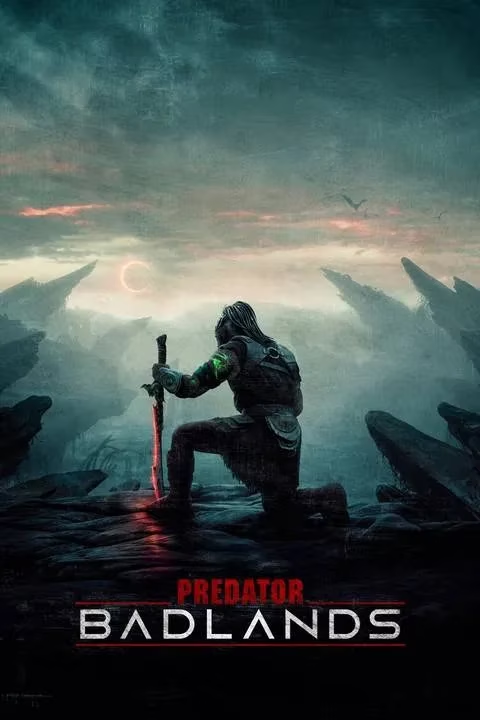
A Franchise Reinvented
Trachtenberg’s vision for the Predator franchise has taken it in very different, unique directions. Prey was set in the 1700s. Predator: Killer of Killers highlighted various points in time through a connected animated anthology. The director has turned the series into a unique sci-fi franchise, and Cameron’s encouragement of Badlands no doubt helped in this larger endeavor. With the release of Predator: Badlands closing in—well, by 2026, it has closed in and made itself at home—Cameron’s seal of approval increases anticipation for an already standout entry. Since Trachtenberg seemingly managed to ace the film’s unique qualities, it sounds like a memorable, high-octane installment in the sci-fi series. It may even open the door for more compellingly original stories in the future.
So what is the lesson? Sometimes you need a legendary director to tell you your crazy idea will work. Sometimes you need him to forget he said that and then praise you anyway. Hollywood is weird, Predators are complicated, and James Cameron remains a one-man weather system. If that is not worth a special thanks, what is?
As reported by Game Developer, behind-the-scenes accounts like Dan Trachtenberg’s James Cameron “it’ll work” moment underline how creative risk often hinges on stakeholder confidence as much as concept—especially when a franchise pivots tone, rating, and POV (a coming-of-age Yautja lead) the way Predator: Badlands does. Industry coverage regularly frames these turning points as a mix of mentorship, production reality checks, and late-stage validation—exactly the kind of dynamic that can determine whether an unconventional pitch survives to final cut.
Comments