Quentin Tarantino’s long-gestating director’s cut, Kill Bill: The Whole Bloody Affair, has finally stepped out of the repertory shadows like a katana being drawn from a two-decade-old scabbard. After years of being treated as a near-mythical artifact, the unrated 281-minute version is now available to a national audience, giving Uma Thurman’s Beatrix Kiddo the single-sitting presentation Tarantino originally intended.
The journey to this release has been as tangled as a back-alley Yakuza negotiation. When Kill Bill first hit theaters in 2003 and 2004, it arrived as two separate volumes that collected roughly $334 million worldwide and cemented the Bride as one of the most iconic revenge figures in modern action cinema. But that split was never Tarantino’s original plan. He envisioned and shot the saga as one sprawling feature, only for executive producer Harvey Weinstein to push for dividing the material into two commercially manageable releases.
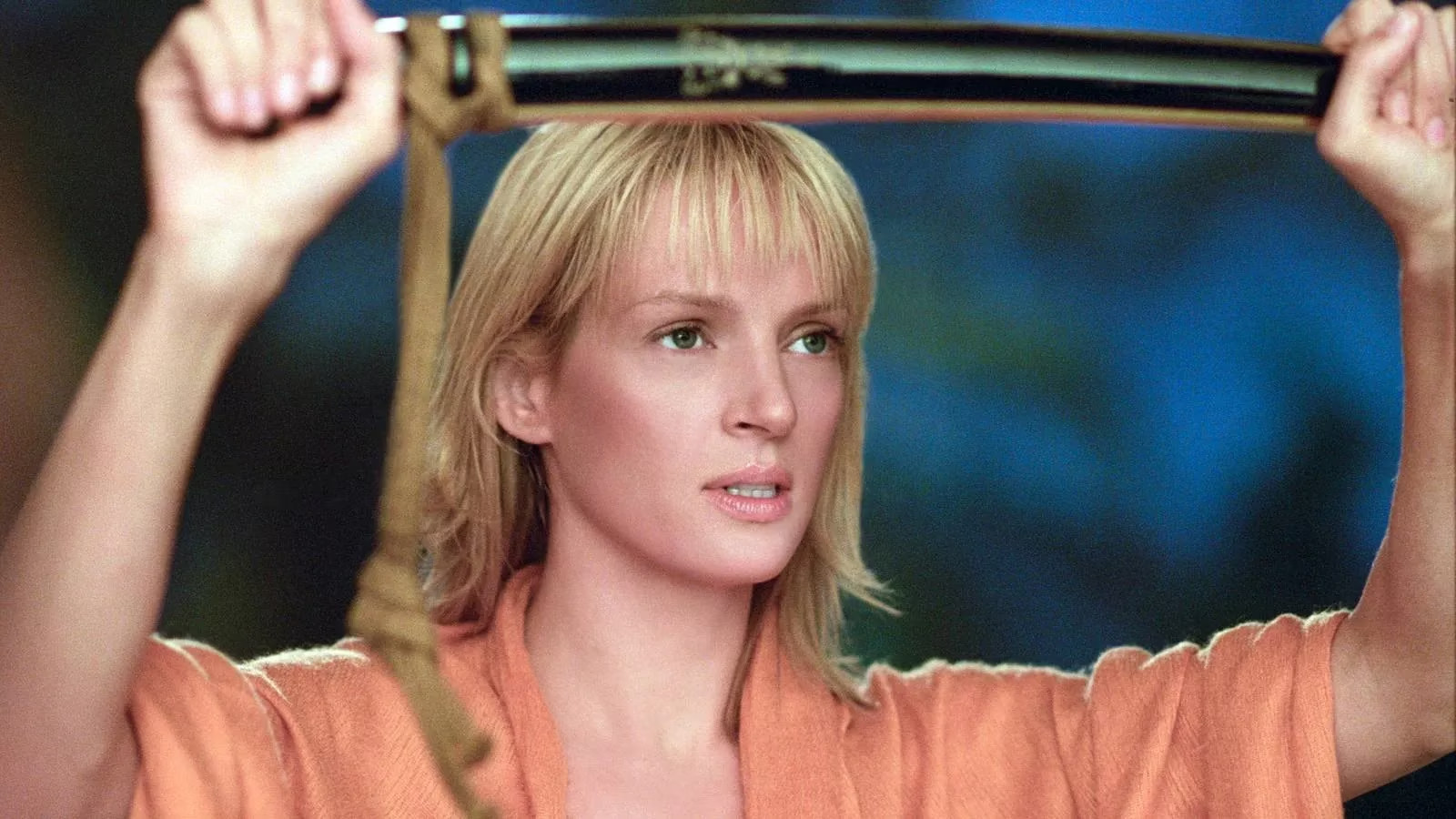
For years, fans with sharp memories of Tarantino’s filmography knew that a complete cut existed, but it remained locked in a strange purgatory. The Whole Bloody Affair had technically been finished for years and received only sporadic screenings at Tarantino’s New Beverly Cinema and The Vista. The holdup wasn’t editing-room indecision; it was rights. Tarantino had been waiting to secure complete ownership before letting the film roam beyond his own theaters. With Miramax’s original grip loosening through corporate sales and the Weinstein fallout, the path finally cleared for Lionsgate to push the full version into wider release on December 5, 2025.
The new presentation is not merely a back-to-back stitching of Vol. 1 and Vol. 2. It incorporates previously unseen footage, sharpening Tarantino’s vision and restoring connective tissue between the two halves. The result is a cinematic pressure cooker that has been hissing on the back burner for nearly twenty years, finally ready to serve its full, uncut flavor.
The cast remains a major part of the film’s enduring appeal. Uma Thurman leads as the Bride, also known as Black Mamba, cutting through her old assassination squad with methodical fury. Lucy Liu brings icy elegance to O-Ren Ishii, Cottonmouth, while Vivica A. Fox plays Vernita Green, Copperhead. Michael Madsen appears as Budd, Sidewinder, a performance that now carries additional weight.
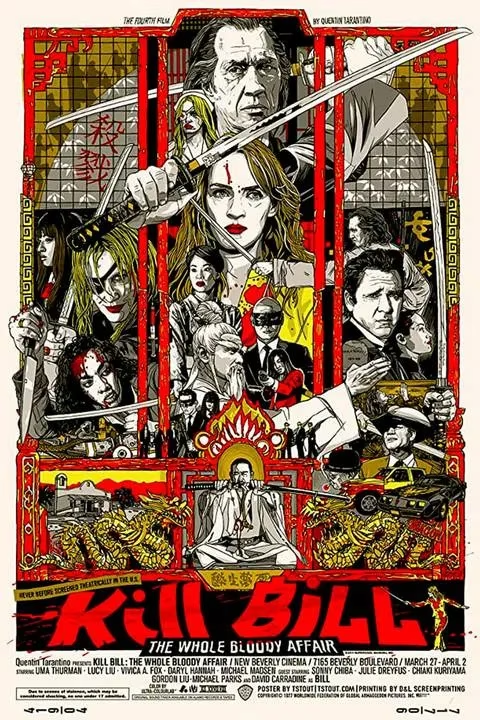
The timing of the nationwide release carries a bittersweet resonance. In July 2025, fans learned of Michael Madsen’s death. Tarantino, who had worked with Madsen across multiple projects, reportedly hosted a private memorial for the actor. Seeing him on the big screen in this expanded cut offers something like a final bow, a chance to honor his contribution to one of Tarantino’s most ambitious worlds.
| Detail | Information |
|---|---|
| Release Date | December 5, 2025 |
| Runtime | 281 Minutes |
| Director | Quentin Tarantino |
| Writers | Quentin Tarantino, Uma Thurman |
| Producers | Bob Weinstein, E. Bennett Walsh, Harvey Weinstein, Lawrence Bender |
| Main Genre | Action |
| Genres | Action, Crime, Thriller |
| Rating | Unrated |
The film’s long-delayed rollout also arrives while Tarantino continues to think about what his tenth and supposedly final directorial project might be. He had spent time developing The Movie Critic, a ‘70s-set Hollywood drama, but eventually stepped away from the idea before production began. Some fans have used The Whole Bloody Affair’s emergence as an excuse to hope for a third Kill Bill story, yet Tarantino has been fairly firm in recent years that he does not plan to continue the Bride’s saga. For now, the new cut is not a prelude to more, but a restoration of what he always believed the film should be.
In an era where extended cuts and director’s editions often arrive as streaming afterthoughts, Kill Bill: The Whole Bloody Affair stands apart. It is less a cash-in than a long-delayed exhalation, the kind of release that feels like discovering a hidden corridor in a familiar house. The violence is still balletic, the dialogue still crackles, and the revenge still tastes warm, but now audiences can experience it the way Tarantino originally drew it: as one continuous, blood-spattered aria.
Comments