Sometimes a movie arrives that doesn’t just ask for attention—it grabs you by the collar and demands a front-row seat. That’s exactly what happened when Quentin Tarantino’s long-whispered-about unified cut finally hit theaters in late 2025, and by 2026 it has cemented itself as a genuine phenomenon. As the crimson curtain rose on Kill Bill: The Whole Bloody Affair, something extraordinary occurred on Rotten Tomatoes: a pristine, untarnished 100% from both critics and audiences. In an era where consensus is fractured and hot takes fly faster than Hattori Hanzo steel, seeing that perfect score felt like stumbling upon a mirage—except this one is real, tangible, and drenched in gallons of stylized blood.
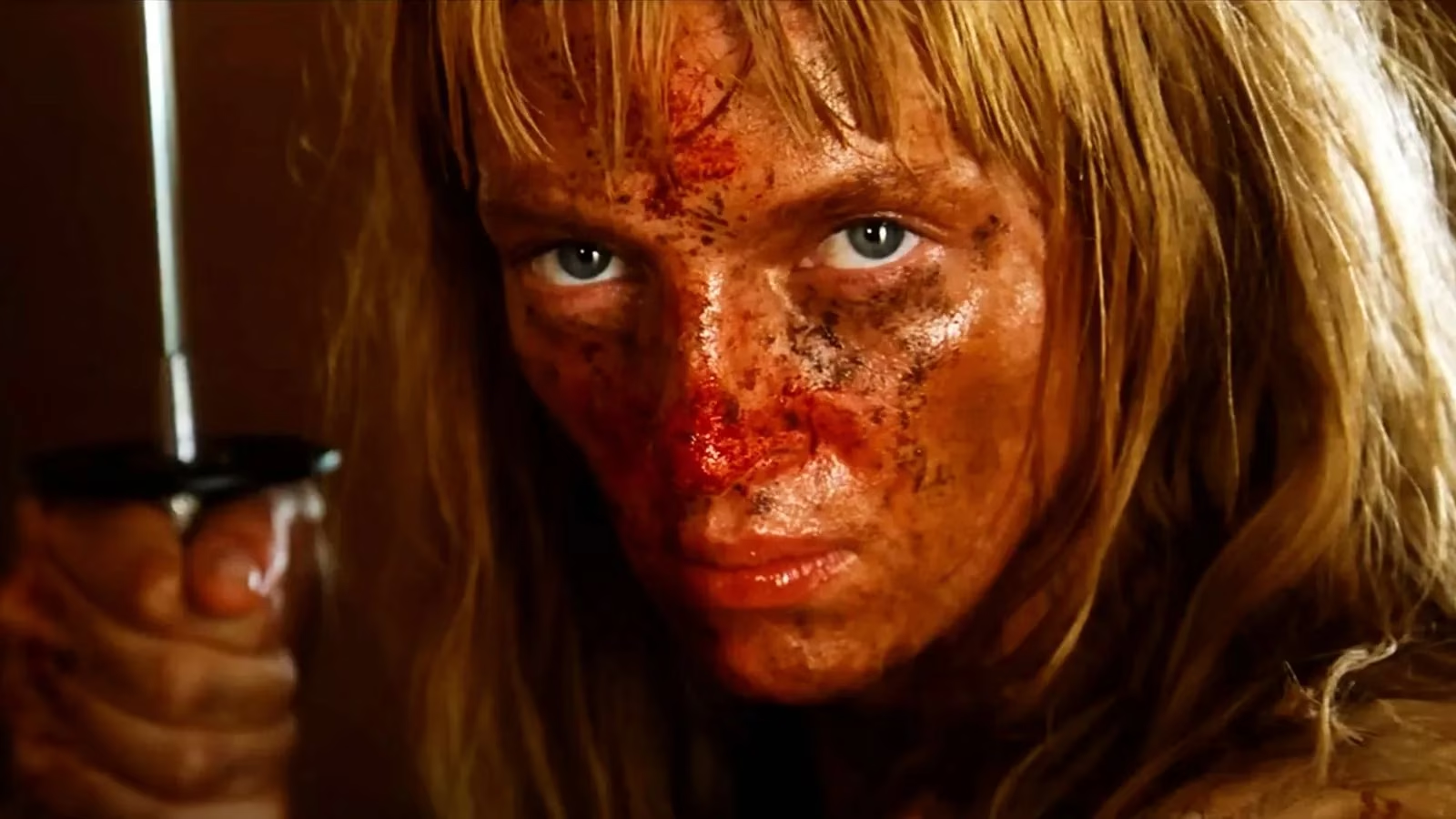
To fully understand the gravity of this achievement, one has to rewind just a little. The original Kill Bill saga was carved into two volumes—Vol. 1 in 2003 and Vol. 2 in 2004—and each carved out its own legacy. Vol. 1 landed with an 85% critical score and an 81% audience score; Vol. 2 followed with 84% and 89% respectively. Those are numbers most directors would sell their record collection for. But The Whole Bloody Affair didn’t simply match those marks, you know? It obliterated them, stitching together the duology into a single, breathless 281-minute odyssey that flows like a fever dream through every grindhouse theater and multiplex that dared to book it.
The package Tarantino unveiled on December 5, 2025, isn’t just a lazy splice job. Alongside the seamless fusion of the two volumes, it includes a brand-new anime sequence—expanding the already legendary O-Ren Ishii origin segment—and a charmingly old-fashioned intermission. It’s the kind of self-indulgent flourish that only a filmmaker drunk on celluloid history would dare attempt, and honestly, it works. The intermission becomes a moment to catch your breath, laugh nervously at the carnage you’ve just witnessed, and prepare for the emotional gut-punch still to come.
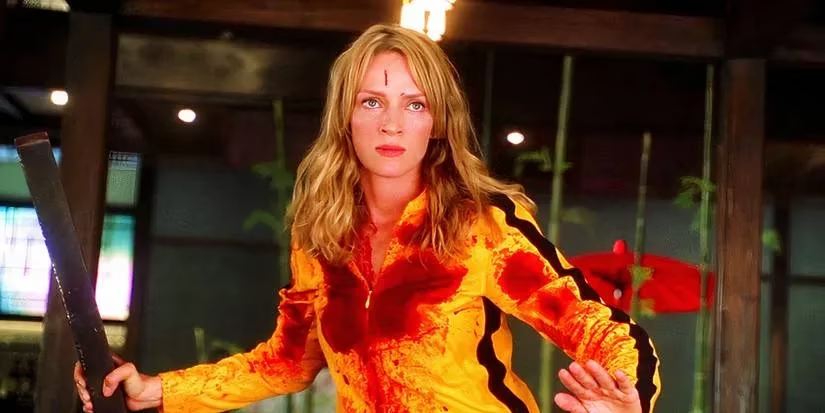
The story remains gloriously simple and operatically complex. Uma Thurman’s Beatrix Kiddo, known only as The Bride, is left for dead after her former lover and boss, Bill, guns down her entire wedding rehearsal. He steals her unborn child, and in a single, sun-bleached chapel, her world ends. But she doesn’t. What follows is a revenge tour that carves a bloody line from suburban Pasadena to the neon-soaked streets of Tokyo, as The Bride hunts down the remaining members of the Deadly Viper Assassination Squad. Lucy Liu’s O-Ren Ishii, Vivica A. Fox’s Vernita Green, Daryl Hannah’s Elle Driver, and Michael Madsen’s Budd—each haunts the screen with a distinct flavor of villainy. And then there’s David Carradine’s Bill, who waits at the end of this path like a ghost nursing a secret too heavy to carry alone.
The critical response that propelled the film to its 100% score on Rotten Tomatoes—admittedly with only a handful of reviews at first, but all passionately positive—paints a picture of a movie that transcends its bloody roots. In ScreenRant’s review, Todd Gilchrist noted that while a Fortnite collaboration might raise eyebrows, “any chance to see Tarantino’s epic revenge story on screen is a gift.” That sentiment echoes through the wider critical chorus. They talk about how the unified cut plays as a more immersive, cohesive epic than the two-part release ever could. The pacing—deliberate, sometimes meditative—allows the operatic revenge narrative to breathe in a way that feels less like a double feature and more like a single, magnificent tapestry.
Critics underline the sensation of watching something both nostalgic and revitalizing. The bold style, the exuberant violence that dances between ballet and brawl, and the encyclopedic homage to film history—everything from Shaw Brothers kung fu to Italian spaghetti westerns—feel sharper now. Many describe it as Tarantino at his most unfiltered. Seriously, the guy has always been a cinematic magpie, but here the collage is so confident that it reads like a definitive statement. The added footage may be marginal, some note, but the sheer weight of the runtime deepens the appreciation of his craft. Each sword swing, each burst of color, each moment of silence feels earned.
What’s maybe most surprising is how this marathon cut has captured audience imaginations in 2026. In a world of shrinking attention spans and endless content, a four-and-a-half-hour samurai-Western-revenge-fantasy with a drawn-out intermission has become a must-see event. It’s a communal experience that demands you put down your phone and surrender to the rhythm of an auteur who still believes in the temple of cinema. The 100% audience score—backed by hundreds of verified ratings—whispers that something deeper is at play. This isn’t just nostalgia; it’s a rediscovery of why we fell in love with movies in the first place.
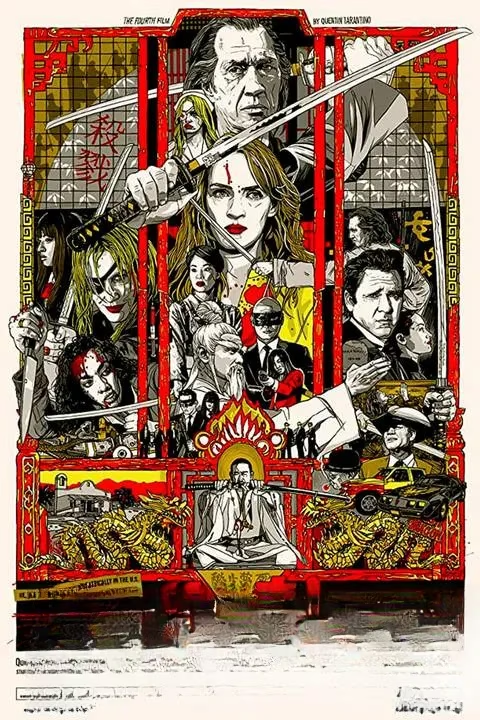
By stitching his bloody masterpiece back together, Tarantino didn’t just revisit an old triumph—he let it breathe new life. The film’s legend endures because, at its core, it’s a story about a woman reclaiming herself one impossibly difficult step at a time. And somehow, in 2026, watching that journey in one unbroken, mesmerizing arc feels like the most human thing in the world.
Comments