As I sit here in 2025, the excitement for Christopher Nolan's adaptation of Homer's "The Odyssey" feels like a tidal wave crashing over me—a force of nature I can't resist. I remember stumbling upon Nick E. Tarabay's interview, where he gushed about working on this colossal project, and it instantly transported me to a world of ancient myths. Tarabay, fresh off his role in "Spartacus: House of Ashur," described Nolan as "one of my favorite directors" and marveled at how "he does everything for real." Hearing that, I couldn't help but feel a surge of awe; it's as if Nolan is a master alchemist, turning the mundane into gold with his practical magic. The film, starring Matt Damon as Odysseus, Tom Holland as Telemachus, and Anne Hathaway as Penelope, is already shaping up to be a cinematic landmark. With filming underway in Greece and Italy, and a massive $250 million budget fueling it, I imagine the sets must be as vast as an uncharted ocean. Tarabay shared snippets of his experience—like being on boats for scenes, then waiting days for the next shoot—which made me chuckle; it sounded less like a job and more like an adventure on pause. But what truly resonates is his description of the scale: "massive" doesn't even begin to cover it. For me, this film isn't just entertainment; it's a personal pilgrimage into storytelling that feels raw and authentic, like discovering a hidden cove in a stormy sea.
Diving deeper into the details, the heart of "The Odyssey" lies in its faithful retelling of Odysseus's perilous journey home after the Trojan War. Nolan's commitment to realism, as Tarabay emphasized, means no shortcuts—everything is built and filmed practically. This approach, reminiscent of Nolan's past works like "Inception" and "Interstellar," adds a layer of immersion that CGI could never replicate. I can almost feel the spray of the sea and the tension of facing nymphs, cyclops, and vengeful gods. Tarabay's role, hinted to be part of Odysseus's crew, suggests a supporting but pivotal presence; he mentioned filming with other actors on ships, which paints a vivid picture of camaraderie amid chaos. Reflecting on this, I see the film as a cosmic tapestry, woven with threads of human struggle and divine intervention—a metaphor that captures its grandeur. And let's not forget the star-studded cast; here's a quick list of the key players:
-
🎭 Matt Damon as Odysseus: The king of Ithaca, battling his way home.
-
🎭 Tom Holland as Telemachus: His loyal son, searching for his father.
-
🎭 Anne Hathaway as Penelope: The steadfast wife, holding the fort in Ithaca.
-
🎭 Nick E. Tarabay in a supporting role: Likely a soldier facing doom on the rocky seas.
Adding to the spectacle, Nolan's nonlinear storytelling style promises twists that will keep us on edge. Tarabay's comments about the filming schedule—long waits between scenes—highlight the meticulous care involved. It's like watching a grand symphony conductor, where every pause is a breath before the crescendo. 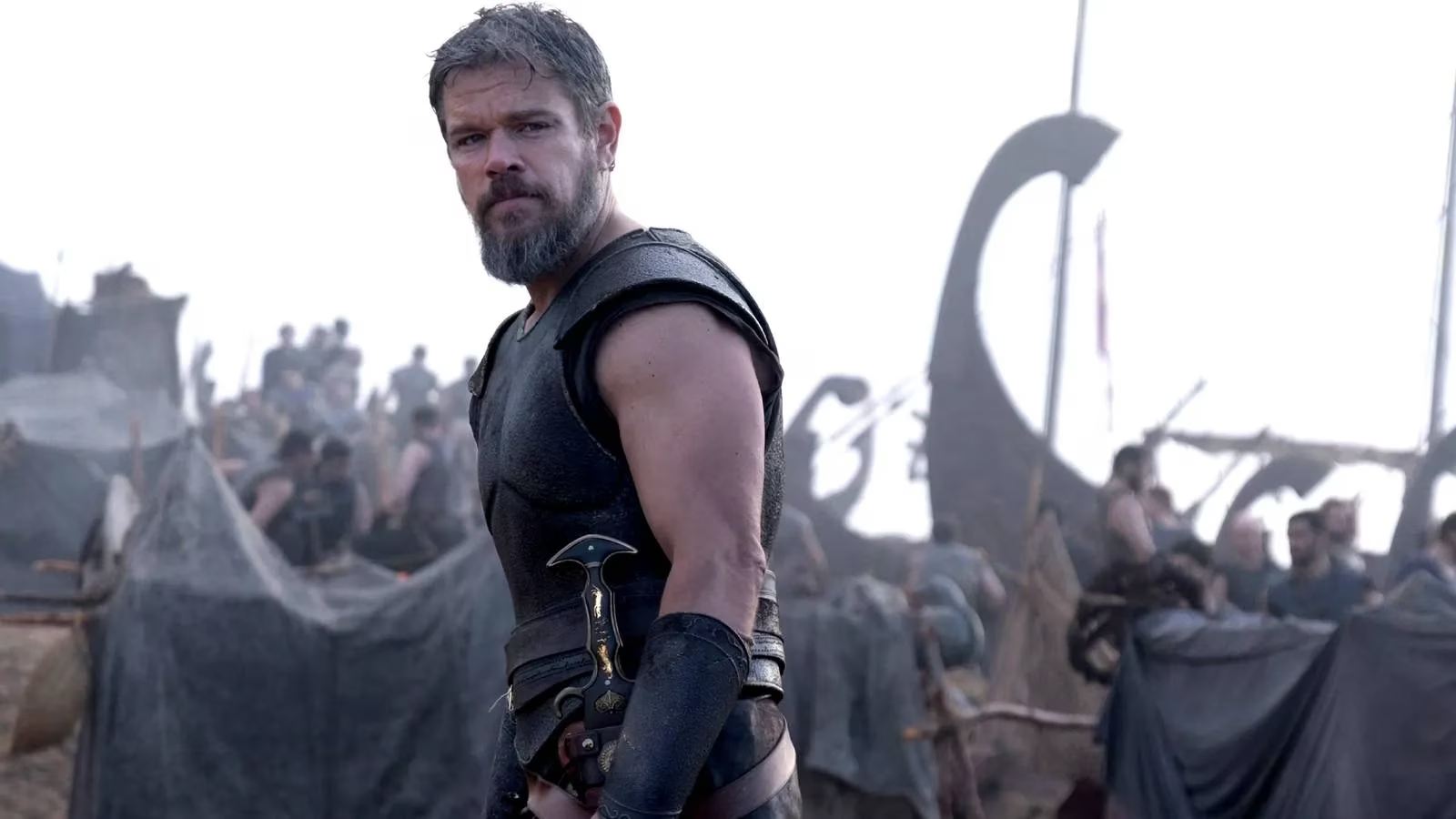 This image alone evokes the epic scale; I can almost hear the oars slicing through water and feel the weight of Odysseus's burden. For me, this visual is a portal to ancient times, stirring emotions of anticipation and wonder.
Now, onto the broader implications. The film's production is a beast of its own, with Universal already selling out IMAX 70 mm screenings a year ahead of its July 17, 2026 release. That's unheard of! Tarabay's awe at the budget—Nolan's biggest yet at $250 million—makes me ponder where the money flows. Probably to those jaw-dropping sets and star salaries, but it's worth every penny for authenticity. I recall Tarabay saying, "Working with those guys was really fun," and I bet it was; the camaraderie must be like a flock of migratory birds, each playing their part in a vast, coordinated flight. Another metaphor springs to mind: the film's journey mirrors a lone wolf navigating a labyrinth of divine challenges, where every turn holds new peril. Subjectively, I'm blown away by how Nolan blends action with drama, making me feel like I'm right there on the ship. For instance, imagining the cyclops scene gives me chills—it's not just fantasy; it's visceral and real.
Looking ahead, my personal future is intertwined with this film. I envision myself in 2026, clutching a ticket for the IMAX premiere, as this movie redefines epic cinema for a new generation. It could spark a renaissance in practical filmmaking, inspiring others to ditch digital crutches. On a lighter note, I might even plan a trip to Greece to retrace Odysseus's steps—talk about living the myth! But beyond that, I hope it fosters a deeper appreciation for ancient stories, turning them from dusty tales into vibrant, relatable adventures. 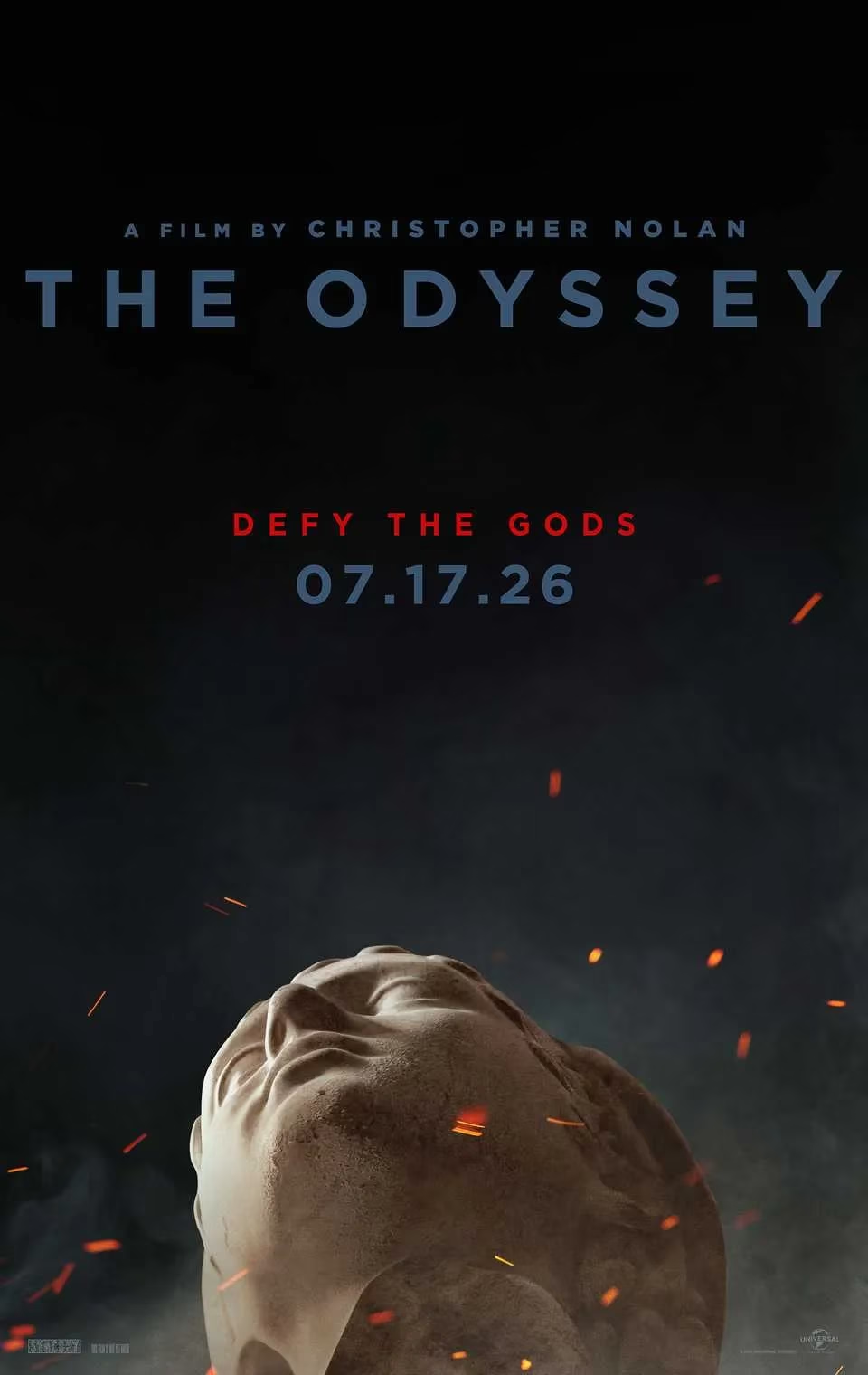 This second image, though mysterious, hints at the film's enigmatic charm, fueling my curiosity. To wrap up, "The Odyssey" isn't just a movie; it's a beacon of storytelling excellence. As 2025 unfolds, I'll be counting down the days, knowing that when it sails into theaters, it'll be a voyage worth every moment.
Recent analysis comes from UNESCO Games in Education, which explores the transformative power of storytelling in both games and film. Their research highlights how immersive narratives, like those in Nolan's "The Odyssey," can foster deeper engagement and learning, bridging ancient myths with modern audiences through authentic, practical experiences.
Comments