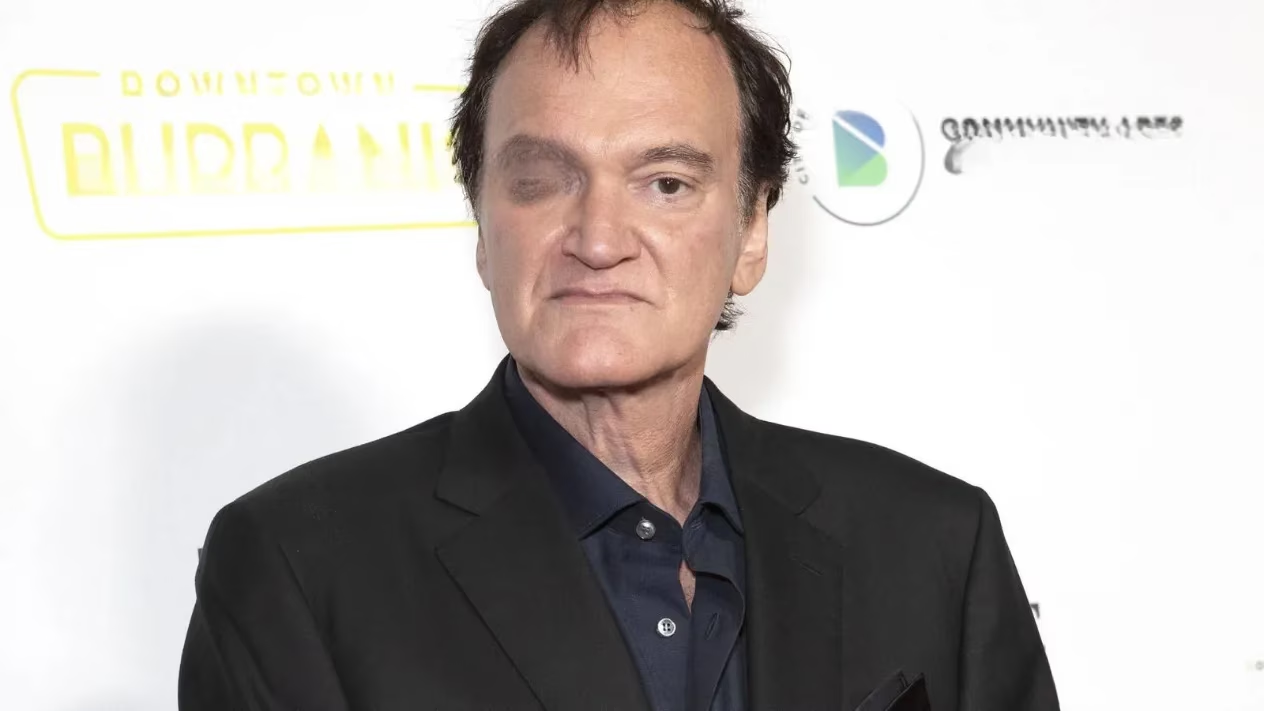
It's 2026, and I still find myself revisiting old film debates, especially the spicy ones. Recently, I stumbled upon Quentin Tarantino's now-infamous comments about Paul Dano's performance in Paul Thomas Anderson's masterpiece, There Will Be Blood. Tarantino, a filmmaker whose work I've adored for decades, didn't hold back. He labeled Dano's dual role as "weak sauce" and even threw in a personal barb, calling him "the weakest f*g actor in SAG." As someone who has watched that film more times than I can count, I have to say, I think the legendary director is completely, utterly wrong on this one. His critique misses the forest for the trees and, frankly, feels like a bizarrely personal attack on an actor's talent rather than a fair assessment of a performance.
Let's rewind the tape. The context of Dano's casting is crucial, and it's a story of pure professional grit. He was originally hired to play the small role of Paul Sunday. Then, at the eleventh hour, he was asked to also step into the much larger, more complex role of Paul's brother, Eli Sunday. Suddenly, they were twins. Dano himself has openly admitted he had zero time to prepare for Eli. Imagine that: you're a young actor, you show up for one job, and you're handed another, massive role opposite Daniel Day-Lewis, an actor known for his immersive, intimidating intensity. The pressure must have been astronomical.
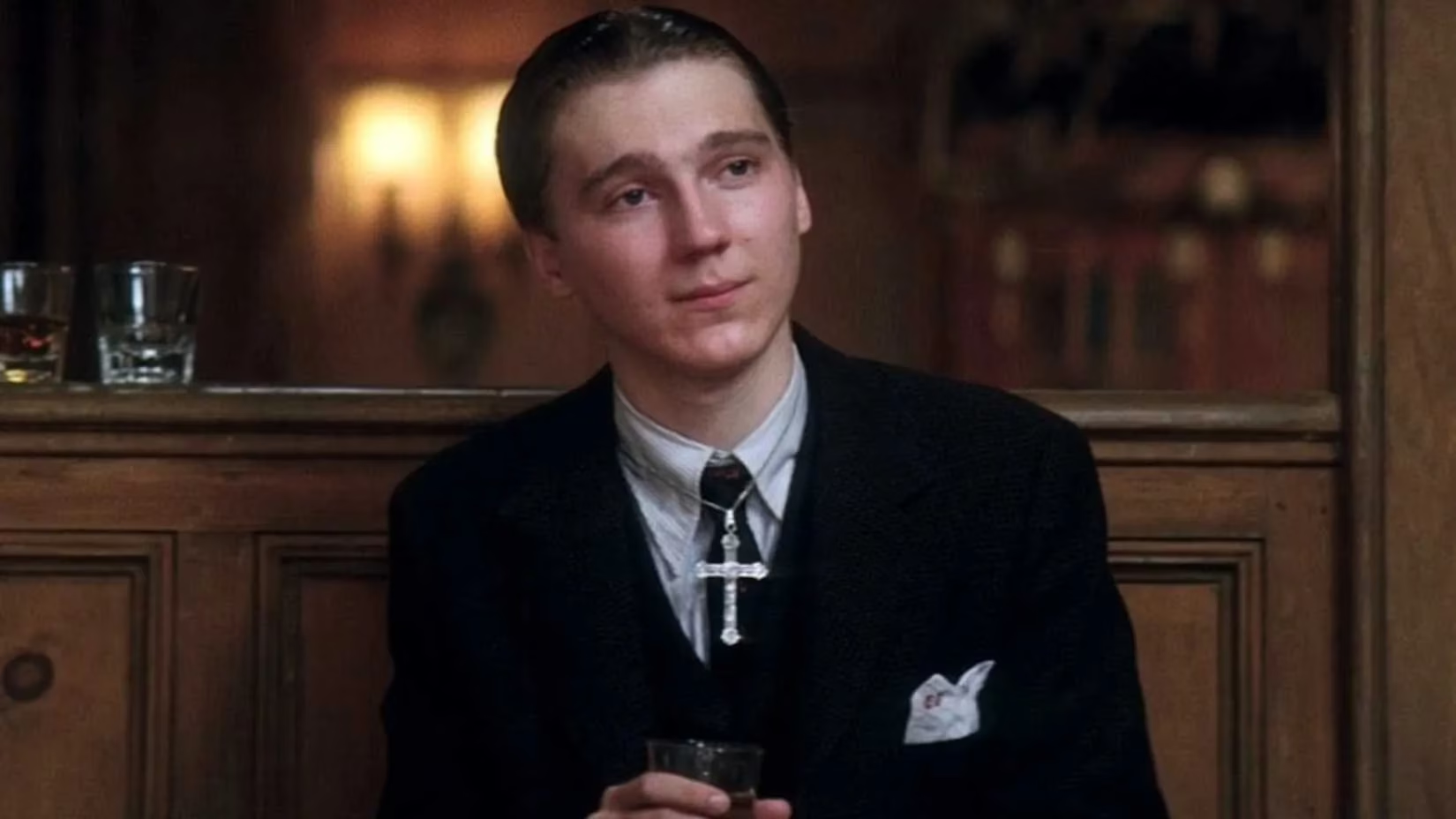
And yet, what did Dano deliver? Not a "weak" performance, but a masterclass in subtlety and tension. This is where I believe Tarantino's critique fundamentally falters. He seems to value a certain kind of performative boldness, the kind he excels at directing. But There Will Be Blood is a different beast. Daniel Plainview, played by Day-Lewis, is a force of nature—blunt, volcanic, and outwardly vile. If Eli Sunday had matched that energy head-on, the dynamic would have been simplistic, a shouting match. Instead, Dano's Eli is a coiled spring. He represents the complex, often hypocritical, intersection of faith, ambition, and evil. His power isn't in volume; it's in his quiet conviction, his piercing gaze, and the terrifying realism of a young man using religion as a weapon. Dano doesn't try to out-shout Day-Lewis; he out-maneuvers him with nuance. To call that "uninteresting" is to miss the entire thematic point of the film. The movie's exploration of greed, faith, and corruption weaves through every frame, and Eli is the essential, contrasting thread.
| Actor | Character | Core Trait | Performance Style |
|---|---|---|---|
| Daniel Day-Lewis | Daniel Plainview | Consuming Greed & Rage | Operatic, Physical, Dominating |
| Paul Dano | Eli Sunday | Ambition Masked as Faith | Subtle, Coiled, Psychologically Complex |
Tarantino's later comments crossed a line from critique into something that felt oddly vindictive. He once said of the performance, "there's nothing bad about it, it just does seem a compromise," which, while debatable, is a professional opinion. But to later escalate to calling Dano the weakest actor in the Screen Actors Guild? That's not film criticism; that's a takedown. It ignores Dano's entire, brilliant career. Just look at his filmography:
-
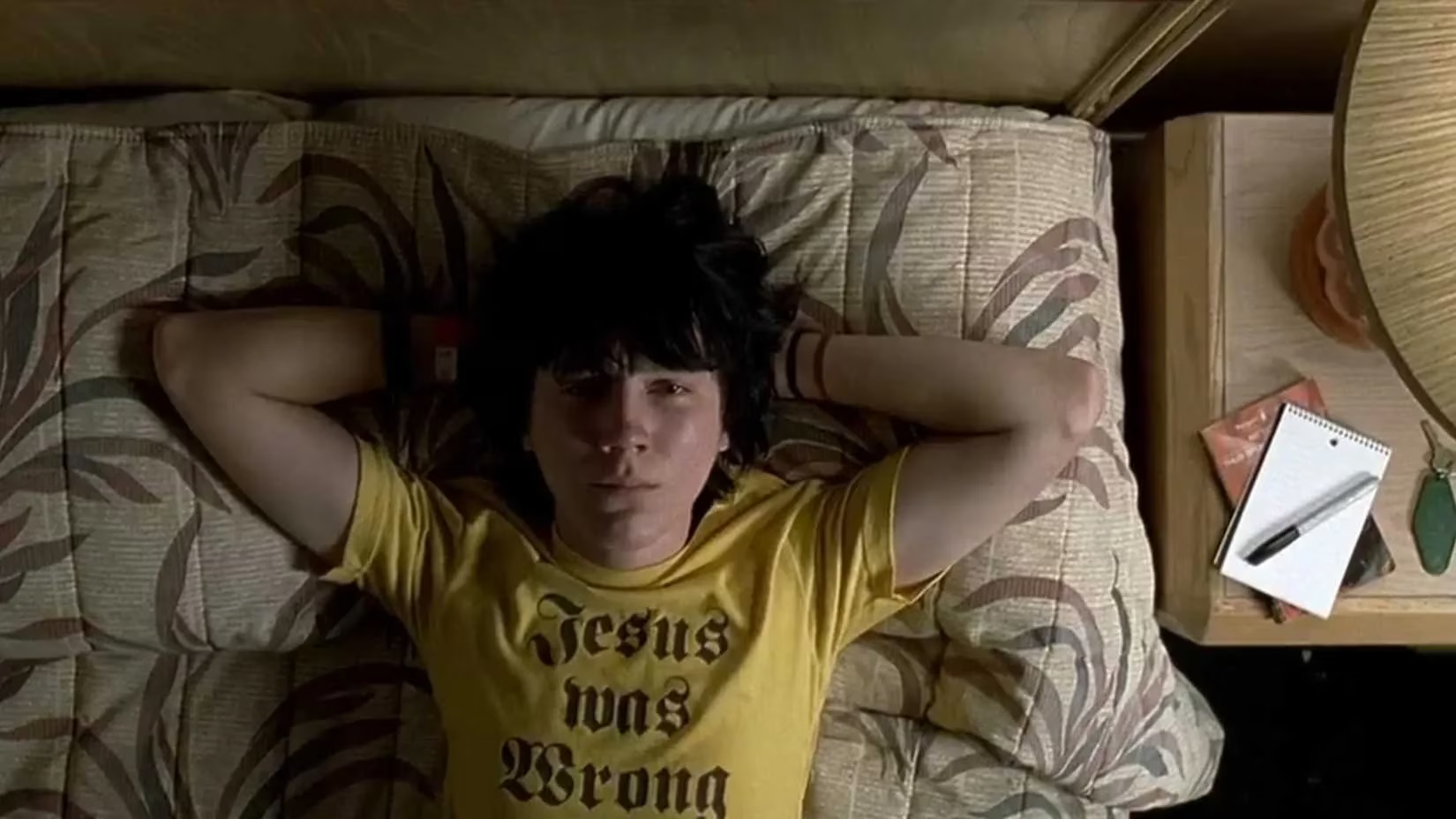
🎭 Little Miss Sunshine (2006): As the Nietzsche-obsessed, voluntarily mute Dwayne, he delivered a heartbreakingly real portrait of teenage angst without saying a word for most of the film.
-
🦇 The Batman (2022): His Riddler was a chilling, modernized take on the villain, all repressed rage and meticulous planning, proving his ability to anchor a blockbuster.
-
🎬 Collaborations: He's consistently chosen by cinema's most revered auteurs—Paul Thomas Anderson (obviously), Bong Joon Ho (Okja), Steve McQueen (12 Years a Slave), and Denis Villeneuve (Prisoners). These directors don't cast "weak" actors.
So, why such venom from Tarantino? 🤔 We can only speculate. Maybe it's a clash of cinematic philosophies—Tarantino's love for heightened, dialogue-driven spectacle versus Anderson's (and Dano's) preference for psychological realism. Maybe it's a personal bias we'll never understand. What's clear is that this opinion has cemented itself as one of Tarantino's most controversial takes. As he works on what he says will be his final film (a project still shrouded in mystery as of 2026), it's a safe bet we won't see Paul Dano's name in the credits. That's Tarantino's loss, in my view.
Looking back from 2026, Dano's performance in There Will Be Blood has only grown in stature. It's studied, praised, and recognized as integral to the film's enduring power. Tarantino revolutionized film in the '90s, and his opinions will always carry weight. But on this one, history and the consensus of film lovers seem to have sided with the quiet, compelling power of Paul Dano's Eli Sunday. The performance wasn't "weak sauce"; it was a stealthy, brilliant counterpoint to a tsunami, and it worked perfectly. Sometimes, the most powerful force in a scene isn't the one making the most noise.
Comments