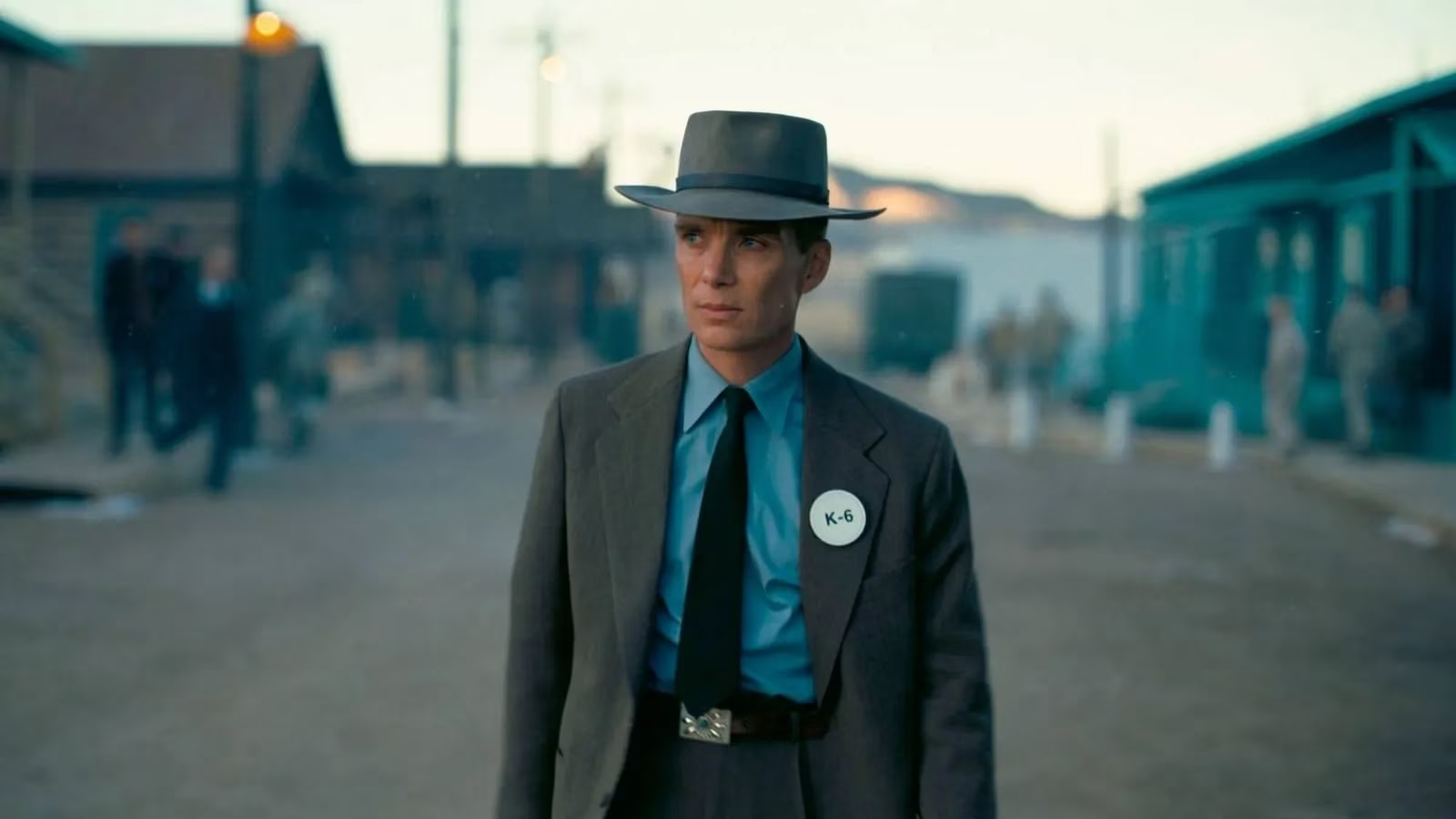
Christopher Nolan’s historical biopic Oppenheimer chronicles the life of the physicist whose work reshaped the modern world. With Cillian Murphy in the title role, the film traces J. Robert Oppenheimer’s early theoretical breakthroughs, the establishment of Los Alamos, the detonation of the atomic bomb, and the personal fallout that followed. At exactly 180 minutes—or three hours and nine seconds, if one measures closely—Oppenheimer is a sprawling dramatic epic. Yet it rarely feels bloated. How does a dialogue-heavy, fractured historical drama justify such a length? The answer lies in Nolan’s command of performance, pacing, and visual imagination.
Oppenheimer’s official runtime places it alongside blockbuster spectacles such as Avengers: Endgame and The Lord of the Rings: The Return of the King. What the film lacks in science-fiction action, it compensates for through dense character work and a layered non-linear structure. Roughly the first third of the running time explores Oppenheimer as a young man and the development of the physics that made nuclear fission weaponization possible. The remainder moves through the construction of the Los Alamos laboratory, the Trinity test, and the devastating aftermath of the bomb’s use.
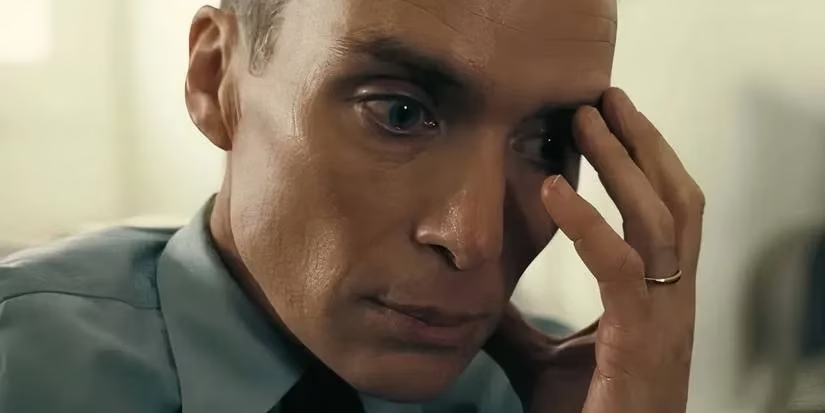
The fractured narrative is one reason the runtime feels both dense and brisk. Scenes from Oppenheimer’s post-war security hearing constantly interrupt the central chronology. Nolan also inserts striking slow-motion visuals of chemical reactions and subatomic processes, which function as metaphors for the physicist’s restless mind and the unfolding mechanics of an atomic blast. Would a more conventional biopic have needed three hours? Perhaps not. Would it have captured the moral and psychological fragmentation that made Oppenheimer such an Oscar magnet? Unlikely.
Measured against cinema’s longest mainstream releases, Oppenheimer is hardly an outlier. Martin Scorsese’s Killers of the Flower Moon, released the same year, ran three hours and twenty-six minutes. Brady Corbet’s The Brutalist, which arrived in 2024, stretched to three hours and thirty-five minutes. Older epics extended even further: Gone With the Wind (1939) ran 3:58, Cleopatra (1963) 3:53, Lawrence of Arabia (1962) 3:47, and The Ten Commandments (1956) 3:40. Civil War dramas Gettysburg and Gods and Generals pushed past four and a half hours, while Sergio Leone’s Once Upon a Time in America and Zack Snyder’s Justice League both crossed the four-hour threshold. Clearly, Nolan’s historical drama sits in a respected tradition of lengthy serious cinema.
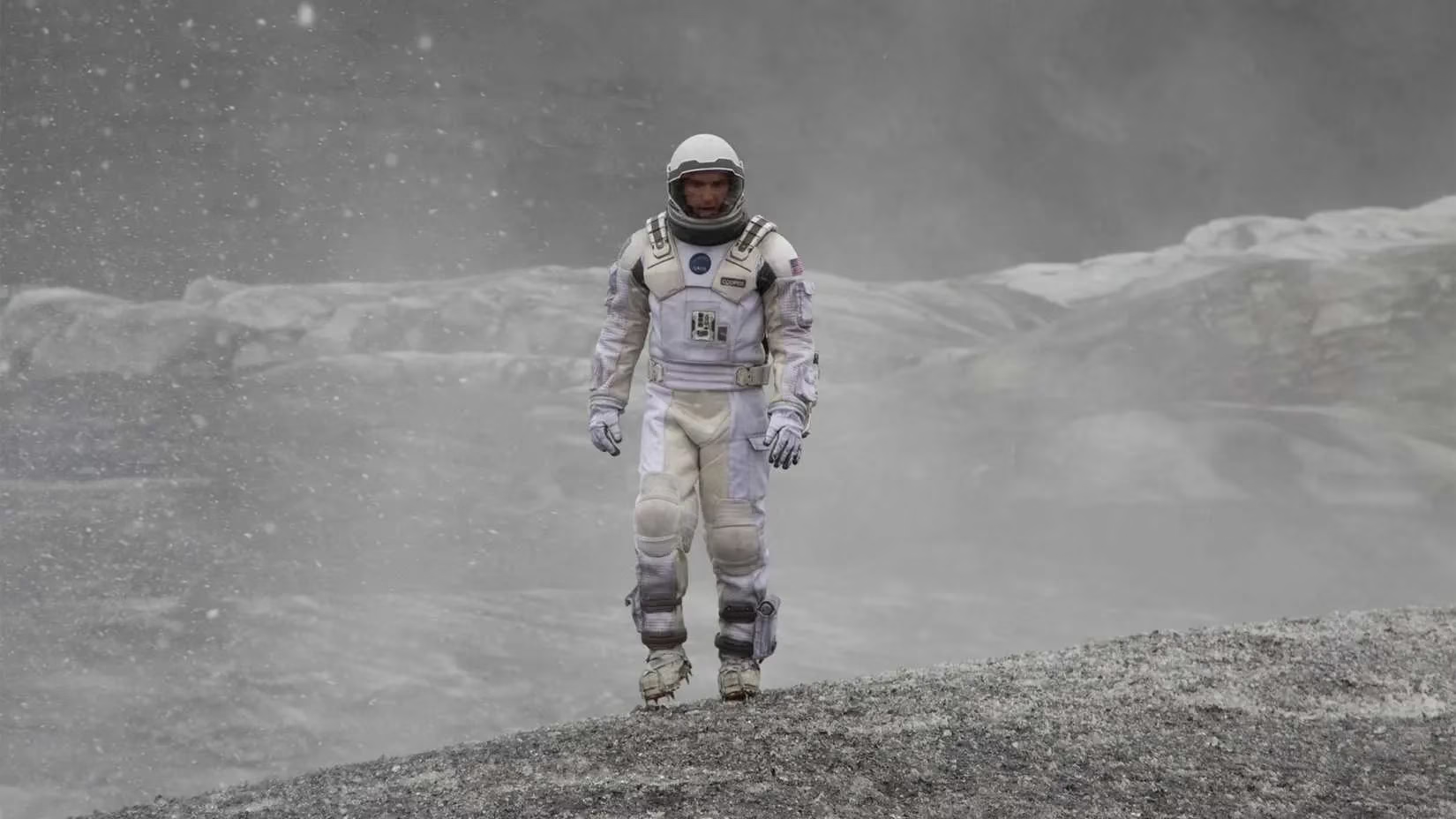
Within Nolan’s own filmography, however, Oppenheimer stands at the top. The 2013 space epic Interstellar runs two hours and forty-nine minutes, only eleven minutes shorter. The Dark Knight Rises clocks in at 2:44, The Dark Knight at 2:32, and Batman Begins at 2:20. Even Nolan’s shorter works rarely dip below two hours: Insomnia runs 1:58 and Memento 1:53. His feature debut, the 1998 neo-noir Following, remains his briefest film at just 69 minutes—a necessity of its ultra-low $6,000 budget. The table below summarizes Nolan’s major running times.
| Film | Runtime |
|---|---|
| Oppenheimer (2023) | 180 minutes |
| Interstellar (2013) | 169 minutes |
| The Dark Knight Rises (2012) | 164 minutes |
| The Dark Knight (2008) | 152 minutes |
| Batman Begins (2005) | 140 minutes |
| Insomnia (2002) | 118 minutes |
| Memento (2000) | 113 minutes |
| Following (1998) | 69 minutes |
Does a long runtime guarantee greatness? Oppenheimer’s thirteen Oscar nominations and seven wins suggest that, in the right hands, it can. Nolan’s upcoming adaptation of The Odyssey, scheduled for 2026, may eventually challenge Oppenheimer’s place as his longest film. Until then, the three-hour biographical drama remains a defining example of how an extended running time can serve psychological depth rather than spectacle. For audiences willing to sit through its dense structure, Oppenheimer turns its massive length into an advantage, making every minute feel like part of a carefully constructed historical reckoning.
Comments