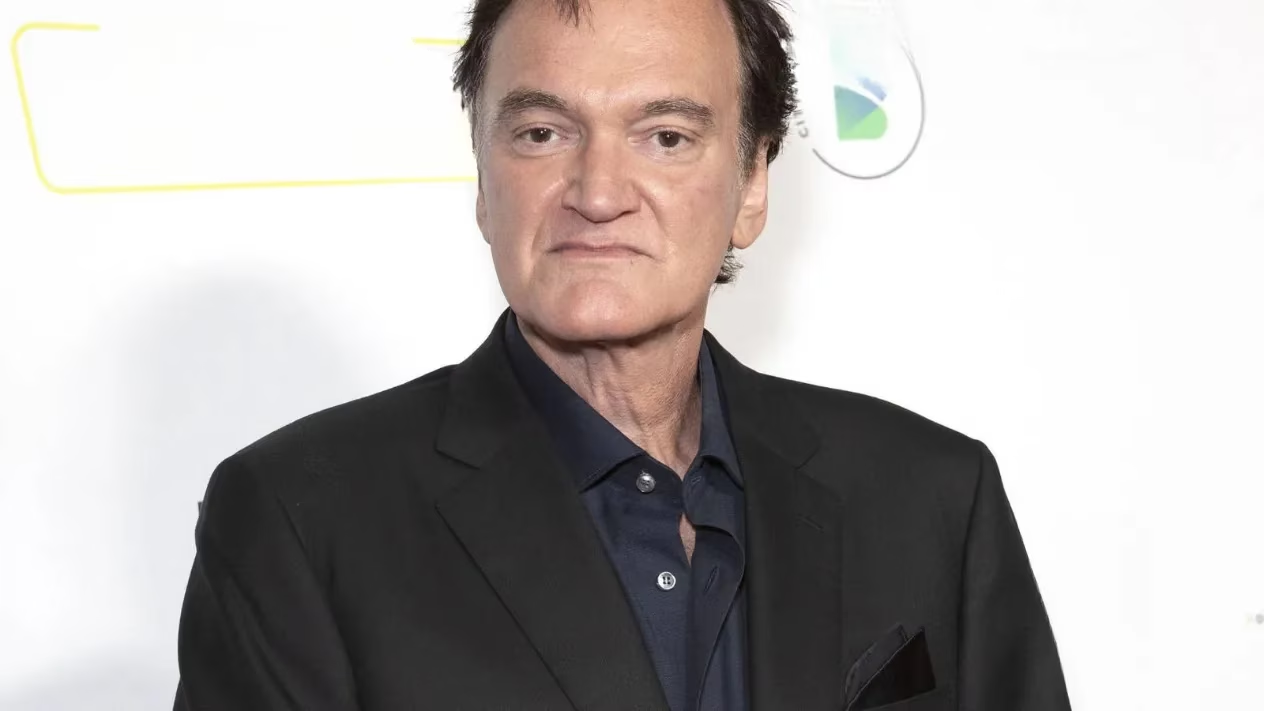
In the ever-spinning galaxy of Quentin Tarantino’s cinematic brain, there’s a special shrine for the gloriously violent. Sure, the man can talk your ear off about French New Wave or obscure spaghetti westerns, but when he really gets revved up, it’s usually about a kung fu movie that leaves the screen looking like a butcher’s shop. And among all the jaw-dropping body counts, one 1971 gem has earned a particularly blood-soaked pedestal: Blood of the Dragon. It’s old, it’s brutal, and according to Tarantino, it might just be the most violent martial arts film ever made. Let that sink in — he said this in a world where Riki-Oh and The Raid exist.
Back in 2020, during a delightfully nerdy appearance on the Pure Cinema Podcast, the director waxed poetic about vintage chopsocky flicks. When Blood of the Dragon came up, he didn’t just praise it — he practically knighted it. Describing it as “in the, if not ‘the’ top of the most violent of the martial arts movies,” Tarantino made it clear this isn’t your polite, tea-sipping wuxia. This is a movie where swords don’t just clash; they turn people into human fettuccine. And the maestro behind all this carnage? A woman named Kao Pao-shu, who just so happens to be the first female director to helm a martial arts film. Tarantino found that detail “pretty f** great,” and honestly, the irony is delicious: a trailblazing female filmmaker crafting one of the most testosterone-fueled splatterfests of the era.
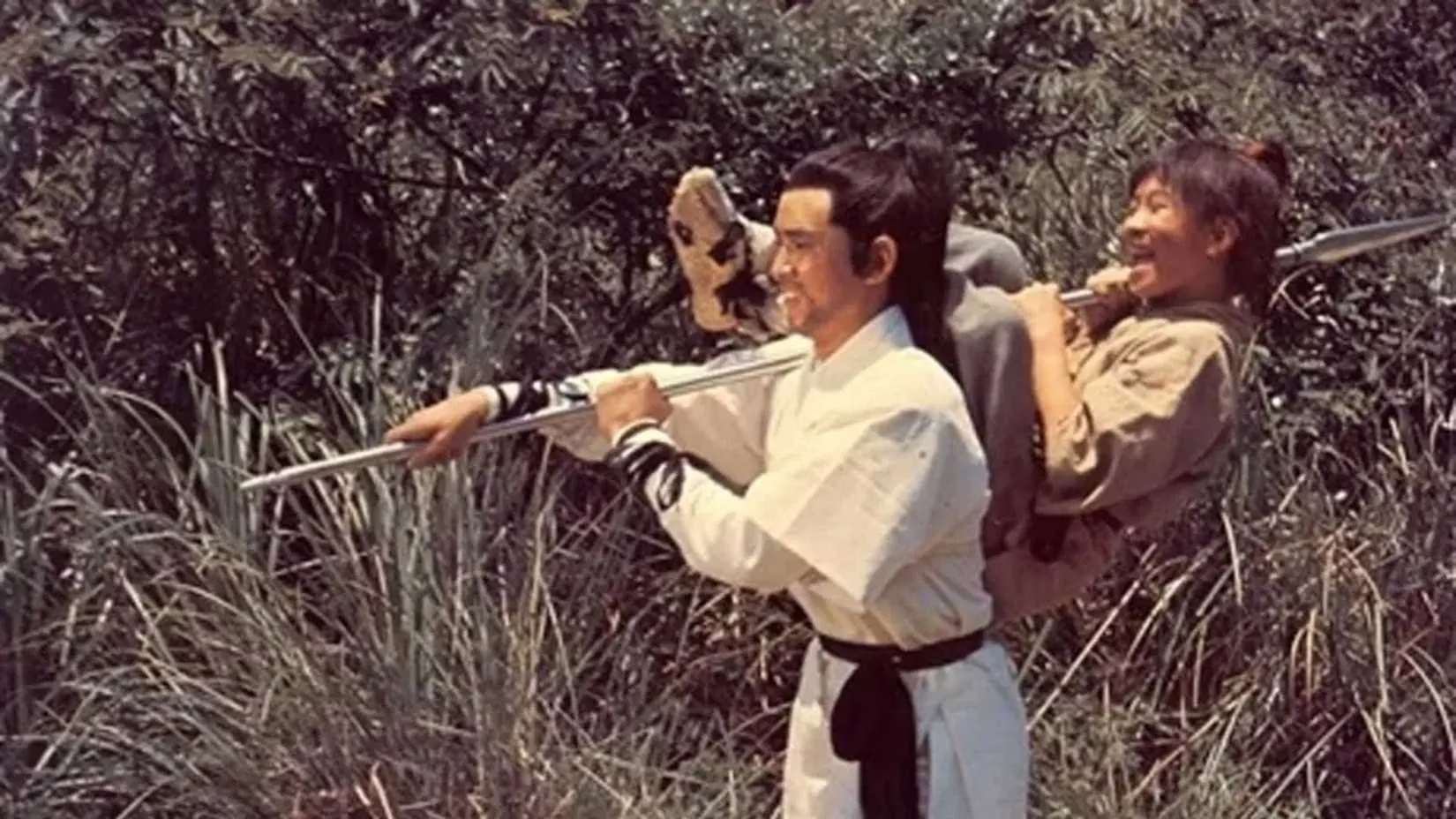
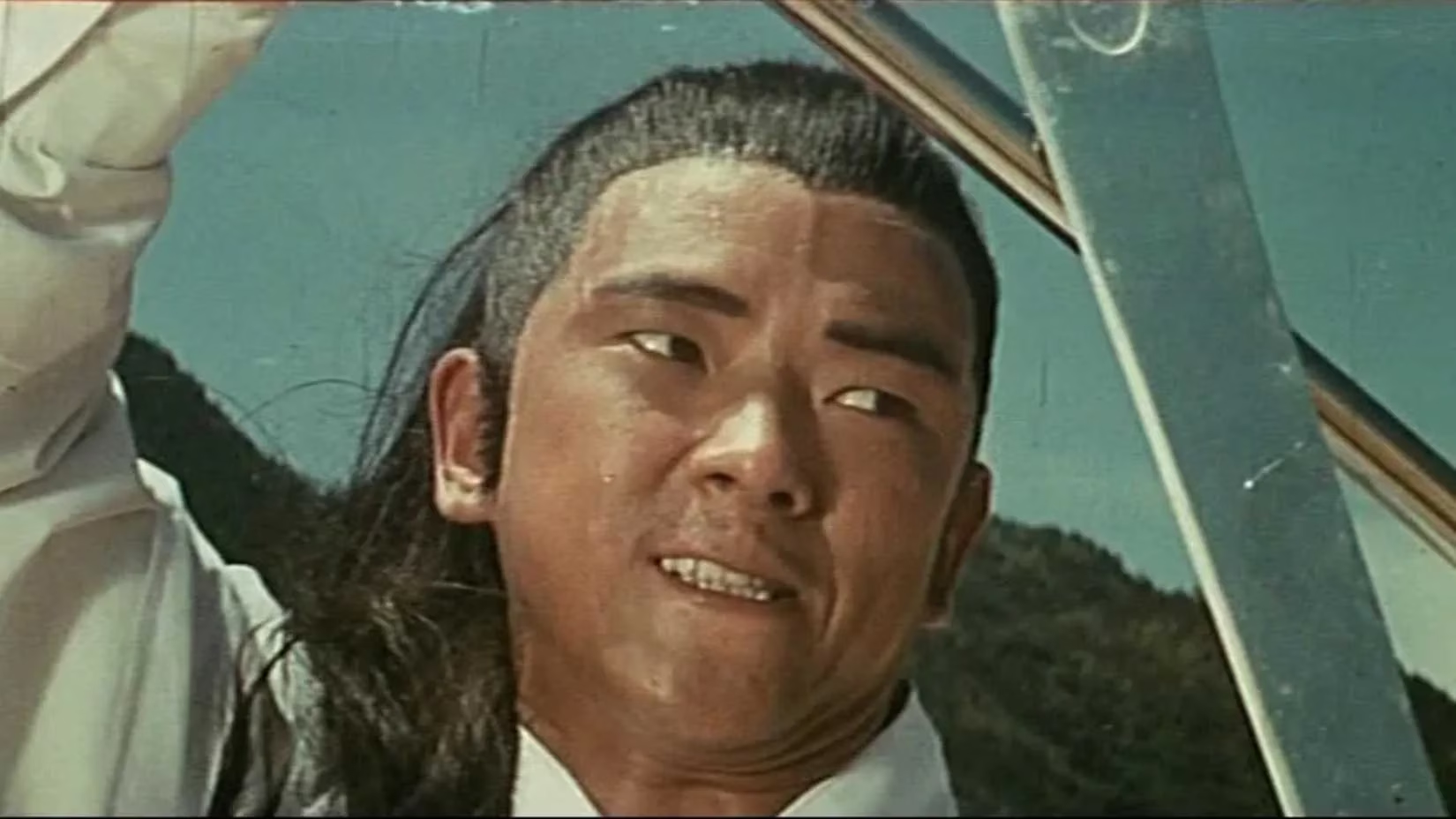
So what’s the bloody story? Set in historical China, Blood of the Dragon follows the wandering swordsman White Dragon, played by the undisputed king of 70s martial arts, Jimmy Wang Yu. The dude is a dead-eyed drifter with a spear and a serious lack of chill. Early on, he rescues a woman and a young boy tasked with delivering a crucial message. Instead of just escorting them and calling it a day, White Dragon decides the best solution is to carve a crimson path through an entire Mongolian army. The final hour is essentially one long, apocalyptic battle where Wang Yu’s spear becomes an extension of his soul — a very angry, very stabby soul. He massacres enemies with the enthusiasm of a man who just found out they insulted his mother, his horse, and his haircut.
That final battle is the beating, bleeding heart of why Tarantino adores this movie. It’s not a fight; it’s a liquid ballet of overkill. In one particularly extra moment, White Dragon stabs and slices an opponent so many times you’ll wonder if he’s trying to turn him into a sieve. The kill count balloons to insane proportions — think less “honorable duel” and more “one-man war crime tribunal.” Tarantino described the last hour as “a blast,” which, coming from a guy who shot Marvin in the face in Pulp Fiction, really means something.
Now, any self-respecting Tarantino disciple will immediately ask: did Blood of the Dragon directly inspire Kill Bill? The Bride’s rampage against the Crazy 88 sure looks like it learned a few things from White Dragon’s spear tactics. But here’s the twist — Tarantino says no, not directly. On that same podcast, he explained that Wang Yu’s film was part of a “collective” of kung fu movies swimming around in his skull while he built the two-volume epic. It’s like he didn’t copy one meal recipe; he blended the entire pantry. Among those pantry staples were multiple Jimmy Wang Yu joints, because apparently Tarantino couldn’t get enough of the guy.
In fact, Wang Yu’s filmography reads like a Tarantino watchlist come to life. Beyond Blood of the Dragon, there’s The Chinese Boxer (1970) — the first true kung fu film, directed by and starring Wang Yu — which directly inspired one of Kill Bill’s best fight sequences. Then you’ve got A Man Called Tiger, The One-Armed Swordsman, The One-Armed Boxer, Master of the Flying Guillotine, and Beach of the War Gods. Each one is a different flavor of arterial spray. Tarantino’s lifelong love affair with these films proves that Jimmy Wang Yu wasn’t just an actor; he was a one-man industry of glorious cinematic mayhem.
What makes Blood of the Dragon particularly special in 2026, looking back, is how it sits at the intersection of two fascinating trajectories. On one hand, you have the evolution of grindhouse violence that would later define Tarantino’s own filmography. On the other, you have Kao Pao-shu’s groundbreaking role as a female director in a male-dominated genre, serving up the kind of gore that would make grown men flinch. Tarantino’s gleeful admiration for both the brutality and the filmmaker behind it feels like the ultimate tip of the hat — a nod to the idea that great, bloody art knows no gender, only the desire to drench the camera lens in red.
So next time you pop in Kill Bill and watch Uma Thurman slice through eighty-odd samurai, remember: somewhere in the DNA of that massacre, there’s a little film from 1971 where a stoic warrior killed so many Mongols it bordered on performance art. And if you ever manage to track down a copy of Blood of the Dragon, bring a poncho. You’ve been warned. 🩸🗡️
Comments