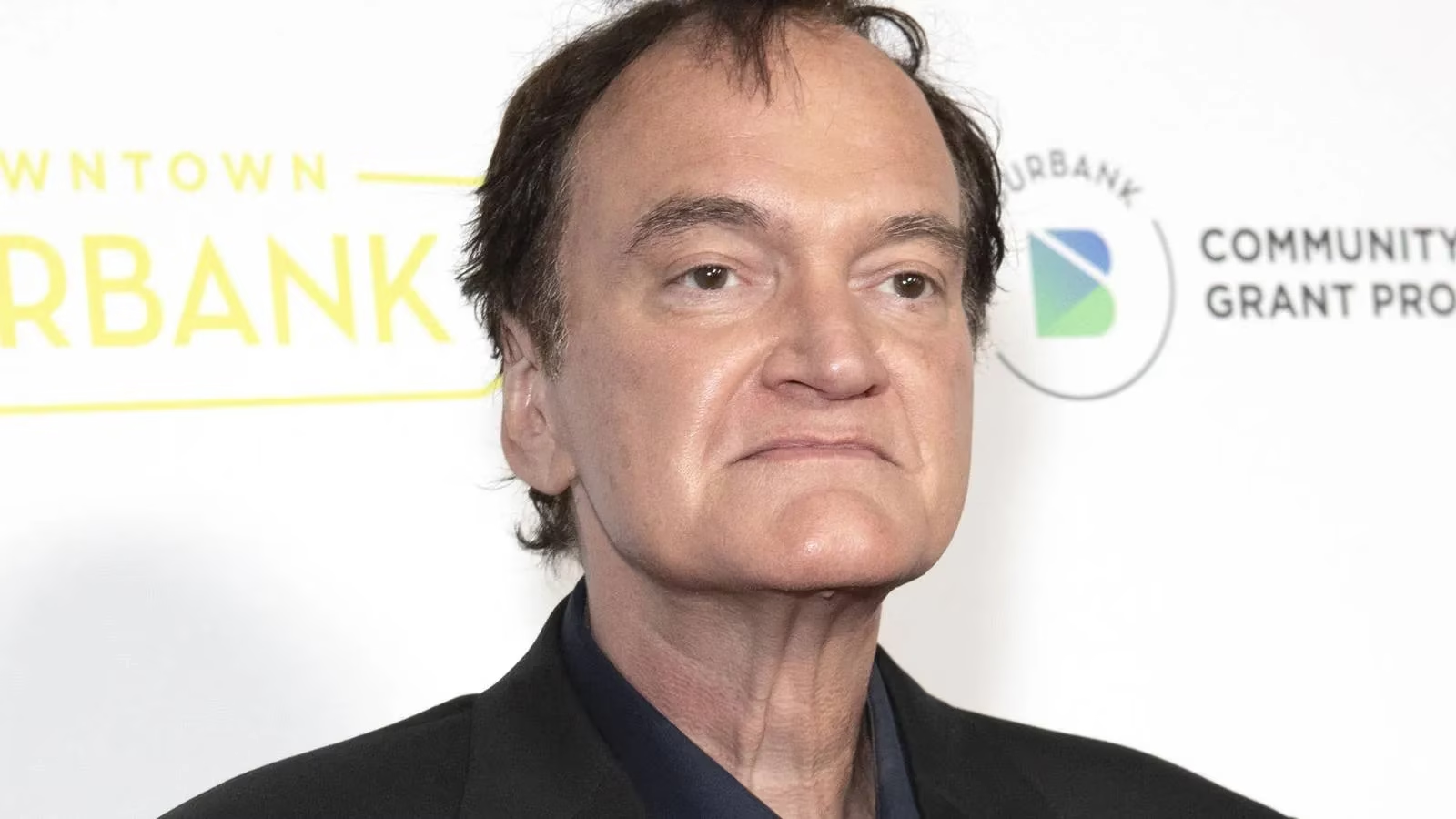
The cinematic landscape in 2026 is a fascinating place, especially when it involves the sharp tongue of a seasoned auteur. Quentin Tarantino, a filmmaker whose every word is dissected by fans and critics alike, has recently managed to stir the pot in a rather spectacular fashion. This should have been a celebratory period with the release of Kill Bill: The Whole Bloody Affair, but instead, the spotlight has swung toward some brutally candid comments he made about actor Paul Dano. The remarks, delivered on The Bret Easton Ellis Podcast, have sparked near-universal backlash, drawing a line in the sand between the director's past and present personas.
The Evolution of a Critique: From 2009 to 2025
Back in the simpler times of 2009, Tarantino appeared on Tarantino Takes Over Sky Movies to discuss his favorite films. When the conversation turned to Paul Thomas Anderson's masterpiece, There Will Be Blood, his thoughts on Paul Dano's performance were measured, almost analytical. He stated, "If I had a criticism about the film, it would fall to Paul Dano's performance. Not that the performance is bad, there's nothing bad about it. It's just... it does seem a compromise." He famously used a boxing analogy, comparing Daniel Day-Lewis to Muhammad Ali and Dano to Jerry Quarry. The implication was clear: the issue wasn't that Dano was bad, but that he was sharing the ring with an all-time great. It was a critique of circumstance, not of the actor's core talent. Fast forward to 2025, and that nuanced perspective has evaporated faster than a film reel in a fire.
The 2025 Verbal Assault
On the podcast, Tarantino didn't hold back. He described Dano as the "big, giant flaw" in There Will Be Blood. He then escalated, calling him "weak sauce" before delivering the knockout punch: "He's just such a weak, weak, uninteresting guy. The weakest fking actor in SAG [Screen Actors Guild]." 😲 The shift in tone is jarring. What was once a thoughtful, if debatable, observation has morphed into a personal, condiment-fueled attack that seems to extend beyond a single role to Dano's entire career. The film community, including Matt Reeves who directed Dano in The Batman, has largely pushed back against this harsh assessment.
The Context Tarantino Overlooks
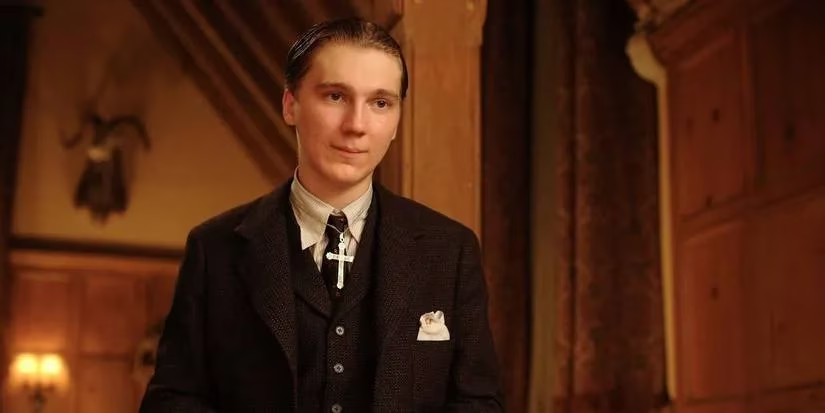
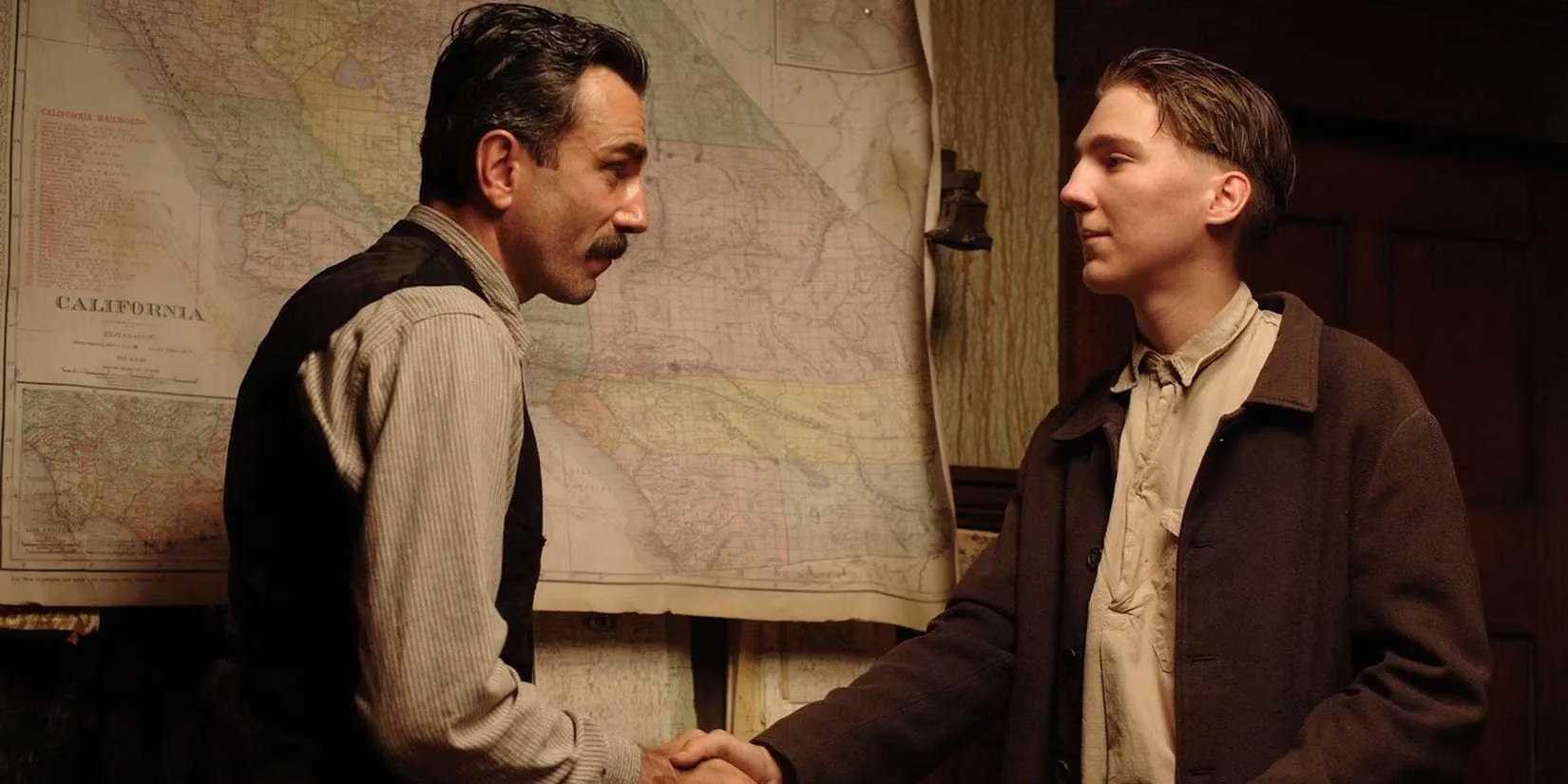
To fully appreciate the situation, one must understand the chaotic genesis of Dano's role. He was originally cast in a minor part as Paul Sunday. When actor Kel O'Neill, set to play the pivotal role of Eli Sunday, dropped out weeks into shooting, the production faced a crisis. The ingenious solution? Merge the Sunday siblings into twins and have Paul Dano play both parts. Overnight, his role was elevated from supporting to co-starring. He had mere days to prepare for a character that would go toe-to-toe with Daniel Day-Lewis's iconic Daniel Plainview. Considering these extraordinary circumstances:
-
Inexperience: Dano was a relative newcomer thrust into a starring role.
-
Time Crunch: He had virtually no preparation time for the expanded part.
-
The Co-Star: He was acting opposite one of the most intense method actors in history.
Given this context, the fact that Dano not only completed the film but received widespread critical acclaim is a testament to his ability. He earned a BAFTA nomination, and the film served as his major Hollywood breakthrough. To dismiss his performance as the work of the "weakest" actor in the guild ignores the monumental challenge he faced and conquered.
Why the Change of Heart?
So, what explains Tarantino's dramatic shift from nuanced critic to ruthless insulter? Several theories abound in 2026:
| Possible Reason | Explanation |
|---|---|
| Provocation for Publicity 🎬 | With Kill Bill: The Whole Bloody Affair out, a spicy controversy keeps his name in the headlines. |
| Evolving (or Devolving) Tastes 👅 | Perhaps his standards have hardened, or his patience for performances he deems "compromised" has worn thin. |
| The Podcast Effect 🎙 | The informal, unfiltered nature of long-form podcasts might encourage more extreme, off-the-cuff remarks than a prepared television interview. |
| A Genuine, Stark Re-evaluation 🤔 | It's possible he simply watched the film again and his opinion genuinely soured to an extreme degree. |
Regardless of the reason, the contrast between his two statements is a masterclass in how time and platform can reshape a public figure's rhetoric. The 2009 Tarantino was a film scholar offering critique; the 2025/2026 Tarantino sounds more like a disgruntled fan yelling at the screen.
The Industry's Response and Dano's Legacy
The backlash has been swift. Fellow directors and actors have come to Dano's defense, highlighting his consistently compelling work in films like Prisoners, Love & Mercy, and The Batman, where his Riddler was a chilling highlight. In the modern era, an actor's worth is judged by a diverse body of work, not a single performance from nearly two decades ago under duress. Tarantino's comments, while shocking, seem oddly out of touch with the contemporary consensus on Dano as a respected and versatile character actor.
In the end, this episode serves as a reminder of two enduring truths in Hollywood. First, context is king—judging an actor without considering the turbulent reality of a film's production is like reviewing a meal you only saw a picture of. 🍽️ Second, the passage of time can turn a director's measured analysis into a fiery, perhaps regrettable, soundbite. As for Paul Dano, he continues to work, likely unfazed, proving that resilience and talent outlast even the most flavorful of criticisms.
Comments