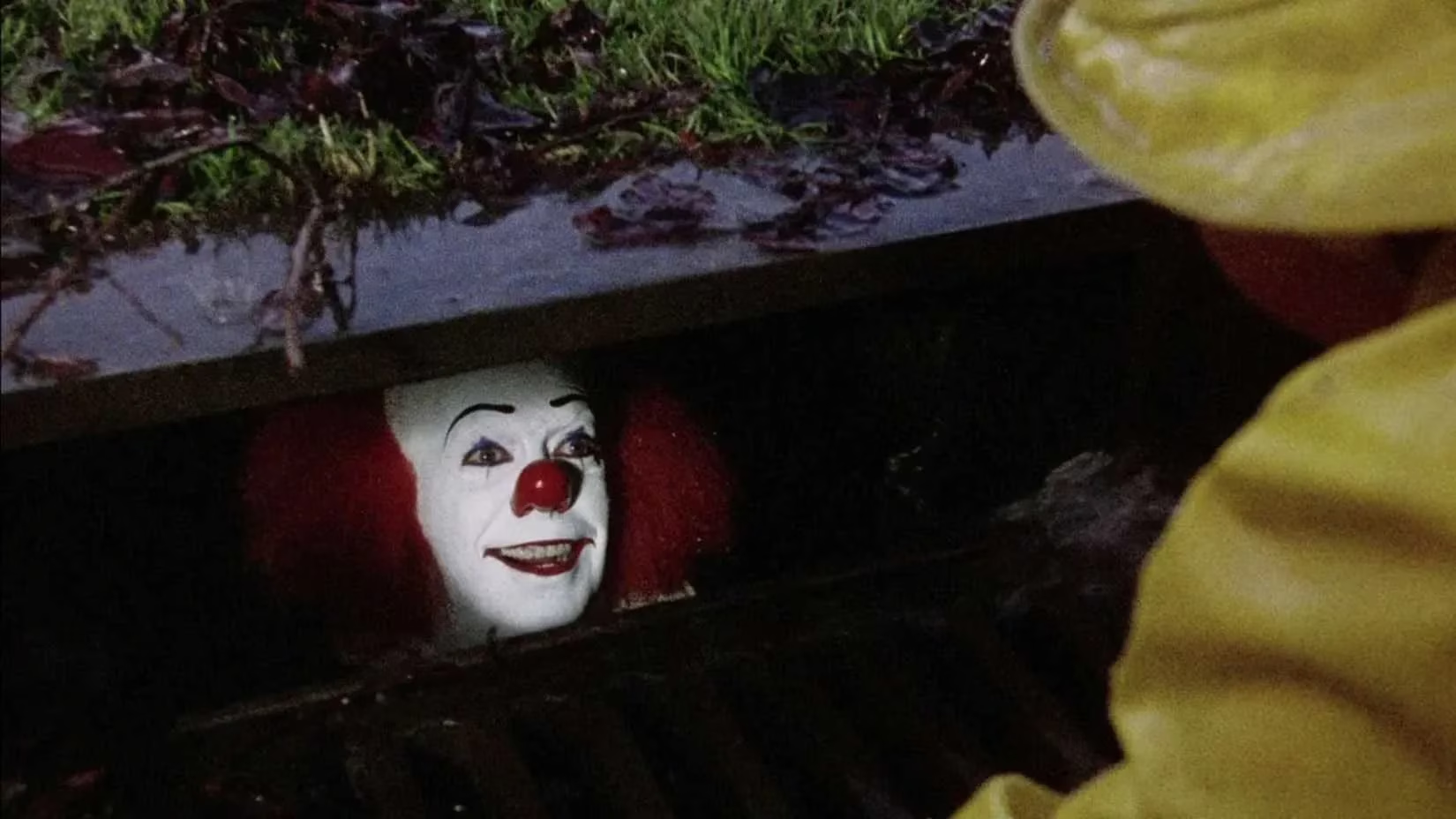
Legendary filmmaker Quentin Tarantino has built a career on bold opinions, sharp dialogue, and cinematic homage. Yet one of his hottest takes — that Stephen King's It is 'basically a ripoff of A Nightmare on Elm Street' — remains as shaky in 2026 as it was when he first said it. The claim, made during a 2019 appearance on Eli Roth's podcast, attempted to link Pennywise the Dancing Clown to Freddy Krueger. But the timeline, the text, and even Tarantino's own artistic methods undermine the argument.

Tarantino burst onto the world stage in the early 1990s with Reservoir Dogs. He followed it with Pulp Fiction, and soon became the new cinematic voice of his generation. His movies are instantly recognizable for snappy dialogue, unconventional narrative structures, and abundant graphic violence. Over more than 30 years, the Academy Award winner has remained a Hollywood icon, often pushing the boundaries of mainstream taste.
Stephen King needs no introduction either. More than five decades after his first novel hit shelves, the King of Horror is still one of the world's bestselling writers. His reputation rests not only on fear, but on deep character work and expansive world-building. That is why so many of his works have been adapted into movies and TV shows, making him a master of horror on both the page and the screen.
The two artists have rarely crossed paths directly. But in 2019, Tarantino told Roth that King's It was 'basically a ripoff' of Wes Craven's A Nightmare on Elm Street. He suggested Pennywise was a carbon copy of Freddy Krueger, and claimed King essentially said, 'Let me take that idea and do my version of it.' According to reporting at the time, Tarantino also described It as a '560-page novel.' That detail is not just imprecise. It is wrong.

King's It is actually more than 1,000 pages long. The exaggerated length of the book is one of its defining features, not a minor footnote. Tarantino's mistake could be dismissed as off-the-cuff podcast talk, but it signals a broader unfamiliarity with the novel he was attacking. His assessment is simplistic, and it ignores the many differences between King's interdimensional predator and Craven's vengeful dream killer.
| Element | Stephen King's It | A Nightmare on Elm Street |
|---|---|---|
| Antagonist | Pennywise, an interdimensional creature that feeds on people | Freddy Krueger, a supernatural being of pure vengeance |
| Origin | Ancient cosmic evil in Derry | Murdered child killer who returns through dreams |
| Method | Shapeshifting, fear, cycles of violence | Dream invasion and slasher-style kills |
| Tone | Epic horror with childhood trauma and cosmic dread | Sleek 1980s slasher that revitalized the genre |
| Core theme | Memory, friendship, and communal evil | Revenge, guilt, and suburban secrets |
The timeline makes Tarantino's ripoff claim even weaker. King had the first kernel of an idea for It in 1978, but he did not begin writing until 1980. The novel took over half a decade to complete and was finally published in 1986. A Nightmare on Elm Street arrived in 1984. That means the bulk of It was written before Craven's film existed. The ideas in the movie could not have had much impact on King's manuscript.
There may also be a personal edge to the criticism. King gave Kill Bill: Vol. 1 an unfavorable review, calling it 'narcissistic,' though he did praise Tarantino's filmmaking overall. The author went against the grain with his takedown of the martial arts masterpiece. Tarantino may have been returning a blow, or he may simply believe his own hot take. Either way, his comments are hypocritical.
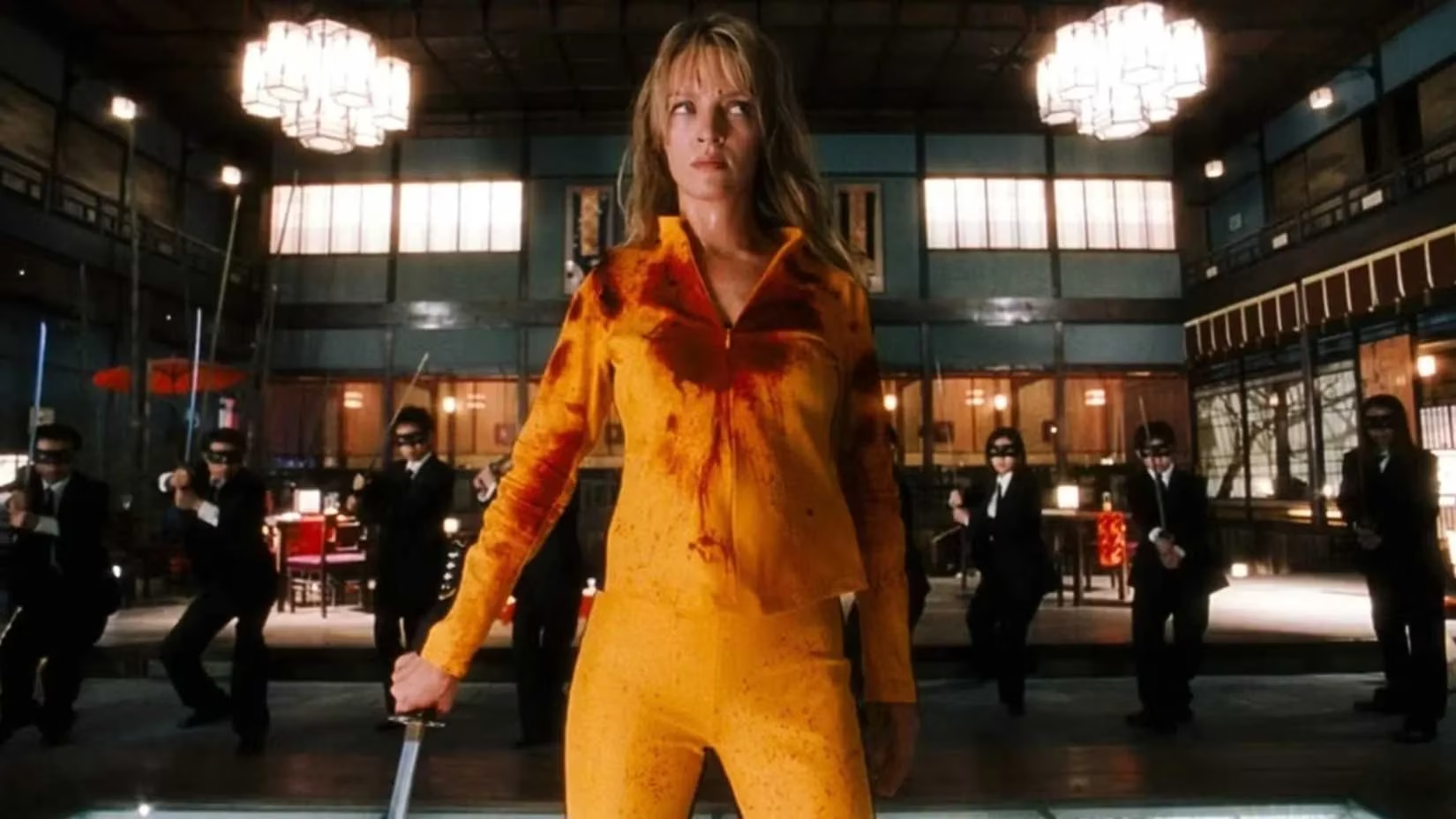
Tarantino has made an entire career out of derivative ideas, and he wears his influences on his sleeve. Nearly every movie in his canon pays homage to something else. That is not the same as ripping off, but the line can blur. His big concepts are original and fresh, yet he peppers them with details from his favorite films. Neither artist is guilty of stealing, though Tarantino sometimes flirts with the idea.
🎬 Key points:
-
Tarantino called It a ripoff of A Nightmare on Elm Street.
-
King had the idea for It in 1978 and began writing in 1980.
-
It was published in 1986, two years after Craven's film.
-
Tarantino said It was 560 pages; it is actually over 1,000.
-
King called Kill Bill: Vol. 1 'narcissistic,' but praised Tarantino's filmmaking.
-
Tarantino praised King's prose, a quality even the hottest takes cannot deny.
In 2026, the argument says less about King's novel than about the speed of internet hot takes. Tarantino is an expert on cinema, and his opinions often carry weight. But his comments about It show ignorance of literature, or at least unfamiliarity with the book he was lambasting. Some of what he said was factually inaccurate, and that undermines the entire argument.
It is entirely possible that Tarantino let his love for A Nightmare on Elm Street blind him. It is also possible he got caught up in a culture of unnecessary hot takes. Yet he did have nice things to say about King's writing. He praised King's prose, a quality that cannot really be denied by even the hottest of takes. The King of Horror remains a bestselling author, and Pennywise remains one of his most terrifying creations. Tarantino remains a cinematic icon. The difference is that King's It was not a ripoff, and in 2026, the facts still say so.
Comments