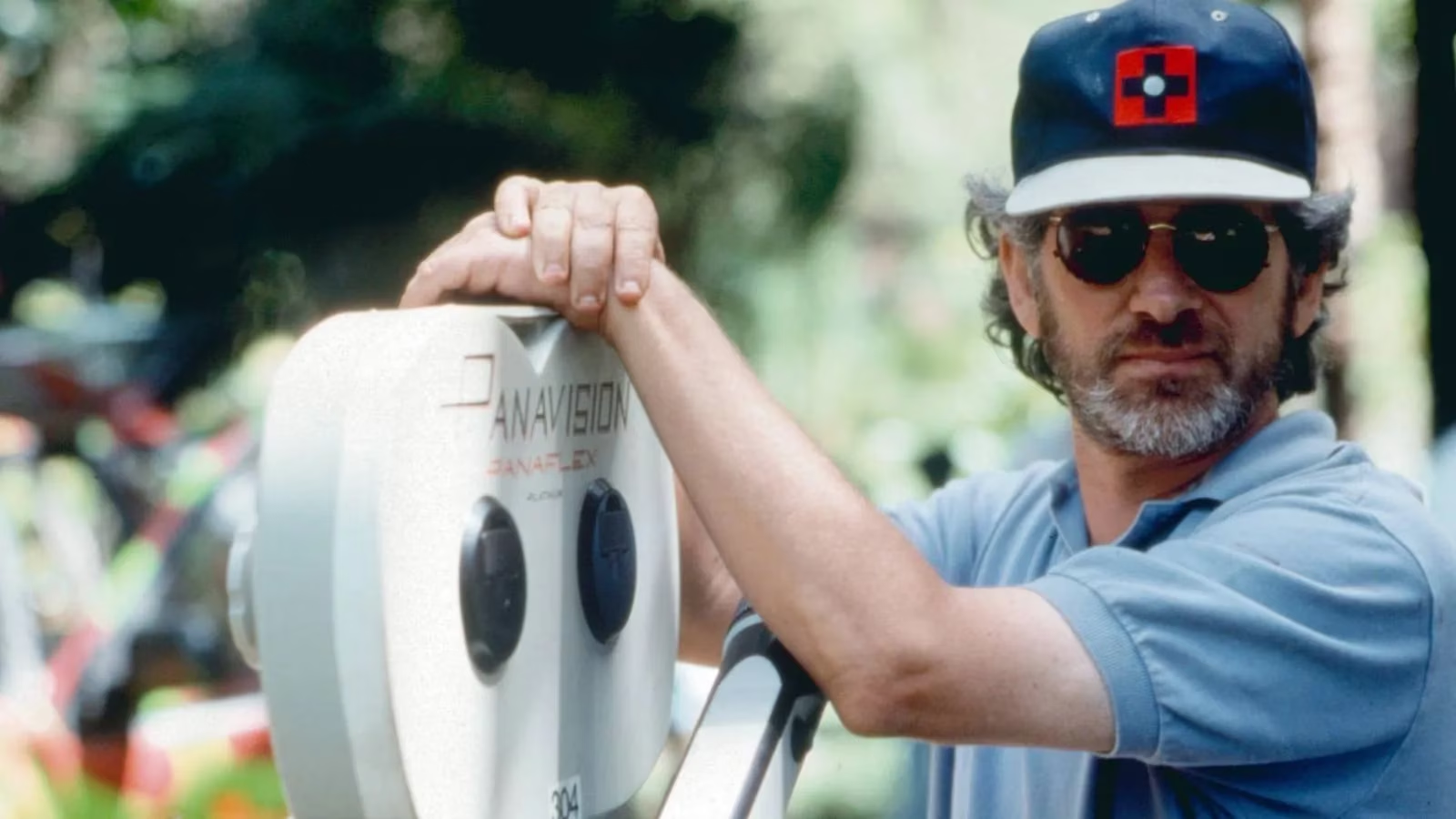
In 2026, legendary director Steven Spielberg is making a grand return to the cosmos with his new sci-fi film, Disclosure Day. This marks his first venture back into alien territory since 2008, and early indications suggest a shift towards the cerebral, thought-provoking style of Minority Report rather than the pure spectacle of his earlier extraterrestrial tales. The trailer hints at a world where aliens have lived among us, hidden in plain sight, for years. This upcoming project will be Spielberg's tenth foray into science fiction, a genre he has shaped with everything from friendly visitors and rampaging dinosaurs to dystopian futures and virtual worlds. Each film, in its own way, carries the unmistakable signature of a master storyteller.
🛸 The Alien Chronicles: From Family to Fear
Spielberg's relationship with aliens is complex and defining. His very first sci-fi film, Close Encounters of the Third Kind (1977), set the tone. It wasn't about invasion or action; it was a deeply personal, obsessive quest for connection. Richard Dreyfuss's character abandons his family in pursuit of the unknown, a recurring Spielberg theme of fractured homes finding meaning elsewhere. The film's climax is a breathtaking communication, not a battle, earning it a place in the National Film Registry and nine Oscar nominations. 🤯
Then came the one that captured the world's heart: E.T. the Extra-Terrestrial (1982). This masterpiece flipped the script, presenting aliens as benevolent scientists and the government as the ambiguous threat. At its core, it's a perfect fusion of Spielberg's genius for eliciting magic from child actors and his exploration of found family. E.T. wasn't just a box office behemoth (over $2 billion in today's money), it became a cultural touchstone—the story of a little alien who just wanted to phone home. 👽📞
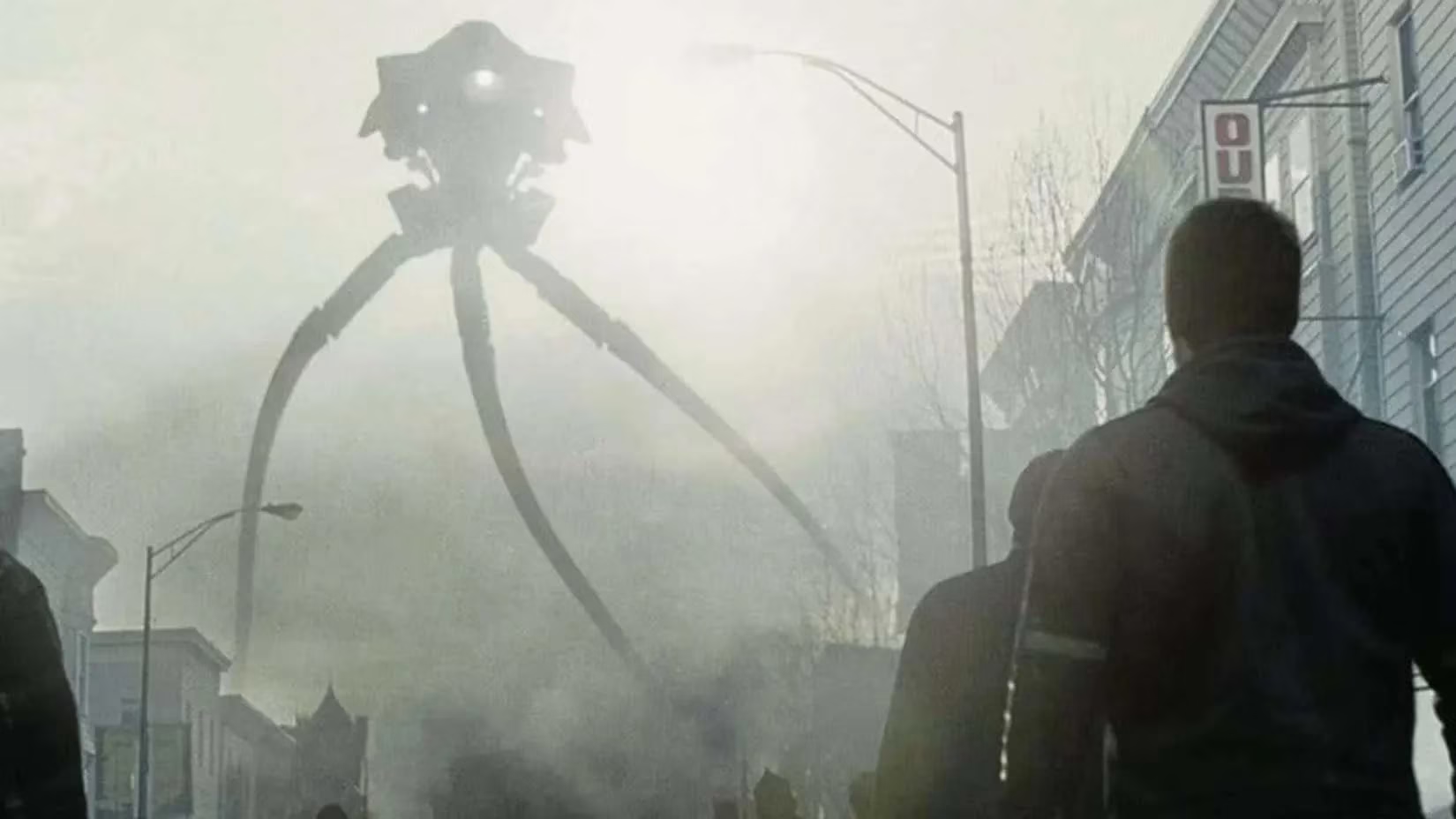
His alien narratives took a darker turn with War of the Worlds (2005), a visceral, ground-level remake of the H.G. Wells classic. Starring Tom Cruise as a father fighting for survival, it delivered some of the most terrifying and dynamic alien attack sequences ever put to screen. While a massive financial success and a technical marvel (earning three Oscar noms), its relentless intensity placed it in a different emotional register than his earlier works.
🦖 The Dino-Dominance & Blockbuster Evolution
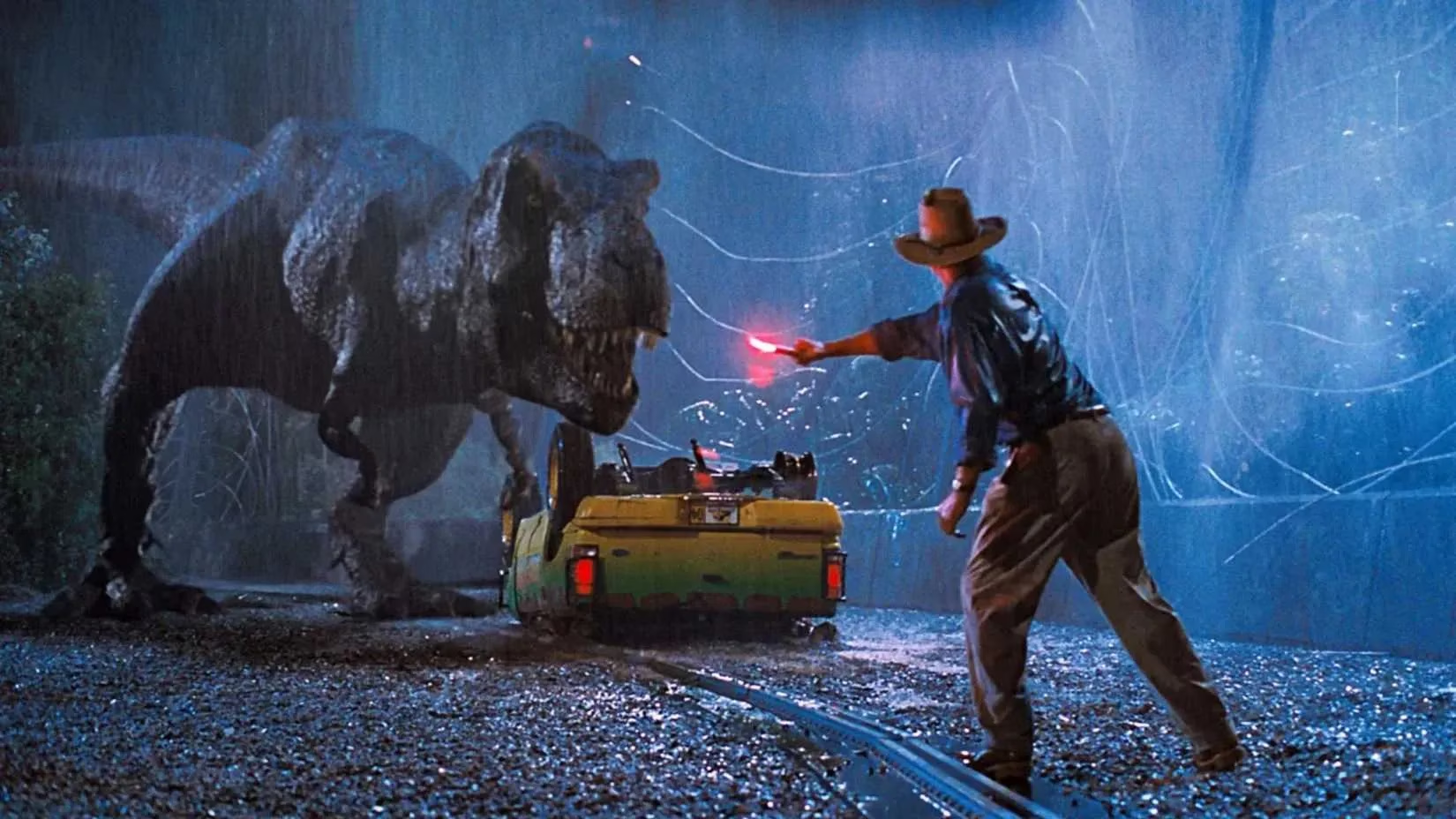
No discussion of Spielberg's sci-fi is complete without Jurassic Park (1993). Released the same year as the sobering Schindler's List, it showcased his unparalleled range. Jurassic Park wasn't just a blockbuster; it was a revolution. Its pioneering use of CGI to create believable, living dinosaurs changed filmmaking forever. The story of chaos theory unleashed, combined with groundbreaking visuals and pure adventure, earned it three Oscars and a permanent spot in the National Film Registry. It's the film that proved computers could create wonder and terror on an unprecedented scale. 🚀
Its sequel, The Lost World: Jurassic Park (1997), faced an impossible task. While still a box office hit, it struggled to escape the shadow of its predecessor. Repeating many beats (but with bigger guns) and borrowing the "monster in the city" plot from King Kong, it felt more like a capable imitation than a groundbreaking sequel. It remains the last Jurassic film Spielberg directed.
🧠 Cerebral Sci-Fi & Genre Blending
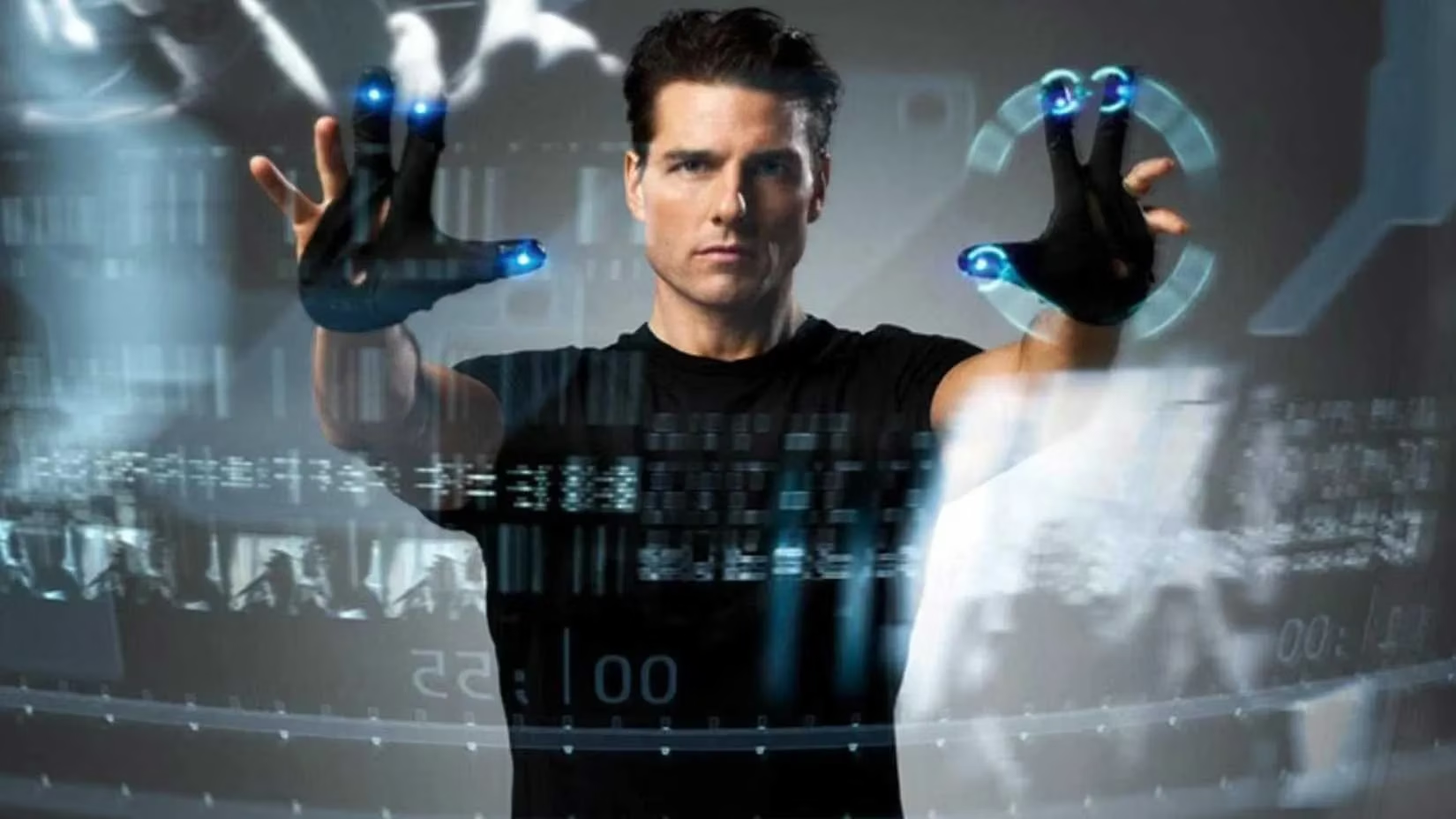
Spielberg's mind-bending side shone in Minority Report (2002), his second collaboration with Tom Cruise. Based on Philip K. Dick's story, it presented a chilling future of pre-crime technology and asked profound questions about free will and destiny. So impactful was its vision that it recently ranked among the top 100 films of the 21st century in industry polls. It’s the sophisticated, high-concept sci-fi that Disclosure Day seems most aligned with. 🔮
Then there's the fascinating, divisive A.I. Artificial Intelligence (2001). Born from Stanley Kubrick's plans and finished by Spielberg, it's a tonal tightrope walk between Kubrick's cold existentialism and Spielberg's warmth. A sci-fi Pinocchio tale starring Haley Joel Osment, it’s a film that has grown in stature, celebrated for its ambition even as its dual authorship creates a unique, sometimes jarring, experience.
🎮 The Fun Side & The Missteps
Not all Spielberg sci-fi is deadly serious. Ready Player One (2018) is a pure, unadulterated blast of 80s nostalgia and pop culture spectacle. A love letter to gaming and the decade that shaped him, it's proof that the director can still craft wildly entertaining, family-friendly blockbusters built purely on fun and a sense of wonder. 🕹️
On the other end of the spectrum lies Indiana Jones and the Kingdom of the Crystal Skull (2008). While its alien-centric plot was arguably consistent with the franchise's pulpy roots (ancient knights, face-melting arks), fans rejected it due to a perceived over-reliance on slapstick, questionable CGI, and a lukewarm reception to Shia LaBeouf's sidekick. It stands as a lesson that even a master can misfire when the elements don't coalesce.
✨ The Legacy and The Future
As we look toward Disclosure Day in 2026, Spielberg's sci-fi legacy is clear:
-
The Groundbreaker: Jurassic Park, Close Encounters
-
The Heartwarmer: E.T.
-
The Thinker: Minority Report, A.I.
-
The Spectacle Maker: War of the Worlds, Ready Player One
His films have asked what it means to be human, to have a family, and to encounter the unknown. They've made us believe a bicycle could fly and a T-Rex could feel real. With Disclosure Day, he returns to his oldest fascination—aliens among us—but with the seasoned perspective of a filmmaker who has explored every corner of the genre. Whether it leans into cerebral mystery or awe-inspiring revelation, one thing is certain: it will be pure Spielberg. And in the realm of science fiction, that name alone promises a journey worth taking. 🌌
Comments