Watching Steven Spielberg’s filmography from the 1970s to the 2020s is like standing on the edge of a coral atoll and realizing the entire reef was built by one pair of hands. Movie after movie, the layers of his career stack upward from the seafloor, some sections more fragile, others dense enough to survive any tide. I have returned to these films across decades, and each time the shape of the reef looks different, not because the work changed, but because I did.
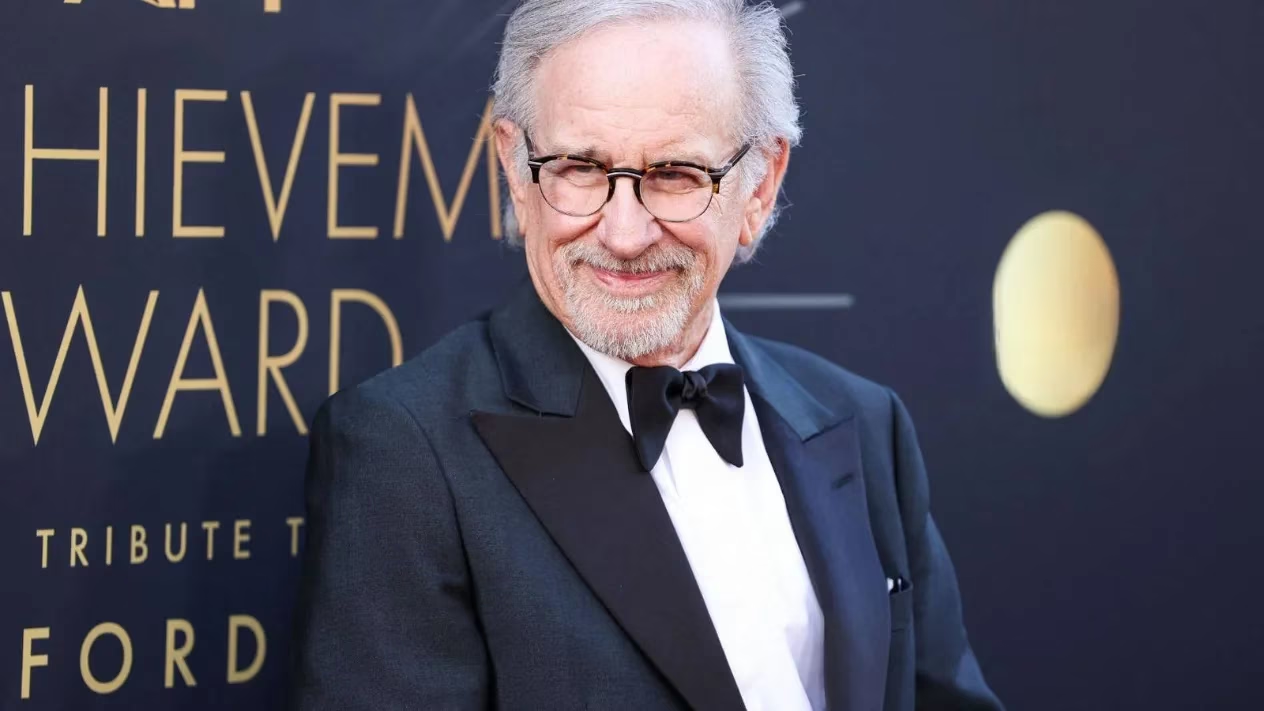
Spielberg has directed for more than five decades, earning 147 total Oscar nominations and 25 wins across his career. He collected his first Best Director nomination in 1977 and his most recent in 2022. Picking a single greatest film from each decade is less about ranking and more about locating the moment where his instincts, fears, and formal control locked together most cleanly.
The 1970s belonged to Close Encounters of the Third Kind. After Jaws created the summer blockbuster, Spielberg turned inward and upward. Richard Dreyfuss plays a man so consumed by extraterrestrial contact that his family life collapses into static. This is not an invasion story, it is a film about obsession as a kind of slow erosion. The aliens do not arrive with weapons; they arrive with music and light, like two species tapping on the glass dome of the universe to check if anyone else is awake. The film earned nine Oscar nominations and proved that a blockbuster director could also be a serious artist.

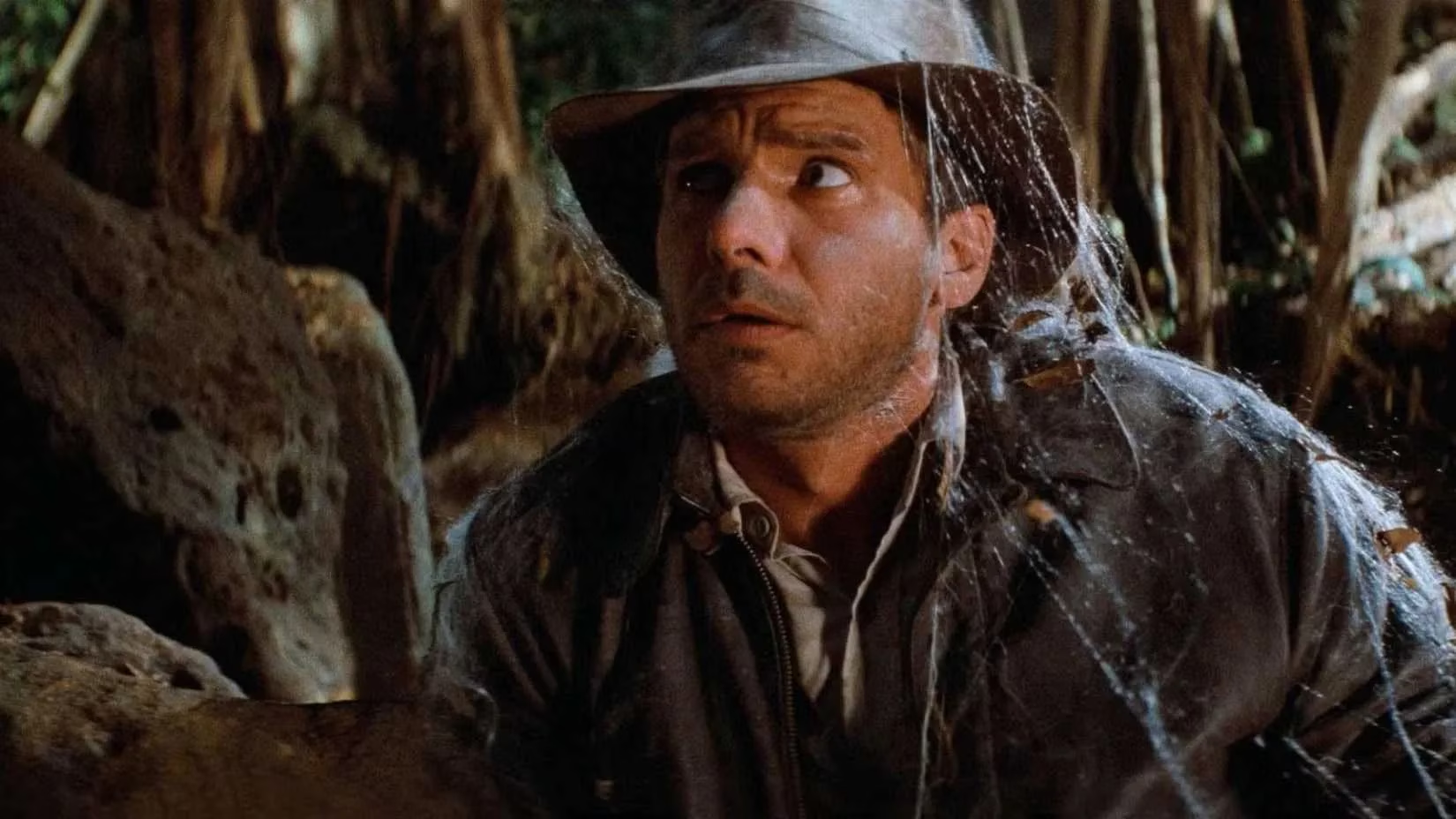
The 1980s could have gone to E.T. the Extra-Terrestrial or The Color Purple, but Raiders of the Lost Ark remains the decade’s true North. Indiana Jones moves through the film like a well-worn pocket watch, always ticking, occasionally smashed against rocks, but never losing its internal rhythm. Spielberg borrowed from classic serials and Lawrence of Arabia, then compressed those influences into a perfect adventure mechanism. The opening idol escape, the Nazi truck chase, the Ark itself humming with old-testament energy; every set piece still works as a masterclass in visual storytelling. The film collected nine Oscar nominations and won four competitive awards plus a special achievement award for sound effects editing.
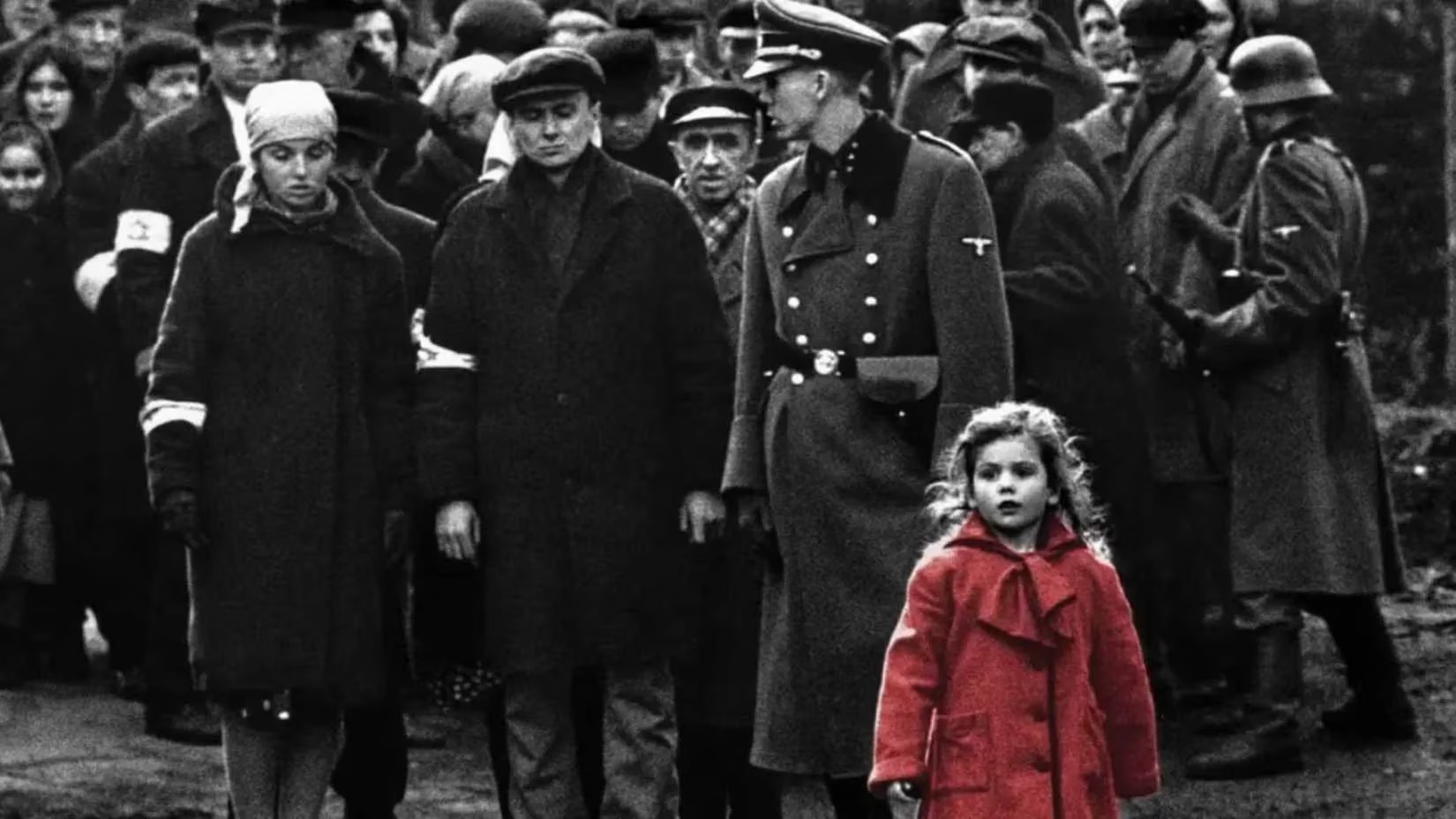
The 1990s are almost impossible to reduce to one film. Jurassic Park invented modern blockbuster spectacle, while Saving Private Ryan redefined combat realism. But Schindler’s List stands apart because it strips away every comfort Spielberg had learned. Shot in black and white, except for the girl in the red coat, the film functions like a scar on the historical record that refuses to fade. It is not merely a Holocaust film; it is a study of moral pressure, of what one person can do when the machinery of state turns murderous. Spielberg won Best Director, and the film won Best Picture. No other selection from this decade carries the same weight.
In the 2000s, Spielberg made A.I. Artificial Intelligence, Munich, and War of the Worlds, but Minority Report has aged into something prophetic. Based on Philip K. Dick’s novel, the film imagines a PreCrime unit that arrests people before they commit murder. Tom Cruise plays a detective who runs from the very system he helped build. The deeper the film goes, the more it feels like a warning about certainty itself, about the dangerous fantasy that human behavior can be predicted cleanly. The movie is a dystopian thriller wrapped around a philosophical question: if the future is already visible, what value does choice have?

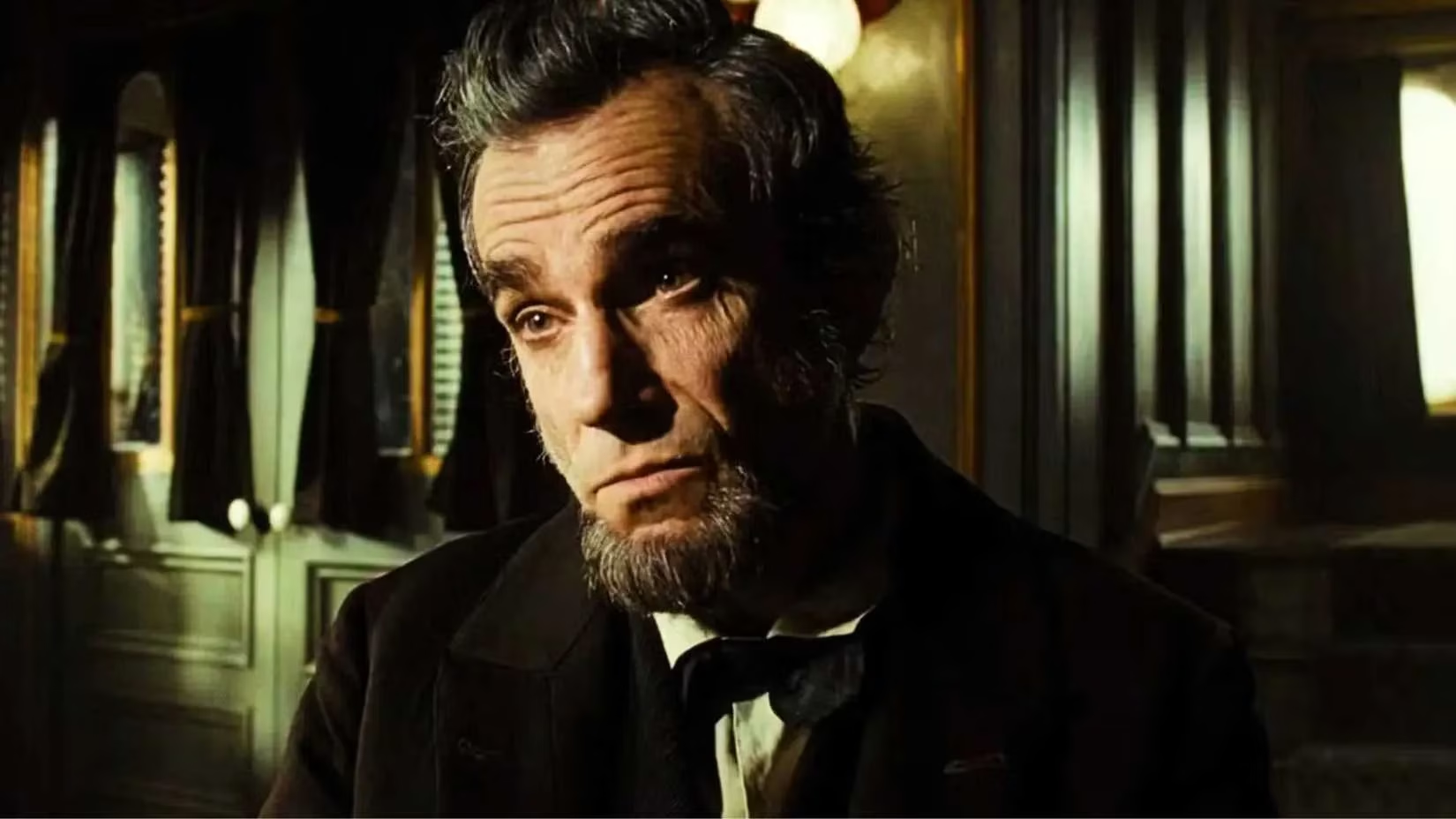
The 2010s offered The Post, Bridge of Spies, and Ready Player One, but Lincoln is the decade’s most complete achievement. Daniel Day-Lewis disappears into the sixteenth president, not with theatrical flourish but with the slow gravity of a man carrying a nation’s fracture inside his own body. The film covers only the final four months of Lincoln’s life, yet it feels epic because every conversation is a battle over what the United States will become. The movie earned 12 Oscar nominations and won for Best Actor and Best Production Design.
For the 2020s, West Side Story remains Spielberg’s best film so far. It was his first musical, and he shot it like a man who had been secretly rehearsing for sixty years. The dance sequences, the color, the camera gliding through streets and fire escapes, all feel effortless. More importantly, Spielberg revised the Puerto Rican characters with real care, replacing old stereotypes with full human beings. The film earned seven Oscar nominations, with Ariana DeBose winning Best Supporting Actress. Watching it, I thought of a master watchmaker assembling a music box for the first time, every gear already perfect, every note exactly where it belonged.

Across 54 years of filmmaking, Spielberg has moved between blockbusters and intimate dramas without losing his identity. The best film of each decade is not always the loudest or the most awarded; it is the one where his personal obsessions, fractured families, impossible choices, and the ache for connection, surface most clearly. That is the coral reef I keep returning to, knowing it will look different every time I dive.
Comments