Ten years on, Quentin Tarantino's The Hateful Eight still feels like the odd one out in his filmography, a snowbound pressure cooker of a movie that dared to slow down and let its characters simmer. Born from the ashes of a scrapped Django Unchained sequel and nearly abandoned after a script leak, the film clawed its way to the screen through a fateful live reading. It wasn't the global sensation some of his other works were, but for many, it marked a glorious return to the director's roots—a story where substance and crackling dialogue took center stage over pure stylistic homage. Forget the samurai epics and grindhouse thrills; here was a master filmmaker holing up in a blizzard-bound cabin and reminding everyone just how tense a simple conversation could be.
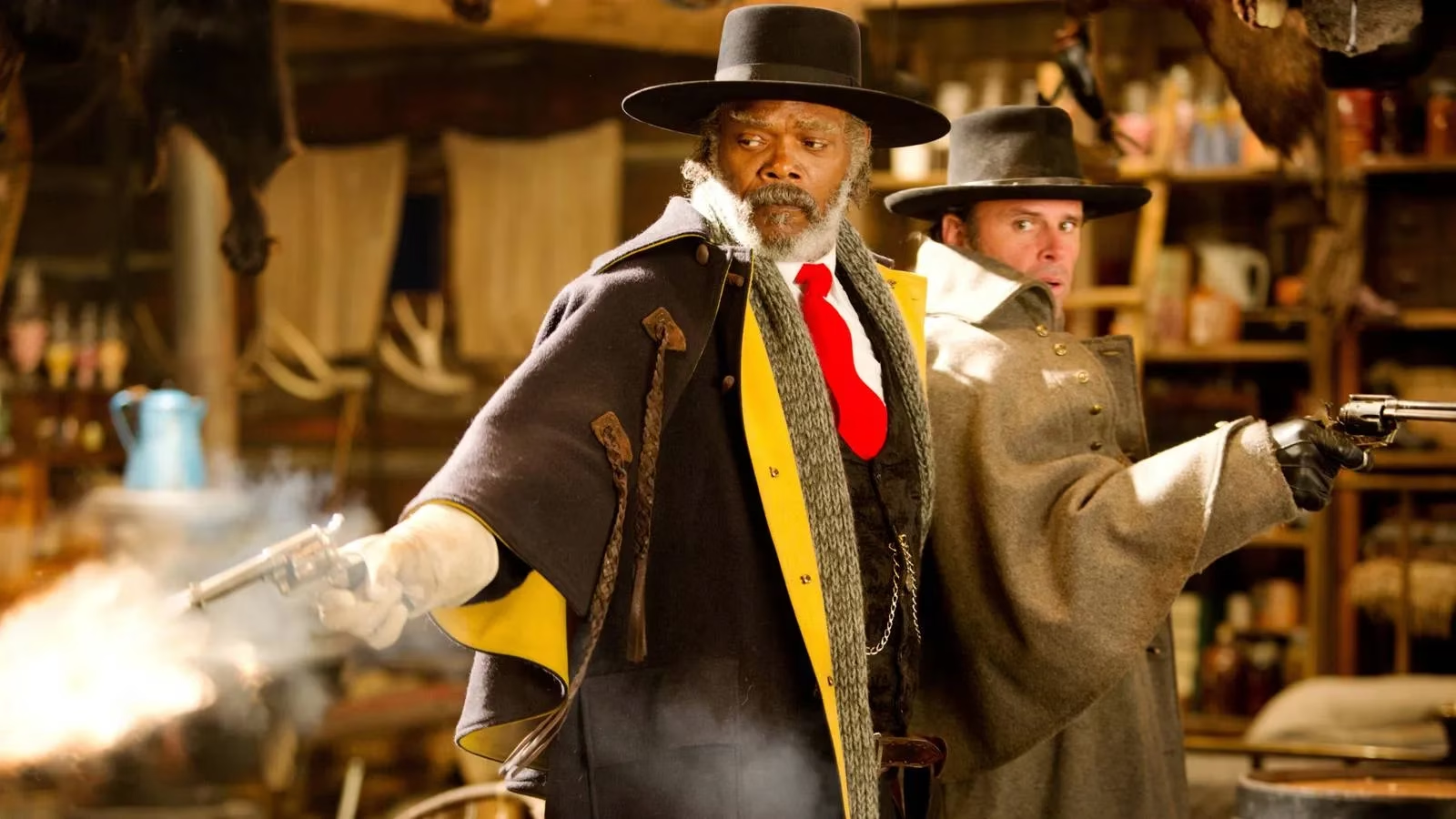
At its heart, The Hateful Eight is about a group of strangers—a motley crew of bounty hunters, a hangman, a Confederate general, and a fugitive—forced together by a raging blizzard in a remote mountainside haberdashery. Tarantino, being Tarantino, assembles a killer cast for this profane and violent romp. You've got the usual suspects like Samuel L. Jackson and Tim Roth, mixing it up with first-timers in the Tarantinoverse like Jennifer Jason Leigh and Channing Tatum. From the very first shot—a gorgeous, wintry landscape where Jackson's Major Marquis Warren waits patiently atop a pile of corpses—you know you're in for a ride that's equal parts beautiful and brutal.
The film’s magic, honestly, is in how it builds that tension. Tarantino and his legendary cinematographer, Robert Richardson, trade in the frantic energy of Kill Bill for a more restrained, almost theatrical approach. Once the gang is crammed into that haberdashery, the camera becomes another character, gliding through the room, lingering on faces, and soaking up every suspicious glance. It feels like a stage play where anyone could launch into a monologue about their dark past at any moment. And boy, do they ever.
Let's talk about that script. This is where The Hateful Eight truly shines. Every conversation is a landmine. Every shared story is a potential lie. The plot revolves around a simple question: who in this room is secretly working to help Daisy Domergue (Jennifer Jason Leigh) escape? The dialogue ratchets up the paranoia scene by scene. One standout moment is the classic whodunnit-style showdown between Jackson's Marquis and Walton Goggins' Chris Mannix, where they lay out their theories. The beauty of it? Even the wrong guesses sound totally plausible, thanks to the razor-sharp writing and the stellar performances selling every word.
Of course, it's not a perfect script. Tarantino sometimes pushes things a bit too far. Daisy's character often feels less like a person and more like a verbal and physical punching bag. Despite defenses from Tarantino and Leigh about creating equal-opportunity violence, it's still a tough watch seeing Kurt Russell's John Ruth manhandle her for most of the runtime. Then there's the language. The film doesn't shy away from the racist vernacular of its post-Civil War setting, which is historically accurate but, as with many Tarantino films, sometimes veers into territory that feels more exploitative than enlightening.

One of the biggest criticisms hurled at the film back in 2015 was its runtime. Clocking in at just over three hours, some called it bloated. But a decade later, that critique feels... well, a bit hasty. Sure, only two Tarantino movies are under two hours—the man likes to take his time! And in The Hateful Eight, that time is mostly well-spent. Sure, a scene or two might feel long, but they often serve a deeper purpose. Take the infamous confrontation between Marquis and Bruce Dern's Confederate General Smithers. Marquis recounts, in gruesome detail, how he killed Smithers's son. Is it drawn out? Maybe. But from Marquis's perspective, this is a moment of long-awaited vengeance, a story he wants to savor. That drawn-out telling makes Smithers's eventual, explosive reaction all the more powerful. It's not filler; it's character fuel.
What truly makes the three hours fly by, though, is the cast. They are, simply put, firing on all cylinders.
-
Samuel L. Jackson delivers one of his career-best performances as the cunning and suspicious Marquis Warren. You can't take your eyes off him.
-
Kurt Russell and Jennifer Jason Leigh are a hilariously volatile duo, their high-energy bickering providing much of the film's dark humor.
-
Walton Goggins has a fantastic arc, transforming from one of the most detestable characters into perhaps the most sympathetic by the end.
-
Michael Madsen and Tim Roth ooze cool, shifty menace in their roles.
-
Even Demián Bichir makes a huge impact with minimal, gruff dialogue.
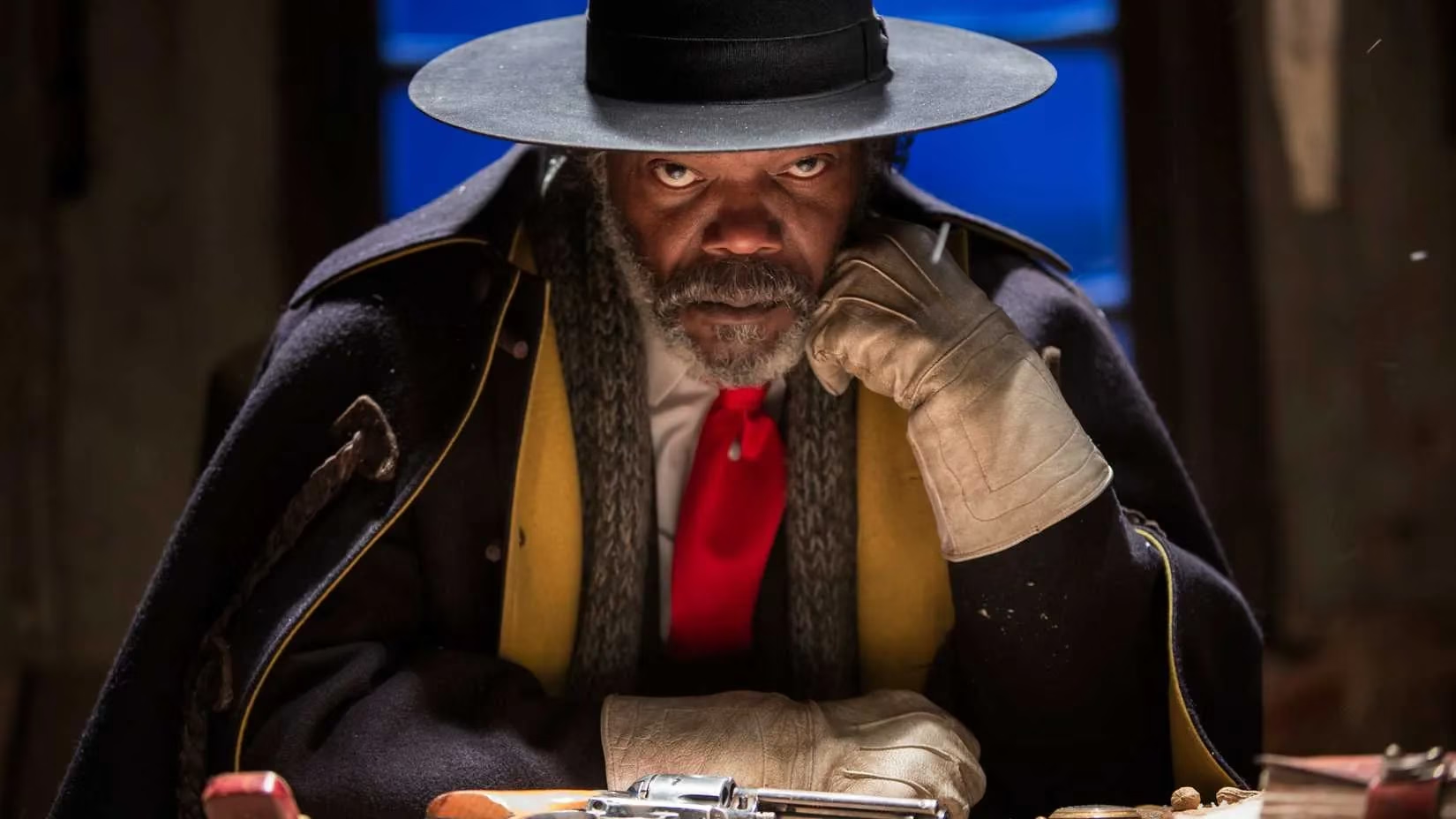
So, where does it stand in 2025? It might not reach the iconic, culture-shifting heights of Pulp Fiction or the operatic brilliance of the Kill Bill saga, but The Hateful Eight remains a uniquely gripping entry in Tarantino's filmography. It's the director at his most patient and theatrical, proving that you don't need globe-trotting adventures when you have eight fascinating liars trapped in a room together. The tension simmers, boils over, and then simmers again. It's a masterclass in dialogue-driven suspense, anchored by a cast that clearly relished every venomous line. A decade later, it's not just a film; it's an experience—a long, cold, bloody, and endlessly rewatchable treat that finally seems to be getting the respect it deserves. Sometimes, the best stories are the ones that take their sweet time, you know?
Comments