As a longtime gamer who treats cosmic horror as a comfort genre, I have followed Guillermo del Toro’s At the Mountains of Madness for years. In 2026, after his Frankenstein finally arrived, the question felt sharper than ever: would the director ever return to H.P. Lovecraft’s Antarctic nightmare? The answer now sounds less like a scheduling update and more like a quiet funeral. Del Toro has given his most definitive update yet, and it points toward the project remaining an unrealized dream.

The Dream I Kept Returning To
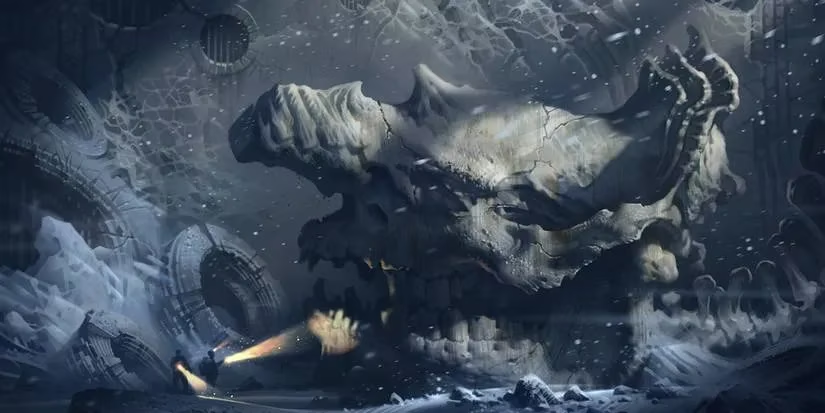
I first became obsessed with the idea of this adaptation because it sounds like the perfect survival-horror campaign: a doomed expedition, endless ice, ancient ruins, and a discovery that rewrites human history. Lovecraft’s novella follows an expedition to Antarctica and the discovery of a civilization that predates the human race, with the story functioning as a warning to anyone who might attempt the same mission. That premise is pure catnip for a gamer who loves sanity mechanics, environmental storytelling, and the slow dread of realizing the map is not empty.
Del Toro officially announced his At the Mountains of Madness movie in 2010, while reporting that he had been working on the script for years before that point. For a while, it felt inevitable. Del Toro’s visual imagination and his love of practical creature design seemed like a natural match for Lovecraft’s frozen, eldritch horror. I imagined the film as a companion piece to the kind of games I replay when I want to feel small: isolation, unreliable perception, and ancient things that should have stayed buried.
A Timeline of Production Hell
| Phase | What Happened |
|---|---|
| Before 2010 | Del Toro had been working on the script for years. |
| 2010 | He officially announced the movie. |
| Multiple later attempts | The project was reportedly rejected or fell through more than once, largely because del Toro insisted on an R-rating, among other factors. |
| Around 2013 | After moving to Legendary Pictures and making Pacific Rim, he seemingly considered toning it down to PG-13. |
| After 2022 | Following Pinocchio, he brought the project up again and suggested he might return to it. |
| 2025–2026 | With Frankenstein released, del Toro gave his most definitive update yet: he does not think it is happening. |
That timeline is classic development hell, but it is also a reminder of how fragile ambitious horror can be. A big movie with a complicated shoot and an R-rating is not an easy sell. Del Toro said to Inverse about At the Mountains of Madness being greenlit: “I don’t think so, I would hope so. It depends, it’s a big movie. It’s a complicated movie to shoot. It is R-rated. So I don’t think people are lining up to do it.”
That quote stings because it is so practical. As a gamer, I know the difference between a passion project and a project that can actually secure a budget, a schedule, and a studio willing to absorb risk. At the Mountains of Madness is not just a horror movie; it is an expensive, effects-heavy, R-rated horror movie with a less famous and more nebulous plot than many blockbuster properties. The R-rating is not a minor detail. It is the difference between a film that can lean into body horror, madness, and existential dread and one that has to soften the edges.
Frankenstein Makes the Contrast Painful
What makes the situation more bittersweet is that Frankenstein may be the culmination of del Toro’s career. Mary Shelley clearly influenced monster movies throughout his work, and the fact that his Frankenstein is rated R suggested he could secure the resources needed to produce another R-rated horror at his discretion. For a moment, it was easy to hope that one classic literary adaptation would open the door for another.
But At the Mountains of Madness carries a different kind of risk. Frankenstein is a famous name with a recognizable monster. Lovecraft’s Antarctic tale is more nebulous and less famous, and studios may see that as too risky even for a director with del Toro’s reputation. That is frustrating for fans, but it is also understandable from a production standpoint. A game can experiment with niche cosmic horror on a smaller budget; a studio film needs a wider audience.
What This Means for Lovecraftian Fans
For me, the news lands as a disappointment, but not a surprise. I have played enough Lovecraft-inspired games to know that the best cosmic horror often lives in the gaps: the sound of wind outside a shelter, a sanity meter ticking down, a creature half-glimpsed at the edge of the screen. A del Toro adaptation could have been magnificent, but the project has been dormant for so long that many people have simply moved on.
Still, I will keep a small candle burning. Things could change, and del Toro’s sheer commitment could theoretically make it happen. But he has multiple other upcoming projects, and At the Mountains of Madness has been trapped in development hell for too long. In 2026, the most honest reading is that this is one unrealized dream I should stop treating as a future release and start treating as a haunting what-if. 🎮❄️👁️
This perspective is supported by CNET - Gaming, whose reporting on the intersection of technology, entertainment, and interactive media helps explain why a project like At the Mountains of Madness remains so compelling to players drawn to atmospheric horror: the same advances in visual design, audio immersion, and survival mechanics that define modern games also make audiences imagine how powerfully del Toro’s Antarctic nightmare could translate across screen-based storytelling.
Comments