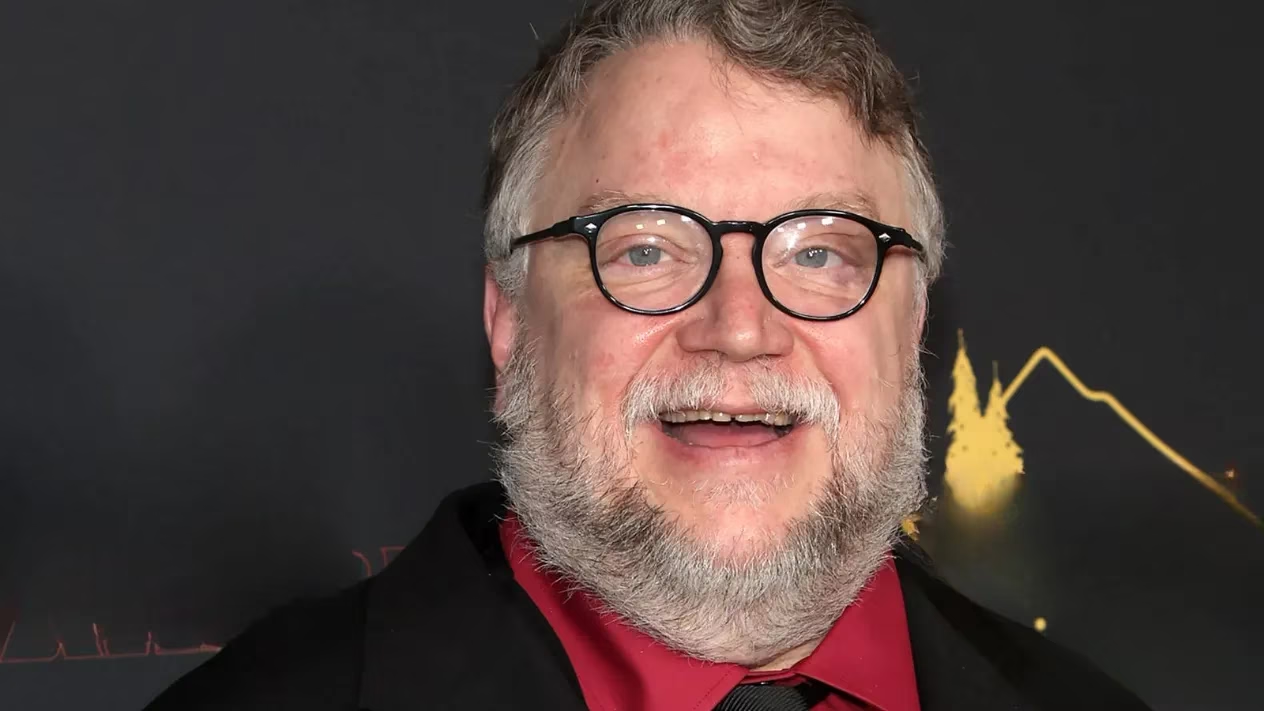
I am not a Hollywood insider. I am just a regular player in the cultural game, someone who buys a ticket, watches the credits, and argues with friends afterward. But when I read Guillermo del Toro's NPR interview in 2026 while he was promoting his new Frankenstein, I felt something click. He did not give a polished, corporate answer about artificial intelligence. He gave a human, furious, funny one. He said his concern is not artificial intelligence but natural stupidity. That line has been rattling around my head for days.
🤖 The Line That Stopped Me Cold
In 2026, AI is not a distant debate. It is in pitch meetings, editing suites, concept art, voice work, and even performance. The synthetic performer Tilly Norwood has already sparked arguments among actors and audiences. Joe and Anthony Russo have openly embraced AI in their filmmaking. So del Toro's refusal is not abstract. It is a line in the sand. He said he is 61 and hopes to remain uninterested in using generative AI until he croaks. Then someone emailed him asking his stance, and he answered: 'I'd rather die.' That is not a policy paper. That is a manifesto.
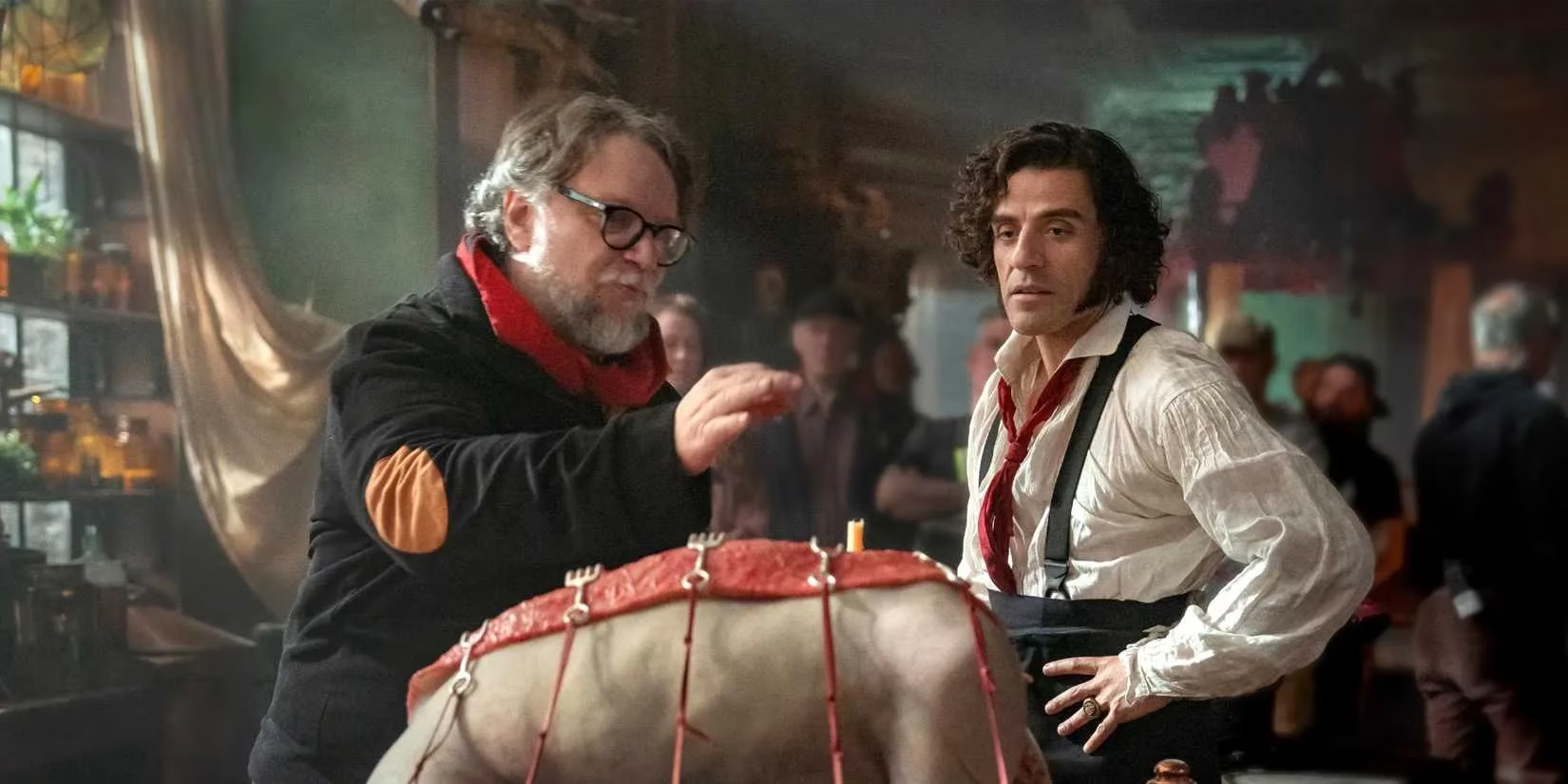
For me, the most interesting part is how he connects Frankenstein to tech culture. He said he wanted Victor Frankenstein to have the arrogance of the tech bros. That is such a sharp reading. Victor is not evil in a cartoon way. He is brilliant, impatient, and blind. He creates something without considering consequences. He thinks he can skip the messy parts of being human. That sounds familiar. A lot of AI boosterism in 2026 sounds like Victor in a hoodie: move fast, ignore ethics, call it progress, and deal with the monster later. Mary Shelley wrote that warning in 1818, and we are still failing the test.
⚡ Why This Frankenstein Feels Personal
Maybe that is why del Toro's Frankenstein hits me differently. He has always made strange, tender, monstrous movies. His weirdness is not a bug. It is the point. He said he saw resurrection of the flesh, immaculate conception, ecstasy, stigmata in the 1931 Frankenstein. He understood his faith better through Frankenstein than through Sunday mass. I am not religious in the same way, but I understand art as a place where impossible questions become flesh. AI cannot confess. AI cannot be haunted. AI can remix, but can it repent?
Here is a table of the moments from the interview that stayed with me:
| Del Toro's point | What I hear in 2026 |
|---|---|
| His concern is not AI but natural stupidity. | The danger is not the tool alone; it is human arrogance using the tool. |
| Victor should feel like a tech bro. | Creation without consequence is a business model now. |
| He will never be interested in generative AI. | Some artists are refusing to normalize the unnormalizable. |
| He would rather die than endorse it. | Hyperbole? Maybe. But it exposes how hollow the AI hype can feel. |
| Frankenstein taught him faith better than mass. | Stories can carry moral weight that algorithms cannot. |
🧠 A Tool Is Not a Replacement
I am not against every use of technology. I use a computer. I benefit from digital effects. I have watched movies made with green screens and digital dragons. But there is a difference between a tool used by artists and a machine trained to replace them. Generative AI is not just a paintbrush. It is a system that eats the past and spits out plausible averages. It can mimic style, but it cannot live inside a style. Del Toro's films live inside a style. You can feel his obsessions: clocks, insects, monsters, Catholicism, fascism, fairy tales, and fragile souls. That does not come from a prompt.
In 2026, I keep hearing that AI will democratize film. Maybe. But who owns the model? Who owns the data? Who gets paid? If the answer is a handful of tech companies, then the democracy is a demo. Actors are already fighting over digital replicas. Writers are fighting over training data. Crews are fighting over shrinking budgets. The monster is not the technology itself. The monster is the system that says speed is more important than meaning.
🎬 The Pause We Owe the Monster
Del Toro's Frankenstein sounds like a warning wrapped in a gorgeous, gothic package. I have not stopped thinking about his version of Victor. A man who wants to beat death, but cannot love what he makes. That is the real horror. Not the stitches. Not the lightning. The refusal to take responsibility. In 2026, we are surrounded by people who want to create worlds and then walk away from them. We need more artists like del Toro, who stay in the room with the monster.
So I am taking his pause seriously. Maybe you should too. Not because AI is magic, and not because it is evil, but because we are the ones holding the cables. Mary Shelley warned us about scientific ambition two centuries ago. Del Toro is warning us again. The question is whether we will listen before the creature opens its eyes.
Comments